

Nanny of the Maroons: The Woman Who Mothered a Nation
The story of Nanny of the Maroons, the warrior mother who helped shape Jamaica’s fight for freedom, and how the strength and resilience of Jamaican mothers still hold the nation together today.

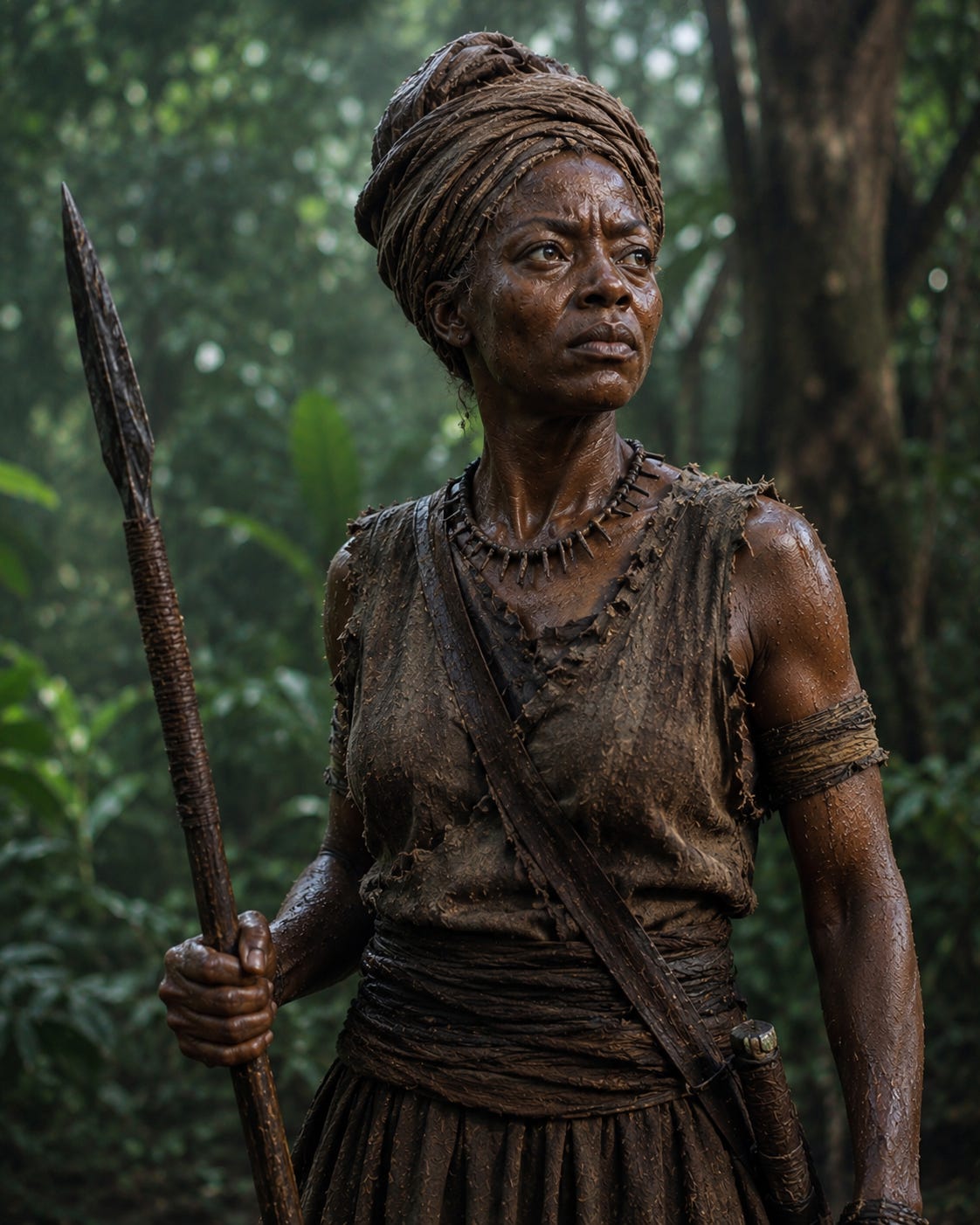
Long before Jamaica became a nation, a woman named Queen Nanny turned the mountains into a fortress of resistance, survival, spirituality, and Black freedom, shaping not only the future of Jamaica but the wider story of liberation across the Caribbean and the Americas, while leaving behind a legacy that still echoes today through Jamaican mothers, communities, land, faith, and the enduring fight to protect family, dignity, and “a piece of the rock”
It is night in the Blue Mountains.
The year is 1734.
The forest is almost silent save for the shriek of bats and the distant sounds of water moving through the hills. To an outsider, the mountains appear empty. But hidden among the trees, behind branches, along ridges and ravines, Maroon lookouts are waiting. Motionless. Watching.
Far below, British soldiers in bright red uniforms move clumsily through unfamiliar terrain. Their boots crash against stone and roots. Their voices travel carelessly through the darkness. They believe they are hunting escaped slaves. What they do not yet understand is that they are walking into the heart of one of the greatest resistance movements the Caribbean has ever seen.
Somewhere ahead of them is Nanny Town.
And somewhere inside those mountains is a woman the British Empire has failed to defeat.
Long before Jamaica became a nation. Long before independence, Parliament, highways, gated communities, mortgages, tourism campaigns, or the idea of owning “a piece of the rock,” there was a woman in the mountains teaching people how to survive.
She taught them how to hide when danger approached. How to move silently through forests. How to protect children. How to grow food in difficult terrain. How to trust God while surrounded by fear. How to resist the idea that freedom belonged only to the powerful.
And perhaps most importantly, she taught them how to stay together.
Today, Jamaica celebrates Mother’s Day with flowers, church services, Sunday dinners, school tributes, and family gatherings. But beneath the modern celebration sits something older and deeper. The story of Jamaican motherhood is not simply about sentiment. It is about survival. It is about women who carried nations before nations formally existed.
No figure captures that reality more powerfully than Nanny of the Maroons, Jamaica’s only female National Hero, the revolutionary mother of resistance whose spirit still hangs over the island’s hills, communities, and families.
A Woman Larger Than History
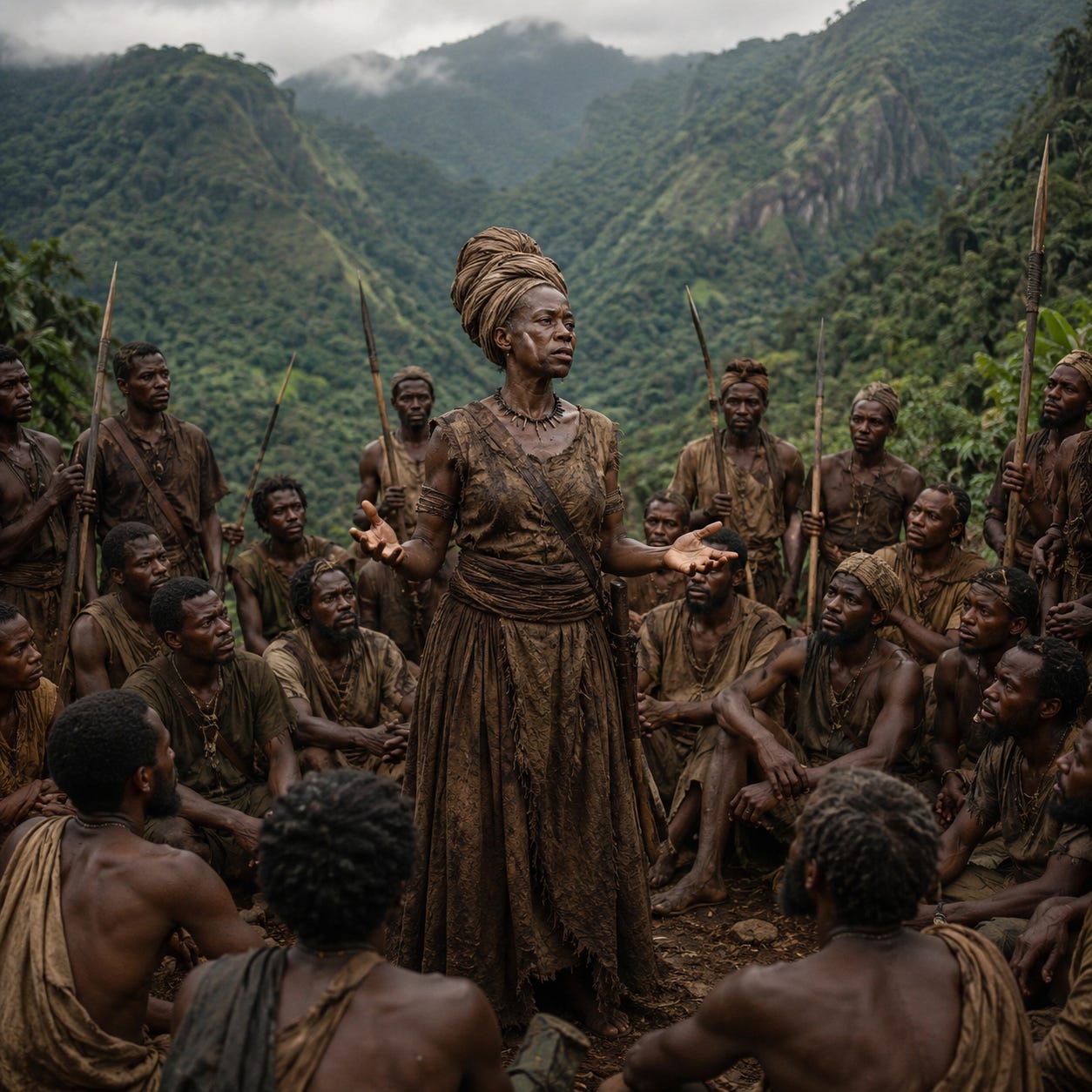
There are some people in history who become larger than biography. Nanny became something else entirely. A symbol. A warning. A shield. A spiritual force. A mother of freedom itself.
According to oral history, Nanny was believed to have been born among the Asante people of present day Ghana before arriving in Jamaica during the brutality of the transatlantic slave trade. Much of what is known about her survives not through official colonial records, but through oral storytelling passed down across generations of Maroons.
That alone says something profound about Jamaica.
Some nations preserve history through monuments. Jamaica often preserves it through people.
Nanny led the Windward Maroons during the First Maroon War, helping formerly enslaved Africans build free communities in the mountains of eastern Jamaica. These communities were not simply hiding places. They were acts of defiance. Entire societies carved into rugged terrain by people determined never to return to bondage.
The British Empire, then one of the most powerful forces on earth, struggled repeatedly to defeat them.
The Maroons understood the mountains better than the soldiers sent to destroy them. They used camouflage, guerrilla warfare, coded communication through the abeng horn, and intimate knowledge of Jamaica’s landscape to outmaneuver colonial forces repeatedly.
British soldiers feared the forests. Feared the silence. Feared the unseen.
Stories spread that the trees themselves had come alive.
One oral account tells of a British soldier resting against what he believed was a tree, only for the figure behind him to emerge silently from camouflage and strike. Whether every story happened exactly as told almost misses the point. What mattered was what the stories represented. The British feared the mountains because the mountains belonged to the Maroons.
And at the center of that fear stood a woman.
The Warrior Mother
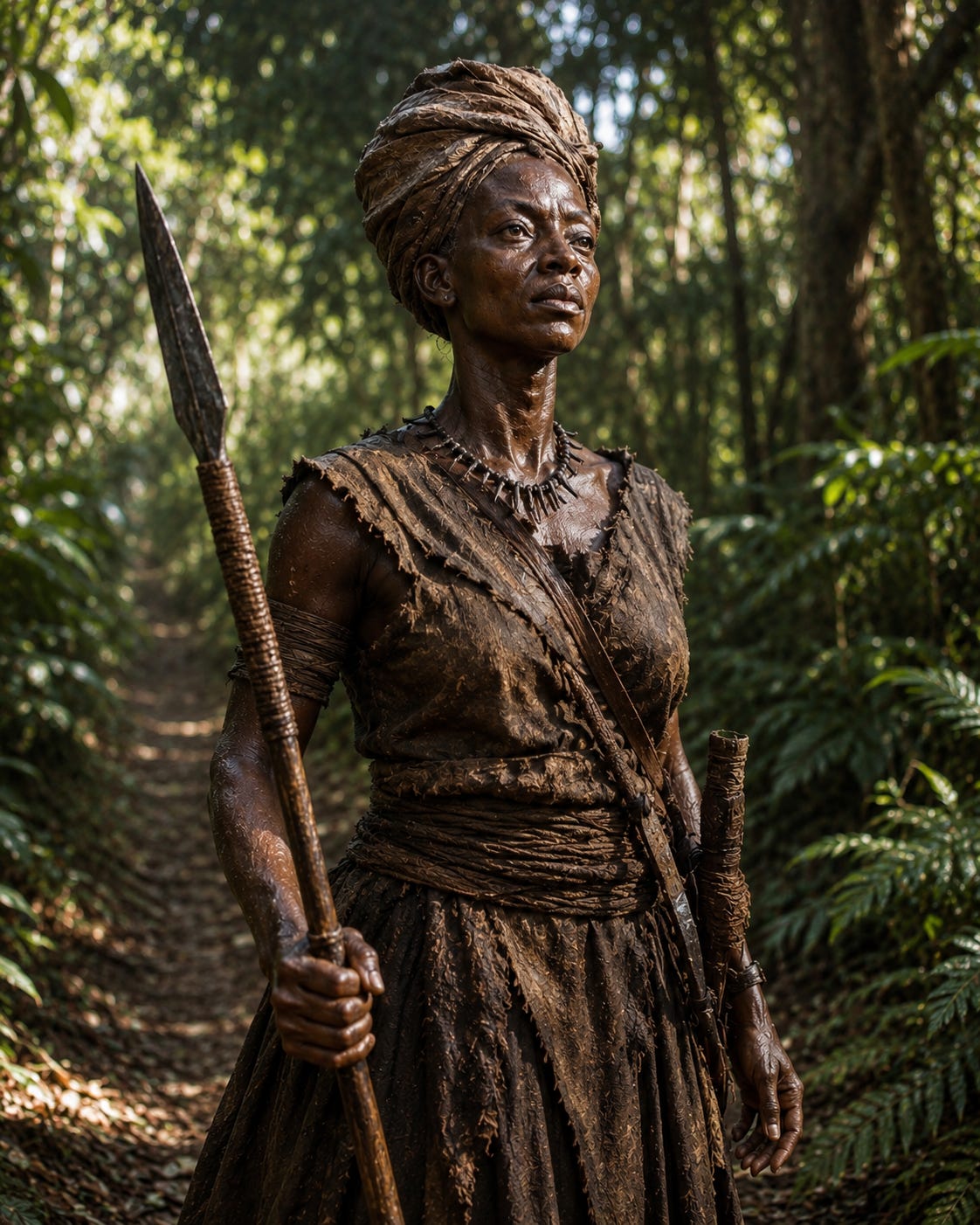
Maroon oral tradition described Nanny as spiritual, strategic, fearless, and deeply connected to the unseen dimensions of life. Legends claimed she could catch bullets and send them back toward attackers. Other stories described her use of herbs, psychological warfare, and tactics that left British soldiers terrified long before battles even began.
Historians may debate the literal truth of such stories, but their importance lies elsewhere. The people believed she was protected because she represented something sacred.
The survival of her people.
In many ways, Nanny embodied the highest form of Caribbean motherhood. Protective but fierce. Spiritual but practical. Loving but uncompromising when survival demanded strength.
She was strategist and nurturer at once.
One Maroon legend tells of a period when starvation threatened the community and surrender seemed close. According to oral tradition, Nanny dreamed of three pumpkin seeds, planted them, and saved her people from famine. The story survives not merely because of miracle, but because Jamaicans have always understood motherhood as the ability to provide life even during impossible circumstances.
This is why her story still resonates so deeply in Jamaica today.
Across the island, mothers continue to carry enormous weight quietly and often invisibly. Jamaican mothers have long worked markets before sunrise, prayed over children before school, stretched impossible budgets, sent barrels from foreign, raised grandchildren while parents migrated abroad, defended communities, built churches, held families together after storms, and somehow still found the strength to encourage others.
The architecture of Jamaican life has often rested on women whose names never entered textbooks.
That reality connects directly back to Nanny.
The Mountains That Protected Freedom
Nanny’s leadership was not abstract politics. It was deeply tied to land, family, safety, food, shelter, and belonging. The Maroons farmed, traded, defended territory, and built communities in the mountains.
They understood something modern Jamaica still wrestles with today.
Freedom means little without stability.
Stability means little without land.
And land means little if communities are divided against themselves.
There is a reason Jamaicans speak emotionally about owning property.
A house in Jamaica is rarely just a house.
It is proof that sacrifice meant something.
It is protection against uncertainty.
It is a place where grandchildren may one day return.
It is dignity.
The phrase “a piece of the rock” carries emotional weight because this island has always been fought over physically, economically, spiritually, and psychologically. For many Jamaicans, home ownership represents far more than financial success. It represents rootedness. Continuity. A declaration that one’s family belongs somewhere permanently.
Nanny understood the importance of protected space long before the language of modern real estate ever existed.
When the British finally signed treaties with the Maroons in 1739 and 1740 after years of failed military campaigns, land formed part of the agreement. The land granted to Nanny and her followers eventually became Moore Town, a community that still exists today.
That continuity matters.
It means the struggle was not only about escape.
It was about permanence.
The Mother Spirit of Jamaica
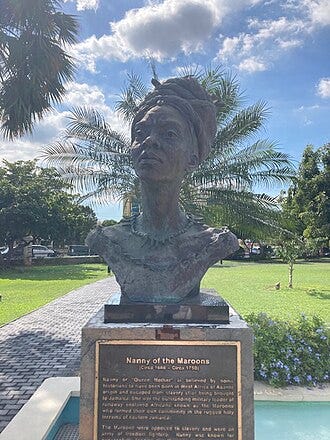
Too often, modern society celebrates freedom while neglecting the conditions needed to sustain it. Nanny appeared to understand that freedom required territory, unity, spirituality, memory, and collective responsibility.
Jamaica still needs those lessons.
The island continues to battle division, political tribalism, violence, economic pressure, migration, social mistrust, and the quiet poison Jamaicans often call bad mind. The instinct to tear each other down rather than build together has weakened communities across generations.
But Jamaica’s greatest moments have usually come when people protected each other instead of competing destructively.
After hurricanes.
During hardship.
In districts where neighbours still check on elderly residents.
In churches where food is quietly shared.
In communities where people still say, “Mi deh yah fi yuh.”
That spirit is part of the deeper inheritance Nanny represents.
Not simply resistance against external oppression, but resistance against internal collapse.
The enemy that divides communities does not always arrive wearing uniforms. Sometimes it arrives through envy, hopelessness, corruption, selfishness, or the slow erosion of trust between neighboursended families.
By women who preserved culture.
By women who transformed survival into community.
By women who taught children to stand upright even when the world bent against them.
On this Mother’s Day, Jamaica does not merely celebrate motherhood as affection. It celebrates motherhood as nation building.
And perhaps that is why Queen Nanny still matters so deeply.
Because in many ways, Jamaica is still living inside the freedom she fought to protect.
Sources and Historical References
This article draws on a combination of Jamaican historical records, Maroon oral tradition, academic research, and publicly recognised cultural depictions of Queen Nanny of the Maroons.
Primary historical and cultural references include:
Jamaican National Heritage Trust archives on Queen Nanny and the Windward Maroons
Oral histories preserved within Maroon communities in Moore Town and eastern Jamaica
Research on the First Maroon War and 18th century British colonial records
Public imagery associated with Jamaica’s National Hero designation of Nanny of the Maroons
The official depiction of Nanny featured on the Jamaican $500 note
Historical writings on Akan influence and Maroon resistance culture in Jamaica
Cultural studies examining Nanny’s role as military strategist, spiritual leader, and symbol of African resistance in the Caribbean
Visual material accompanying this article includes generated historical reconstructions inspired by Jamaican cultural depictions, Maroon heritage, and the landscape of Jamaica’s Blue Mountains.