


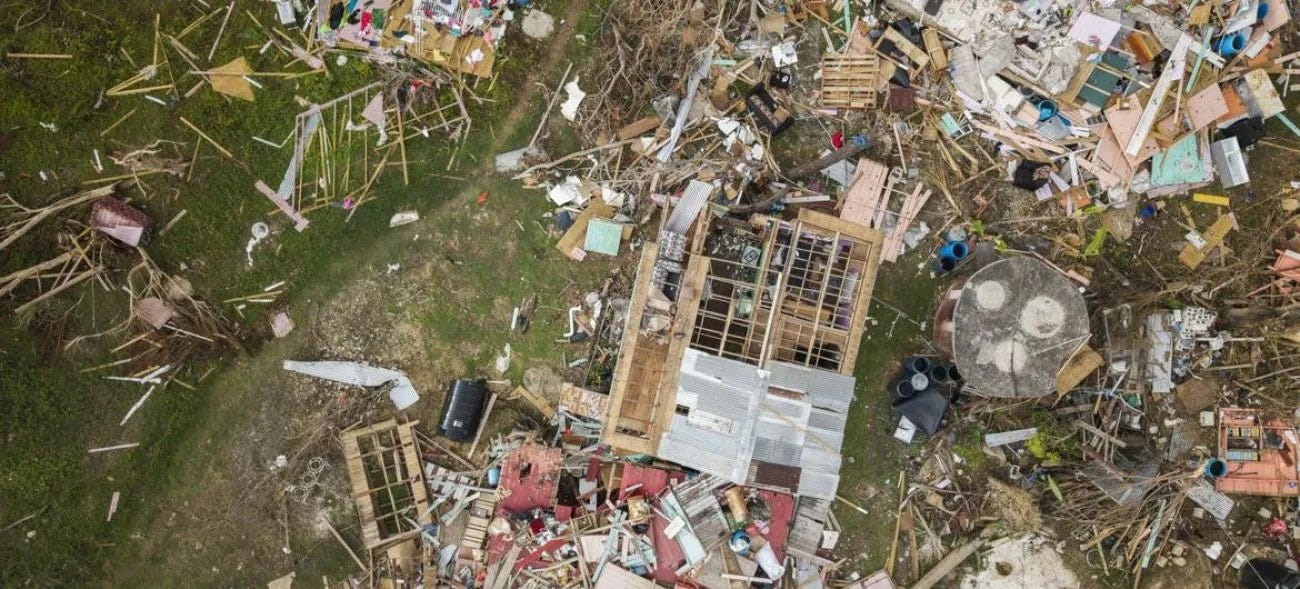
Why the National Reconstruction and Resilience Authority matters, why it exists, and what “building back better” must truly mean
Jamaica has arrived at one of those rare, uncomfortable moments in national life when the future presses itself into the present. National Reconstruction and Resilience Authority (NARA) is not just another institution added to the alphabet soup of government. It is a response to exposure—exposure of systems, assumptions, and long-standing weaknesses that Hurricane Melissa did not create, but brutally revealed.
Disasters do that. They do not invent fragility; they illuminate it.
When the Government announced that NARA would lead and fast-track national reconstruction efforts, the reaction was predictable. Applause from some, suspicion from others, and impatience from many. Why did it take weeks? Why not days? Why not before the storm? These questions are understandable, but they risk missing the more important issue: what kind of authority Jamaica actually needs now, and whether we have the maturity to let it work properly.
I support the creation of NARA. I did so early, publicly, and unequivocally. Shortly after Hurricane Melissa, I called for the establishment of a dedicated body—high-level, analytical, delivery-focused—to assess, govern, monitor, and ultimately execute recovery at national scale. Not as a talking shop. Not as a symbolic gesture. But as a mechanism capable of holding complexity without collapsing under it.
That distinction matters.
Why NARA exists: emergencies end, reconstruction does not
Jamaica already has competent emergency institutions. Office of Disaster Preparedness and Emergency Management (ODPEM) has guided the country through hurricanes, floods, fires, and crises for decades. Its mandate—preparedness, early warning, response, coordination—is essential and must remain so.
But Hurricane Melissa exposed a truth many professionals already understood: emergency response and national reconstruction are not the same discipline.
Emergency response is about speed, coordination, and saving lives in the moment. Reconstruction is about systems, sequencing, capital allocation, governance, standards, and long-term risk reduction. It is about decisions that lock in consequences for generations.
Trying to rebuild a country through emergency structures alone is like trying to run a marathon with sprinting spikes. You might move quickly at first, but you will not finish well.
NARA exists because Jamaica crossed a threshold. Damage measured in billions, systemic infrastructure failure, prolonged loss of power and communications, and a recovery burden that far exceeds the design limits of normal ministerial operations. This was not a “clear-up and carry on” event. It was a national reset moment.
Speed versus composure: a false choice
Much has been made of the perceived slowness of the Government’s response in operationalising NARA. I understand the frustration. People were hurting. Communities were dark. Businesses were stalled. Lives were disrupted.
But speed without structure is not urgency—it is recklessness.
I have been in environments where the pressure to “move now” was absolute. After the terrorist attack at Westminster in 2017, I stepped into a programme environment moving at what felt like 300 miles per hour. Multiple projects already in flight. Political pressure at its highest. Security, public safety, heritage, and continuity all colliding at once. There was no luxury of pause—but there was still a necessity for composition.
The lesson from those experiences is simple: you can move fast and still get it wrong.
Post-disaster reconstruction is unforgiving. Decisions taken in haste become constraints that last decades. Procurement shortcuts harden into weak assets. Poor governance choices become scandals. And communities lose trust when promises outrun delivery.
Moving too slowly is dangerous. Moving too quickly is equally so. What Jamaica needs—and what NARA must embody—is deliberate urgency.
Composition matters more than celebrity
One of my deepest hopes for NARA is that its composition reflects capability rather than familiarity.
This is not a moment for “known names” alone. It is a moment for the right people: individuals who understand capital programmes, infrastructure systems, risk, governance, climate adaptation, and human impact—often simultaneously. People who are technically strong, yes, but also human, grounded, and humble enough to listen.
Large-scale recovery is not just an engineering challenge. It is a social one. Lives are involved. Trauma is present. Inequality is exposed. Institutions must operate with authority and empathy.
Humility is not weakness here; it is a professional requirement.
What Melissa really taught us
Hurricane Melissa was devastating—but the storm itself was not the most alarming part. The aftermath was.
The loss of telecommunications. The collapse of connectivity. Prolonged power outages. Fragmented information. Centralised systems unable to reach local realities. These failures compounded the disaster long after the winds subsided.
Jamaica lives in a seismic zone. Earthquake activity is regular, even if rarely felt. Climate systems are changing faster than planning assumptions. Extreme events are no longer exceptional; they are cyclical. Normalising risk because “it hasn’t happened yet” is no longer defensible.
Preparedness, therefore, cannot mean public advice alone—duck under tables, store water, charge phones. Those are individual actions. Necessary, but insufficient.
The real challenge is national preparedness: systems that still function when stressed.
Building back better: beyond slogans
“Building back better” is an attractive phrase. It is also dangerously empty if not defined properly.
Building back better does not mean simply rebuilding stronger structures in the same vulnerable patterns. It does not mean adding more power stations without addressing distribution resilience. It does not mean faster approvals without better standards.
True resilience looks systemic.
It means redundancy, not just capacity. Multiple internet providers. Satellite backup for critical services. Hardened telecommunications infrastructure treated as a utility, not a luxury. Power resilience for key government buildings, hospitals, shelters, and schools—not as exceptions, but as standard practice. Solar energy integrated as baseline infrastructure, not pilot projects. Underground electrical systems where feasible, particularly in dense urban areas.
It means decentralisation—not fragmentation, but localised capability. One of the clearest lessons from Melissa was that when central systems failed, it was communities, churches, and non-governmental organisations that responded first. Government mobilisation at the local level lagged badly.
That cannot happen again.
Local response capacity must be embedded, resourced, trained, and empowered. Central coordination remains vital—but it must not be the single point of failure.
The governance challenge NARA must confront
NARA has been established with extraordinary powers for a reason. Jamaica’s normal procurement and investment rules are designed for accountability in stable conditions, not capital reconstruction at emergency scale.
As Andrew Holness rightly acknowledged, a fragmented, ministry-by-ministry approach would cannibalise operational capacity and slow recovery to a crawl. Reconstruction of this magnitude requires a dedicated apparatus with authority to integrate planning, financing, procurement, environmental standards, and delivery.
But extraordinary powers demand extraordinary discipline.
NARA’s success will hinge on governance clarity, transparency, and competence. Monitoring funds in and out. Evaluating outcomes honestly. Sequencing projects intelligently. Knowing when to intervene and when to step back.
This is not about bypassing accountability. It is about designing accountability that works at scale and speed.
What is needed from NARA—without giving everything away
NARA does not need to do everything. In fact, trying to would be its undoing.
What it must do is set direction, enforce standards, coordinate intelligently, and ensure that reconstruction produces net national gain, not just visible activity. It must understand risk as a system, not as isolated projects. It must prioritise decisions that reduce future exposure, even when they are politically uncomfortable.
And it must attract the kind of expertise that understands both delivery reality and national consequence.
There is more to say here—but not everything needs to be said publicly. Serious work attracts serious conversations.
Fear as information, not paralysis
Fear has a role. On its positive side, fear tells us to prepare—to avoid repeating failure. Jamaica should not be ashamed of being shaken by Melissa. It should be ashamed only if it learns nothing from it.
Preparedness at national level means assuming uncomfortable scenarios: multi-storey collapses, fires, water contamination, hospital overload, road failures, regional isolation. Planning for these realities is not pessimism; it is responsibility.
An alert, representative, ready-for-action organisation is therefore the first component of preparedness. Materials matter, but response capacity matters more. Melissa proved that delay costs more than money.
This must begin now—but it must be done right
NARA is now operating as a department of Cabinet. Roles are being advertised. Structures are forming. The window for setting culture, standards, and expectations is open—but it will not remain so for long.
This is the largest rebuilding effort in Jamaica’s modern history. It deserves seriousness, competence, and moral clarity. Not politics. Not posturing. Not panic.
Jamaica has the talent. The expertise exists—locally and globally. The question is whether we will empower it properly.
NARA is not the solution by itself. But it can be the platform through which solutions are delivered—if it remains focused, disciplined, and brave enough to choose long-term resilience over short-term applause.
This is the moment. We should not waste it.