


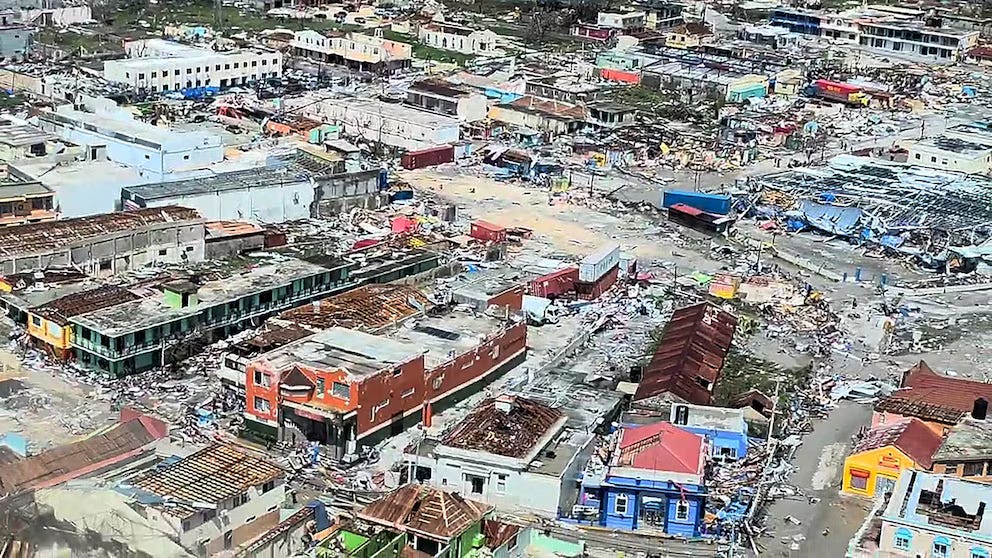
There is a particular moment after every great storm when the noise subsides, the winds retreat, and what remains is not drama, but exposure. Rooflines torn open. Roads fractured. Systems—once assumed solid—revealed as thin, brittle, provisional. It is in that moment, not during the tempest itself, that a country discovers what it is really made of.
Hurricane Melissa did not simply damage Jamaica. It revealed Jamaica.
The darkness that followed was not only the absence of electricity. It was the absence of connectivity, of coordination, of resilience where it was most assumed. Mobile networks fell silent. Internet access disappeared. Power outages lingered. And while the hurricane was fierce, it was the aftermath—the long, grinding days without light, water, communication, or clear direction—that left the deeper impression.
It is from this exposed landscape that the National Reconstruction and Resilience Authority (NARA) has emerged.
Not as an ornament of government. Not as a reactionary gesture. But as an acknowledgement that rebuilding a country is not the same thing as managing an emergency.
Why NARA exists
Jamaica is not short of institutions. Nor is it short of experience. For decades, the Office of Disaster Preparedness and Emergency Management has guided the nation through storms, floods, and crises with professionalism and commitment. Its role—warning, sheltering, coordination, immediate response—is indispensable.
But Hurricane Melissa crossed a line.
This was not a moment for patching, clearing, and returning to normal. Normal, it turns out, was part of the problem. The scale of damage, the systemic failures, the prolonged recovery period all pointed to a truth that is uncomfortable but necessary: the structures designed for everyday governance are not designed for national reconstruction.
Rebuilding is slower than rescue. More complex than response. It demands decisions that stretch far beyond sandbags and shelters. It involves land use, housing standards, infrastructure logic, financial sequencing, climate adaptation, and governance at a scale that does not sit neatly within ministerial silos.
NARA exists because Jamaica reached the limits of what its existing architecture could reasonably carry.
The impatience—and the danger—of speed
In the weeks following Hurricane Melissa, calls grew louder for faster action. Why did it take time to stand up NARA? Why not move immediately?
The question is understandable. But it carries a risk.
There is a temptation, after disaster, to confuse speed with effectiveness—to believe that motion alone equals progress. Yet those who have worked inside complex recovery programmes know a quieter truth: haste has a habit of hardening mistakes.
There are environments where urgency is absolute—where dozens of projects are already running, the stakes are national, and delay feels intolerable. In one such environment following the 2017 Westminster attack, programme leadership involved establishing order, governance, and delivery discipline amid intense pressure and overlapping priorities.
“After working on national security programmes following the 2017 terrorist attack at Westminster, near the Houses of Parliament in the United Kingdom, the aftermath of Hurricane Melissa felt disturbingly familiar — not because the events were the same, but because of the shock they leave behind.”
— Dean Jones, founder of Jamaica Homes
In parts of Jamaica after Hurricane Melissa, communities were torn open, systems went down, and landscapes became unrecognisable—creating a sense that a single event had ripped through the fabric of normal life.
In such moments, the instinct is to run. To build immediately. To act first and think later. But running without composition rarely ends well.
Reconstruction is not forgiving. The wrong governance structure, rushed procurement, or poorly sequenced decisions can lock a country into weakness for decades. Moving too slowly is dangerous. But moving too quickly—without clarity, capability, and humility—can be worse.
What Jamaica needs now is not haste, but deliberate urgency.
The people matter more than the structure
Authorities are easy to announce. Institutions are harder to make work.
The success of NARA will not be determined by its title, its powers, or its reporting line. It will be determined by its people.
This moment does not require familiar names for comfort. It requires the right minds for complexity. People who understand infrastructure not as isolated projects, but as living systems. Who grasp that capital, risk, climate, and community are intertwined. Who can hold technical precision in one hand and human consequence in the other.
After disaster, humility becomes a professional skill. Lives are disrupted. Trauma lingers. Communities are raw. The work demands confidence, yes—but also restraint, empathy, and listening.
Rebuilding a country is not an act of dominance. It is an act of care, executed with authority.
What Melissa really taught us
The storm was severe. But the lesson was systemic.
Jamaica was not undone by wind alone. It was undone by fragility in the networks that were meant to endure stress. Telecommunications failed. Power distribution faltered. Centralised systems struggled to reach local realities. When government response slowed, it was communities, churches, and non-governmental organisations that moved first.
This is not an indictment; it is a signal.
We live in a seismic zone. Earthquake activity is frequent, even when unnoticed. Weather systems are intensifying. Risk is no longer occasional—it is structural. What was once extraordinary is becoming cyclical.
Preparedness, therefore, cannot stop at individual behaviour. Sturdy tables and bottles of water matter. But they are not enough.
The real work lies in national systems that continue to function when conditions are no longer normal.
Building back better, properly understood
“Building back better” is an attractive phrase. But unless it is defined with discipline, it becomes a slogan rather than a strategy.
Building back better does not mean rebuilding the same vulnerabilities with stronger materials. It does not mean more power stations without resilient distribution. It does not mean faster approvals without better outcomes.
True resilience is systemic.
It means redundancy where failure is unacceptable. Multiple internet pathways. Satellite backup for critical services. Telecommunications treated as essential infrastructure, not commercial convenience. Power resilience embedded into hospitals, shelters, schools, and government buildings as standard practice. Solar energy integrated not as experiment, but as baseline.
It means decentralisation that empowers local response without fragmenting national coordination. Melissa showed us the cost of a purely centralised model when communication fails. Local capacity must be real, resourced, trained, and trusted.
Resilience is not a single project. It is a way of thinking.
The governance challenge ahead
NARA has been granted extraordinary powers because ordinary rules are not designed for extraordinary circumstances. Jamaica’s existing procurement and investment frameworks are appropriate for stable times, but they strain under the weight of national reconstruction.
A fragmented, ministry-by-ministry approach would exhaust capacity and slow progress to a standstill. Reconstruction at this scale requires integration—planning, financing, procurement, environmental standards, and delivery aligned within a single framework.
But power alone will not deliver success.
NARA must be disciplined, transparent, and rigorous. It must monitor funds honestly. Evaluate outcomes without sentiment. Sequence projects with intelligence. And resist the temptation to confuse visibility with value.
This is not about avoiding accountability. It is about designing accountability that works at speed.
What must be asked of NARA
NARA does not need to do everything. In fact, it must not.
Its role is to set direction, enforce standards, coordinate effectively, and ensure that reconstruction reduces future risk rather than merely repairing past damage. It must understand where intervention adds value—and where restraint does.
There is more to this than can be set out publicly. Serious institutions invite serious engagement. The deeper work will be done quietly, in rooms where expertise matters more than noise.
Fear as a form of intelligence
Fear, properly understood, is not paralysis. It is information.
On its positive side, fear tells us to prepare—to acknowledge vulnerability and respond with intention. Jamaica should not be embarrassed by being shaken. It should only fear repeating the same mistakes.
Preparedness at national scale means imagining uncomfortable realities: collapsed buildings, fires, contaminated water, damaged hospitals, fractured roads, isolated communities. Planning for these is not pessimism. It is responsibility.
An alert, representative, ready organisation is the first act of preparedness. Materials matter, but response capacity matters more. Melissa proved that delay compounds loss.
A moment that will not wait
NARA is now forming. Roles are being defined. Culture is being set—whether consciously or not. The opportunity to establish clarity, integrity, and seriousness is brief.
This is the largest rebuilding effort in Jamaica’s modern history. It demands more than urgency. It demands wisdom.
Jamaica has the expertise. It has the talent. What remains to be seen is whether that talent will be empowered, trusted, and allowed to work.
There is a saying Jamaicans know well: “Wi likkle but wi tallawah.” It is not bravado. It is a reminder that strength is not measured by size, but by resolve and organisation. Small countries survive great shocks not by speed alone, but by judgment.
NARA will not save Jamaica by itself. But it can provide the structure through which Jamaica saves itself—carefully, intelligently, and with an eye firmly on the future.
Moments like this do not come often.
We should be very careful not to waste it.