

No Pension, No Pause: What America’s Retirement Crisis Reveals About Jamaica’s Future
As U.S. retirement savings falter, Jamaica’s reliance on property, family support, and informal income exposes a deeper, more fragile model of financial security in later life


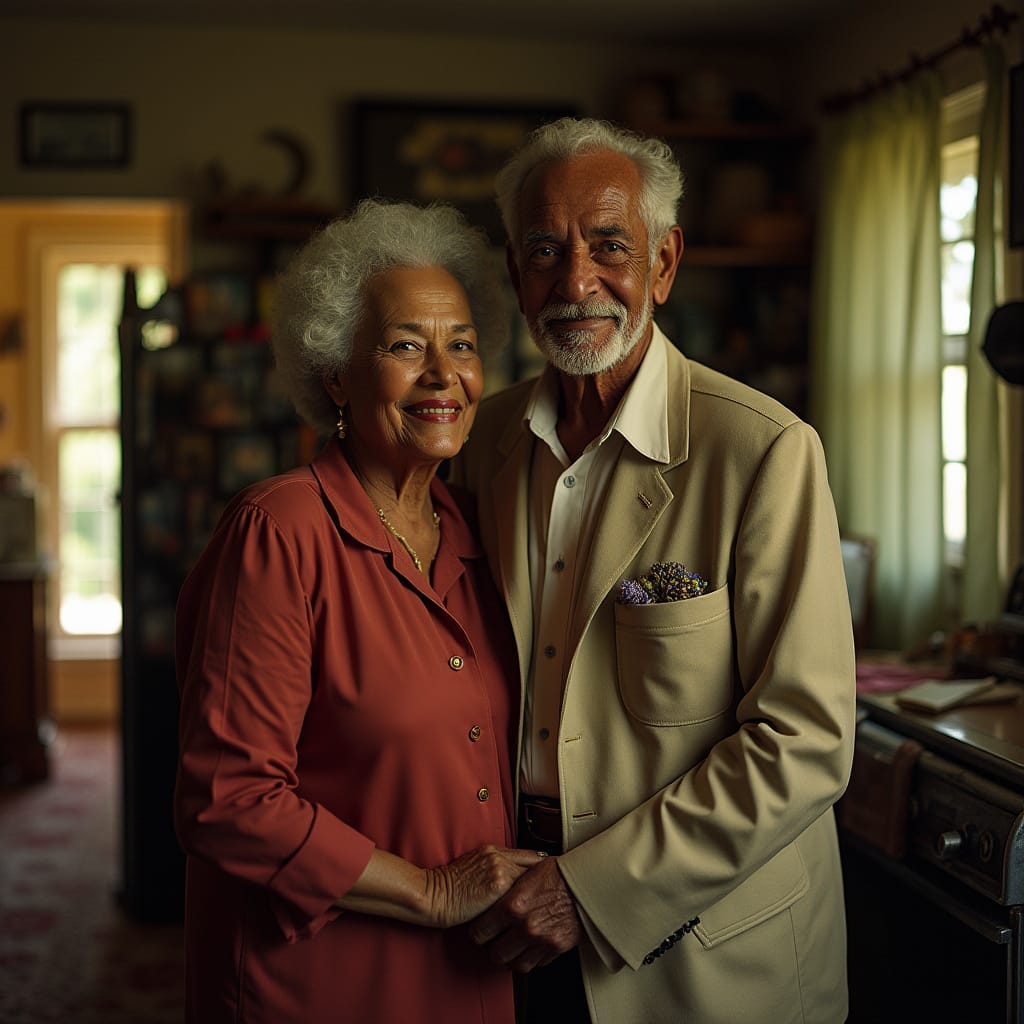
Nearly half of working-age Americans have no retirement account, exposing a widening gap between work and financial security in later life
In Jamaica, the absence of structured pension systems makes the issue more acute, with many relying on informal survival models instead
The National Insurance Scheme (NIS) offers limited support, but was never designed to fund full retirement
Rising living costs are forcing younger generations to prioritise immediate survival over long-term savings, both globally and locally
Property ownership remains Jamaica’s primary retirement strategy, yet growing affordability pressures are putting that pathway at risk
Without pensions, insurance, or assets, a new generation may face later life with fewer options, raising urgent questions about how retirement is defined and sustained
A new report highlighted by Fortune finds that nearly half of working-age Americans do not have a retirement account, with a significant share of people approaching their 60s holding little or no savings. The finding speaks directly to the United States, but its implications extend well beyond it. For Jamaica and much of the Caribbean, where formal retirement systems are thinner and personal savings patterns less structured, the issue is not emerging. It is already here.
A global shift in how people approach retirement
For decades, retirement followed a familiar script. You worked, you contributed to a pension, and you stopped. That model is now under strain across advanced economies. Rising living costs, insecure employment patterns, and shifting cultural attitudes have quietly reshaped expectations. Younger generations, particularly those now entering or moving through the workforce, are not engaging with retirement planning in the same way as those before them. Some cannot afford to. Others do not trust that the systems will hold. Many simply prioritise the present because the future feels increasingly uncertain.
The Fortune data reflects this shift in stark terms. It shows a population moving toward later life without the financial structures that once underpinned retirement security. But if the United States represents a system under pressure, Jamaica represents something different. It is a system where those structures were never fully built in the first place.
The limits of Jamaica’s safety net
Jamaica does have a national framework in the form of the National Insurance Scheme. It provides a basic pension for those who qualify. But its design has always been modest. It was never intended to fully replace income in retirement. It was designed as support, not as a solution.
This distinction is critical, yet it is not always widely understood. Many Jamaicans assume, or hope, that NIS will carry more weight than it realistically can. In practice, the payouts are limited. They can assist with essential expenses, but they do not sustain a comfortable standard of living. The result is a gap between expectation and reality, one that becomes visible only when people approach retirement age.
In countries with more mature pension systems, that gap is often filled by employer schemes or personal retirement accounts. In Jamaica, those alternatives exist, but they are not universally accessible. Formal pension coverage remains uneven, particularly for those working outside structured employment.
Insurance and the absence of a financial buffer
The issue extends beyond pensions. Insurance, another pillar of long-term financial security, is also unevenly distributed. House insurance and life insurance are not standard features of financial planning for large segments of the population.
In many cases, insurance is only obtained when it is required. Mortgage holders, particularly in urban areas such as Kingston, are often mandated by lenders to insure their properties. Outside of those arrangements, coverage drops sharply. For many households, the cost of insurance is perceived as prohibitively high. It becomes an expense that is difficult to justify against immediate needs.
This creates a fragile financial position. Without insurance, a single event, whether a storm, a fire, or a health crisis, can erase years of effort. Without pensions, there is no structured income to fall back on. Without savings, there is no cushion. Each gap reinforces the others.
There is also a cultural dimension. Some individuals express scepticism about insurance altogether, preferring to rely on personal savings or informal support networks. The logic is often simple. Why pay into a system that may never return full value, when those funds could be kept and used directly if needed. It is a view shaped by lived experience, but it carries risk, particularly in a country exposed to climate and economic shocks.
Retirement without retirement
Perhaps the most defining feature of the Jamaican context is that retirement, as understood in wealthier economies, is not always the end goal. For many, there is no clear point at which work stops. Instead, work changes form.
Older Jamaicans often remain economically active well into later life. They run small shops, operate taxis, manage rental rooms, or engage in informal trade. These activities are not simply hobbies or lifestyle choices. They are essential sources of income. The idea of a complete withdrawal from work is, for many, neither practical nor expected.
Family plays a central role in this model. Support from children or relatives, particularly those living abroad, can supplement income. Remittances form a quiet but significant part of the financial landscape. At the same time, homeownership reduces living costs, removing the burden of rent that is common in other countries.
This system, built on family, property, and ongoing activity, has functioned for generations. It is resilient in its own way. But it is also under pressure.
Property as the backbone of financial security
In Jamaica, property has long served as the closest equivalent to a pension. Owning a home provides stability. It also creates options. A single property can be adapted over time, subdivided, rented, or extended to accommodate multiple households.
This flexibility has allowed families to generate income and support themselves across generations. It has also anchored wealth in a tangible form, one that is less dependent on formal financial systems.
From a real estate perspective, this is not incidental. It is central. Property is not just about shelter. It is about long-term security, income potential, and resilience. It is, in many cases, the primary asset that individuals rely on as they age.
A changing landscape
The challenge now is that the conditions supporting this model are shifting. Property prices have risen significantly in recent years, particularly in and around Kingston. Construction costs have increased. Access to financing remains uneven. For younger Jamaicans, the pathway to ownership is becoming more difficult.
At the same time, broader economic pressures continue to build. The cost of living has increased globally, and Jamaica is not immune. Food, transportation, and utilities place constant strain on household budgets. In this environment, saving for the long term becomes harder. Immediate needs take priority.
The result is a growing risk that a new generation may reach later life without the assets that supported those before them. Without property, without pensions, and without sufficient savings, the traditional fallback options begin to narrow.
A perspective from the ground
Dean Jones, founder of Jamaica Homes, has been tracking these trends over time. From his vantage point within the real estate sector, the shift is visible not just in data, but in behaviour.
“This has been a concern for a long time,” he said. “It is not just Jamaica. It is global. Younger generations are not engaging with retirement in the same way. Partly because they cannot. The cost of living has expanded so much that long-term planning often takes a back seat to getting through the month.”
He notes that the Jamaican context adds additional layers. “In the United States, you have a structured system that people are now stepping away from. In Jamaica, that structure was never as strong. So the consequences show up differently, but they are just as real.”
On insurance, he points to a similar pattern. “A large percentage of people do not have house insurance or life insurance. It is not something people naturally do unless it is required. For many, the cost is simply too high relative to income.”
The result, he argues, is a system that relies heavily on informal solutions. “People depend on family, on property, on small income streams. They keep working. There is no real stop. That is something people outside Jamaica often do not fully appreciate.”
That reality is visible across sectors, including in parts of the public service, where individuals often remain in roles well into later life. It is sometimes framed as a question of generational access, but the underlying issue is more complex. For many, stepping away is not simply a matter of choice. Without sufficient savings, pensions, or alternative income, continuing to work is not optional. It is necessary.
The wider implications
What emerges from this picture is not a single crisis, but a convergence of pressures. Retirement systems are under strain globally. In Jamaica, where those systems are less developed, the strain is felt earlier and more directly.
This does not mean collapse is inevitable. It does mean that assumptions need to be revisited. The idea that retirement will be funded by a single source, whether a pension, a property, or a family network, is increasingly fragile. Each element plays a role, but none is sufficient on its own.
For policymakers, the challenge is to strengthen formal systems without ignoring the realities of how people actually live and work. For individuals, the challenge is to navigate a landscape where traditional pathways are less certain.
A moment for clarity
The Fortune report may focus on the United States, but its significance lies in what it reveals about a broader trajectory. People are reaching later life without the financial foundations that previous generations relied on. In Jamaica, that trajectory is already visible.
The conversation, then, is not simply about retirement accounts. It is about how societies organise security over a lifetime. It is about the balance between formal systems and informal practices. And it is about whether the structures in place today are sufficient for the realities of tomorrow.
In Jamaica, the answer remains uncertain. What is clear is that the old model, built on steady employment, accessible property, and predictable costs, is under pressure. What replaces it will shape not just retirement, but the broader question of how people live, work, and age in the years ahead.
This is such a powerful wake-up call. It’s clear that as the old systems shift, our greatest assets are our faith, our families, and our ability to support one another. We have to keep building our own foundations and looking out for our neighbors. Thank you for shedding light on this we truly must keep on keeping on! ❤️ 🫂🌱I love you brother! 🙏🏾❤️🙏🏾
I did an intern with Sylbourne Sydial with Facikitatirs for a Better Jamaica. I attended an Economic forum 2009 era, and the professor from the Uni in Jamaica said Kingston was going to be the future Harlem. I personally would love to live there. But ya know Only The most High knows. I still need to make it to the Phillipines so I can see where my heart really is… lol.