

Three Hills and the Changing Face of Rural St. Mary
How a quiet St. Mary community became part of a larger story about land, security, development, migration, and the changing future of Jamaica’s north coast

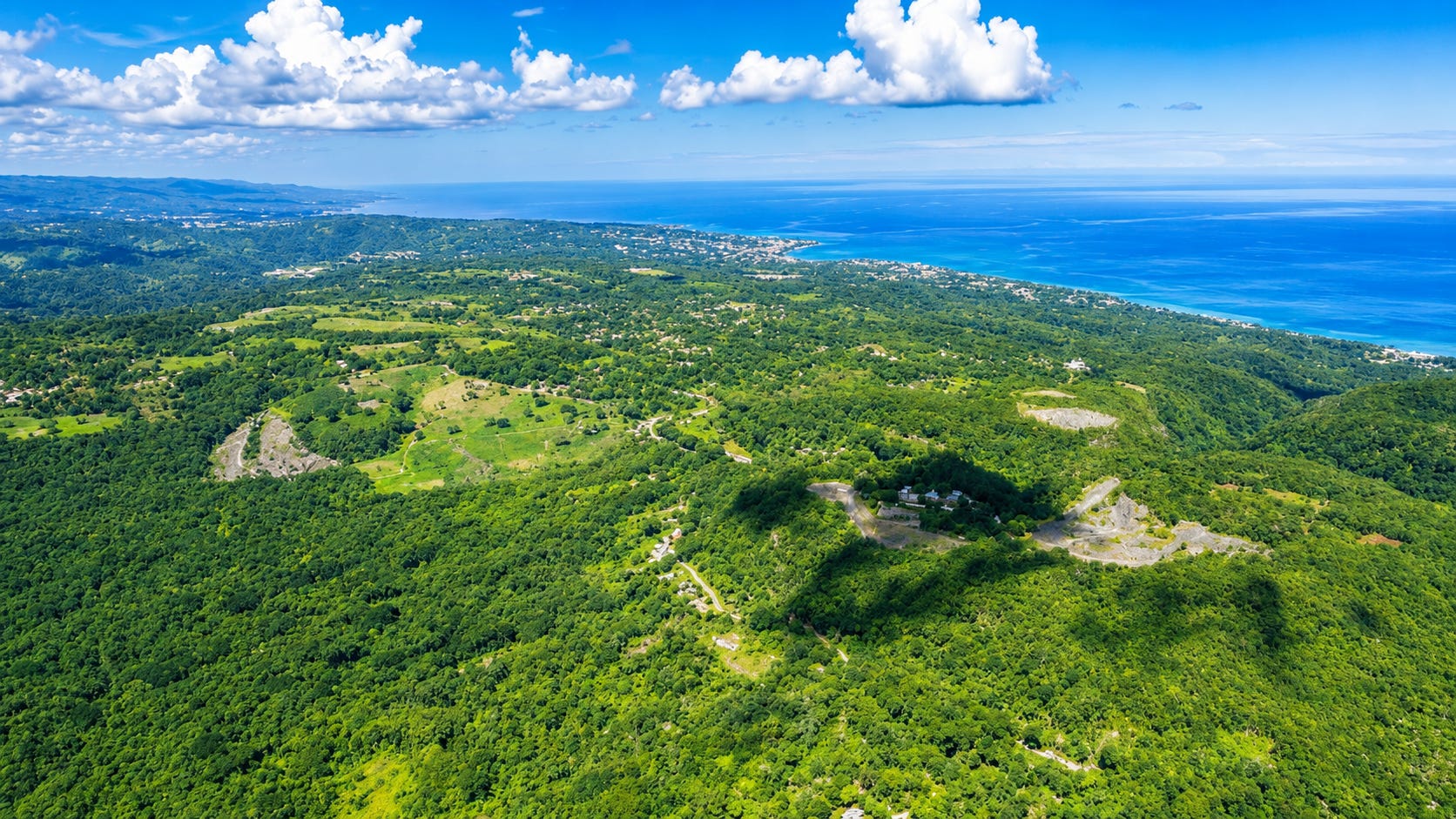
There are places in Jamaica that rarely make national headlines until something changes. Sometimes it is a new highway. Sometimes it is violence. Sometimes it is investors quietly arriving before the rest of the country notices what is happening. Free Hill in St. Mary is becoming one of those places.
For decades, Free Hill existed largely outside the national conversation. Tucked into the hilly interior near Three Hills and Port Maria, the district was known more for farming, family land, church life, and rural tradition than for large scale development or major investment attention. Yet over the last several years, the area has increasingly appeared in news reports tied to crime investigations, curfews, infrastructure projects, land titling discussions, water access, housing expansion, and growing speculation about the future of St. Mary itself.
What is unfolding in Free Hill reflects something much bigger than one rural district. It reflects the gradual reshaping of Jamaica’s north coast economy and the slow transformation of communities once considered peripheral into places increasingly connected to investment, migration, and development pressure.
A Community Built in the Shadow of Jamaica’s Colonial Past
Like many rural settlements across St. Mary, Free Hill likely emerged from the long aftereffects of plantation Jamaica. St. Mary itself was one of the earliest areas occupied during Spanish colonisation before later becoming deeply tied to British plantation agriculture and the Atlantic slave economy.
The parish’s mountainous terrain created pockets of isolation that historically became refuge areas for formerly enslaved Africans after emancipation. Across Jamaica, communities carrying names such as “Free Town,” “Retreat,” and “Free Hill” often reflected this broader movement away from plantation centres toward interior lands where small farming communities emerged.
Over time, districts like Free Hill developed around:
• family land ownership
• banana cultivation
• small scale farming
• church centred social life
• migration ties to Kingston and overseas
St. Mary itself became nationally associated with banana production and rural agriculture for much of the twentieth century.
Even today, parts of Free Hill still carry the rhythms of rural Jamaica that once defined much of the island: winding roads, hillside homes, close family networks, informal land arrangements, and communities where people still know each other by name.
But rural Jamaica is changing.
From Isolation to Strategic Position
For years, St. Mary sat somewhat outside the main engine of Jamaica’s tourism boom. St. Ann and Montego Bay attracted the dominant investment flows while much of St. Mary remained quieter and less commercially developed.
That balance has gradually shifted.
The development of the Ian Fleming International Airport in Boscobel, improved highway access, tourism expansion along the north coast, and wider infrastructure investment have increasingly drawn attention toward St. Mary as one of Jamaica’s emerging growth corridors.
Communities once viewed as distant are now being reconsidered through a different lens:
• residential expansion
• commuter communities
• returning resident investment
• tourism spillover
• land speculation
• mixed use development potential
That changing geography matters enormously for places like Free Hill and nearby Three Hills.
As land prices rise in Ocho Rios and more established north coast areas, investors and developers naturally begin looking slightly further east where land remains comparatively cheaper and larger parcels are still available.
In many ways, this is how transformation begins in Jamaica. Quietly at first.
The Headlines That Changed Perception
While development has slowly increased, Free Hill has also appeared in national headlines for far more troubling reasons.
One of the most widely reported incidents connected to the area occurred in 2024 when gunmen reportedly posing as police officers entered a home in Free Hill and killed two men, including firefighter Gary Samuels. The murders shocked residents and drew national attention to security concerns in the district.
Subsequent curfews imposed across sections of Free Hill and surrounding communities during 2025 and 2026 further reinforced concerns about organised criminal activity and growing security pressures within parts of rural St. Mary.
Additional criminal investigations involving individuals from the area also appeared in police reports and media coverage.
These developments matter because crime changes more than safety. It changes perception. Perception influences investment. Investment shapes property values. Property values influence migration and development.
For communities trying to attract sustainable investment, security headlines can become economically damaging even when the vast majority of residents remain law abiding citizens simply trying to live peacefully.
Yet the relationship between crime and development in Jamaica is often more complicated than it appears.
Historically, infrastructure growth and rising land values can themselves create tensions inside transitioning communities. As roads improve and investment arrives, land disputes increase, speculative buying intensifies, and pressure on long standing rural systems begins to grow.
Water, Infrastructure, and the Politics of Development
At the same time Free Hill was appearing in crime headlines, another story was unfolding quietly beneath the surface: infrastructure expansion.
One widely circulated government post celebrated water access arriving to sections of Free Hill after more than three decades of waiting.
For urban Jamaicans, this may sound like a relatively small development. For rural communities, it can be transformational.
Water infrastructure changes:
• housing potential
• agricultural productivity
• land values
• mortgage viability
• commercial feasibility
• quality of life
In Jamaica, many rural properties remain difficult to finance or develop precisely because of inconsistent access to utilities and infrastructure.
Once roads, water, emergency services, and utilities improve, entirely new categories of development become possible.
That appears to be part of the larger shift now occurring across St. Mary.
Government statements in 2026 pointed to broader investment across the parish including market redevelopment, fire service expansion, infrastructure upgrades, and recognition that residential growth is now reaching deeper rural communities.
That single point may prove more important than many realise.
Deep rural Jamaica is no longer as economically disconnected as it once was.
The Land Question
One of the most revealing developments connected to the wider Three Hills and Free Hill area involved discussions surrounding land titling and structured planning initiatives for local farmers and residents.
Land remains one of the most sensitive and economically important issues in Jamaica.
Across rural districts, generations of informal family land arrangements have created challenges involving:
• probate
• inheritance disputes
• unclear ownership
• financing difficulties
• subdivision complications
• development limitations
Many rural families effectively occupy and pass down land for decades without fully regularised titles.
For investors, this creates uncertainty.
For residents, it can lock families out of formal financing systems and reduce the long term economic potential of their property.
The emergence of structured land titling discussions in areas like Three Hills signals something significant: planning pressure is increasing.
And when governments begin formalising land systems in growing districts, it often means larger scale development conversations are already underway behind the scenes.
Property, Investment, and the Future of Free Hill
The most important question is no longer whether Free Hill will change.
It already is.
The real question is what kind of change it will experience.
Recent years have seen increasing real estate marketing activity connected to nearby Three Hills and sections of the Free Hill corridor. Residential lots, commercial land, and development parcels are now appearing more frequently in listings and investment discussions.
Several forces are driving this:
• rising land prices elsewhere on the north coast
• returning residents seeking quieter communities
• migration out of Kingston
• tourism related economic expansion
• infrastructure improvements
• scarcity of affordable development land in traditional growth zones
The hills themselves are part of the attraction.
Elevated terrain offers:
• cooler temperatures
• scenic views
• reduced density
• relative privacy
• perceived lifestyle value
Increasingly, rural Jamaican communities are being marketed not simply as farming districts, but as lifestyle destinations.
That transition changes everything.
The Risk of Repeating Old Mistakes
Still, development brings its own dangers.
Across Jamaica, communities have often watched major investment arrive without corresponding long term benefits reaching local residents. Land prices rise faster than local incomes. Agricultural land disappears. Younger residents struggle to remain in the communities where they grew up.
In some cases, development creates prosperity. In others, it creates displacement.
That tension now hangs quietly over places like Free Hill.
The challenge for St. Mary is not simply attracting investment. The challenge is ensuring development does not erase the very communities and cultural identity that made these districts valuable in the first place.
Rural Jamaica cannot become merely an extension of speculative real estate markets.
There remains enormous value in preserving:
• agricultural capacity
• community networks
• environmental resilience
• local ownership
• cultural continuity
Particularly in hilly districts vulnerable to erosion, climate pressures, and infrastructure strain, unmanaged expansion carries real long term risks.
A Small Community Inside a Bigger National Story
What is happening in Free Hill is ultimately part of a wider Jamaican story.
It is the story of:
• rural transformation
• uneven development
• infrastructure expansion
• migration and return migration
• changing property markets
• security pressures
• land formalisation
• north coast economic growth
For decades, communities like Free Hill existed beyond the centre of Jamaica’s investment narrative.
Now they are slowly moving closer to it.
Whether that becomes an opportunity or a warning may depend on decisions made over the next several years by policymakers, investors, residents, and the state itself.
Because once development truly arrives in rural Jamaica, it rarely leaves communities unchanged.
Updated May 2026. This article reflects publicly available reporting, government statements, community discussions, and property-related developments connected to Free Hill, Three Hills, and the wider St. Mary corridor up to May 2026. Developments relating to security, infrastructure, land use, and investment remain ongoing and may continue evolving.
Sources include reporting and public information from:
The Jamaica Observer, Radio Jamaica News, Television Jamaica (TVJ), Jamaica Constabulary Force (JCF), Jamaica Information Service (JIS), Local Government Jamaica, St. Mary Municipal Corporation materials, public real estate listings, community and government social media posts, and historical references relating to St. Mary Parish and Jamaica’s north coast development corridor.