


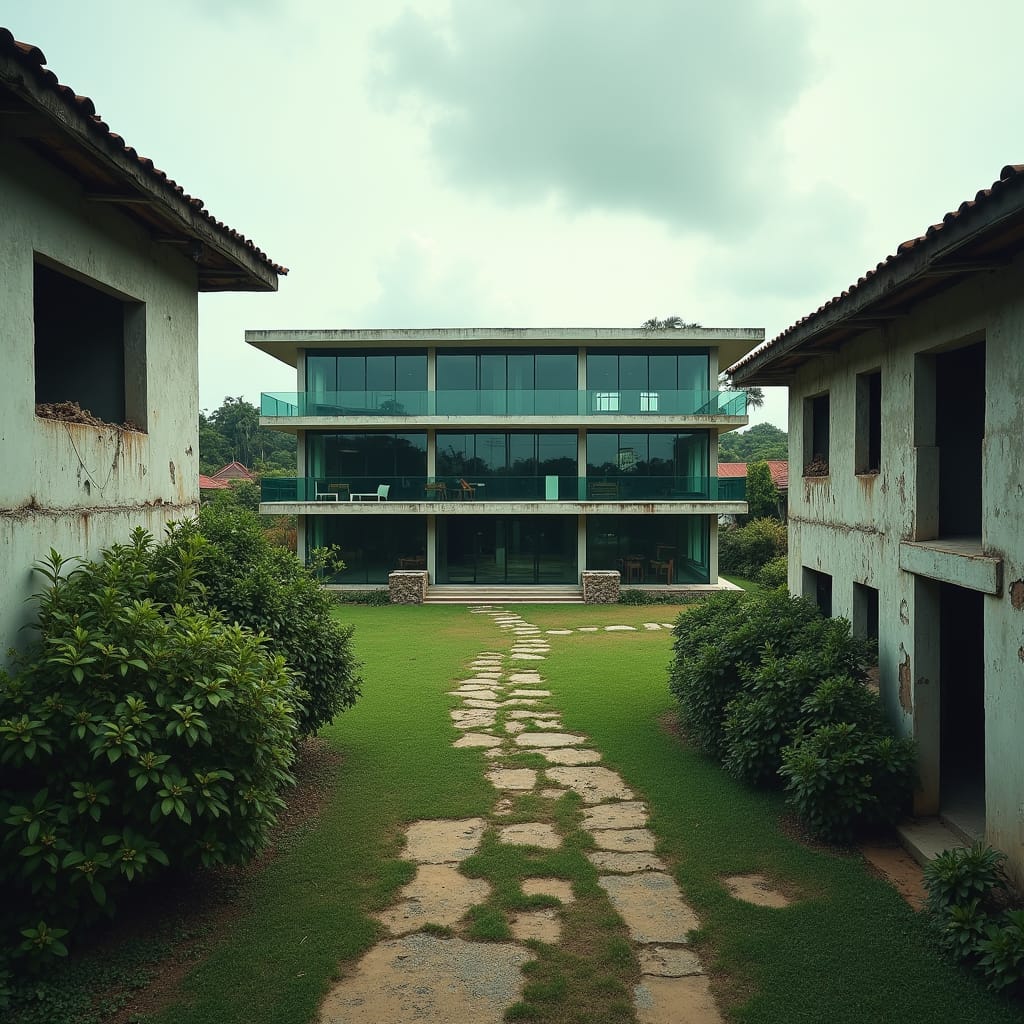
Across Jamaica’s towns and rural communities, unfinished houses stand as quiet monuments to ambition. Steel rods stretch skyward from concrete columns. Ground floors are completed but upper levels remain open to the elements. Some structures are locked and weathering; others were never roofed at all.
These buildings are not simply construction delays. They are part of a century-long story — one rooted in migration, aspiration, sacrifice and the enduring belief that “back home” is where the journey ultimately ends.
As Jamaica reconsiders how to address dormant or distressed properties, any conversation must begin with history.
The Early Migration Story
Jamaican migration did not begin with the Windrush generation; it stretches back to the early 20th century. Jamaicans travelled to Panama during the canal construction era, to Cuba and Costa Rica for agricultural labour, and later to the United States and Canada. Migration was rarely about abandonment. It was about survival and advancement.
The post-1948 Windrush era deepened that pattern. Thousands travelled to the United Kingdom to rebuild a war-torn economy. They worked in the NHS, on buses and trains, in factories and public services. Many arrived with modest means but formidable resilience.
In cities like London, Birmingham and Manchester, Jamaican families settled in neighbourhoods such as Brixton, Stoke Newington and parts of Islington. Terraced houses were purchased collectively. Basement flats were rented to supplement mortgages. Four-storey townhouses were shared between siblings and cousins.
Community saving schemes — known locally as “partner” — were essential. Each member contributed weekly; one person collected the lump sum; the cycle continued. Partner financed deposits, renovations, school fees and, crucially, land purchases back home.
This was not accidental wealth building. It was intentional strategy.
The Dream of Return
For many migrants, return was not optional; it was inevitable in their minds. Jamaica was not just birthplace — it was retirement plan, identity, dignity.
Land was purchased steadily. Construction often began while families were still abroad. A foundation would be poured. Walls would rise. A caretaker relative would supervise progress. Remittances funded blocks, cement, timber and labour.
The house was more than shelter. It was proof of success. It was insurance against foreign uncertainty. It was a statement to children born overseas: this is where you come from.
Some homes were completed and became cherished retirement residences. Others were finished but remain empty for much of the year — diaspora families visiting seasonally.
And then there are the unfinished ones.
When Life Interrupts the Build
The narrative of the unfinished Jamaican house is rarely about failure. It is usually about interruption.
A spouse passes away unexpectedly. A key remittance earner loses employment. Children settle permanently abroad and choose not to return. Immigration policies shift. Health deteriorates. Inflation surges. Construction costs double.
In some cases, the person who held the vision dies before completion. The remaining family lacks the same emotional attachment. The project stalls.
Across Jamaica, one can find communities where multiple structures sit mid-construction for decades. In smaller districts, residents can count 20, 30 or even 40 within a short radius.
Dean Jones, founder of Jamaica Homes, sees them differently.
“When you drive through parts of Jamaica, you are not looking at abandoned buildings. You are looking at paused promises,” Jones said. “But if a promise remains paused for 25 years, it begins to shape the entire character of a neighbourhood.”
Generational Wealth — Preserved or Frozen?
From one perspective, unfinished homes represent wealth preservation. The land is owned. The structure exists. The asset remains within the family.
But from another perspective, that wealth is frozen — non-productive, sometimes deteriorating, occasionally disputed among heirs.
Intergenerational transfer becomes complicated when:
No formal will exists
Multiple children live overseas
Titles were never regularised
Construction approvals were informal
Property taxes accumulate quietly over decades
A house that was meant to secure the next generation can become the source of conflict, delay and stagnation.
This is not unique to Jamaica. Small island societies across the Caribbean share similar patterns of diaspora investment and interrupted construction.
The Aesthetic and Social Reality
There is also a difficult but honest dimension: unfinished housing affects community morale.
Concrete shells weather visibly. Exposed reinforcement bars rust. Grounds become overgrown. In some instances, vacant properties attract dumping or squatting.
Jamaica cannot realistically ignore the cumulative visual and structural impact of thousands of incomplete buildings across the island.
As Jones puts it:
“We must treat the history with delicacy. These homes represent sacrifice. But at the same time, we cannot allow entire districts to carry the weight of half-finished construction for another 30 or 40 years. That is not sustainable planning.”
The tension is clear: respect legacy, but confront reality.
Why It Matters Now
Three structural pressures make this conversation more urgent:
1. Housing Demand
Jamaica continues to face a significant housing shortage, particularly in affordable segments. Meanwhile, a considerable portion of existing stock remains underutilised.
2. Climate Vulnerability
Unfinished or deteriorating structures are often less resilient to hurricanes and heavy rainfall. As climate events intensify, vulnerable buildings increase risk — not only to owners but to neighbours.
3. Land Scarcity
Jamaica is a small island. Efficient land use is not a luxury; it is a necessity. Land locked in indefinite dormancy reduces supply elasticity and constrains development planning.
The Emotional Economy of “Back Home”
The diaspora relationship with Jamaica is deeply emotional. The house being built slowly over decades is often the physical expression of longing.
In the UK and elsewhere, early migrants endured discrimination, long shifts, and economic hardship. They saved collectively. They invested strategically. They often purchased larger properties abroad while simultaneously funding builds in Jamaica.
Those early investors were sometimes envied for their visible success. But beneath the surface was disciplined community finance and shared sacrifice.
To treat unfinished homes as mere blight would ignore that history.
Yet to ignore their cumulative impact would ignore present realities.
What Is the Policy Question?
The question is not whether Jamaica should seize unfinished homes. That would be culturally and politically explosive.
The more measured policy question is this:
How can Jamaica responsibly reactivate stalled housing stock while protecting ownership rights and generational equity?
Possible approaches could include:
Structured tax arrears mediation before escalation
Voluntary completion partnerships
Low-interest finishing loans tied to occupancy requirements
Incentives for families to regularise title and probate
Time-based development covenants on certain categories of land
Community-level rehabilitation schemes for long-abandoned properties
Any intervention must be proportionate and humane.
The first aim should always be completion — not confiscation.
A Cultural Sensitivity Test
Public policy in this area must pass a simple test:
Does it honour the migrant generation’s sacrifice?
If the answer is no, it will fail.
Jamaica’s migration history is not peripheral to housing. It is central. Remittances have long been one of the country’s most stable economic pillars. Much of the built environment outside formal housing schemes was funded by diaspora earnings.
Policy that disregards that contribution risks undermining trust.
The Role of Inheritance Planning
One under-discussed factor is estate planning. Many unfinished homes become stalled because clear inheritance structures were never formalised.
Encouraging:
Wills
Proper title registration
Probate planning
Co-ownership agreements
may reduce the number of properties frozen by uncertainty.
In many cases, the issue is not lack of funds but lack of clarity.
A National Conversation, Not a Blame Exercise
This topic should not devolve into criticism of families who did not finish their builds. Circumstances are often complex and deeply personal.
But equally, Jamaica must confront the visible accumulation of stalled projects.
A mature national conversation would recognise:
The dignity of aspiration
The unpredictability of life
The importance of orderly land use
The need for resilient housing stock
These are not opposing values. They are competing priorities requiring balance.
What Happens If Nothing Changes?
If no structured framework evolves, the current pattern may continue:
Generational properties sitting empty
Rising maintenance costs
Growing tax arrears
Planning inefficiencies
Increasing vulnerability during climate events
Over decades, the cumulative effect becomes structural.
From Paused to Completed
There is a powerful opportunity here. If even a modest percentage of unfinished homes were supported to completion or formal reintegration into the housing market, the impact could be transformative.
Not through force — but through facilitation.
Jones believes reframing is key.
“The goal should never be to take away someone’s dream. The goal should be to help finish it, or responsibly transition it so it serves the next generation,” he said.
That distinction matters.
The Broader Caribbean Context
Jamaica’s story mirrors patterns in Barbados, Trinidad and Tobago, and parts of the Eastern Caribbean, where diaspora remittances funded incremental construction.
As migration patterns evolve and younger generations feel less certain about permanent return, dormant properties may increase.
A regional exchange of policy ideas could prove valuable — particularly around tax resolution, climate resilience and inheritance modernisation.
A Landscape of Memory
Ultimately, Jamaica’s unfinished homes are physical expressions of history. They tell stories of ships crossing the Atlantic, factory shifts in London, nurses in British hospitals, bus drivers on cold mornings, and partner collections passed from hand to hand.
They also tell stories of interruption, mortality and changing identity.
The challenge now is to ensure those stories do not harden into permanent stagnation.
Jamaica’s housing future requires both reverence and realism.
The dream of return built much of modern Jamaica’s landscape. The next phase must decide how that landscape evolves — respectfully, responsibly and with clarity.
Disclaimer: This article is for general information and commentary purposes only and does not constitute legal, financial, or investment advice. Readers should seek professional guidance appropriate to their individual circumstances.