

Poorest to Suffer as Drive to Halt Cuba’s Overseas Doctors Reaches the Caribbean
In Jamaica, the loss of 277 Cuban medical professionals exposes a fragile system, raising urgent questions for returning residents, the elderly, and those already priced out of care


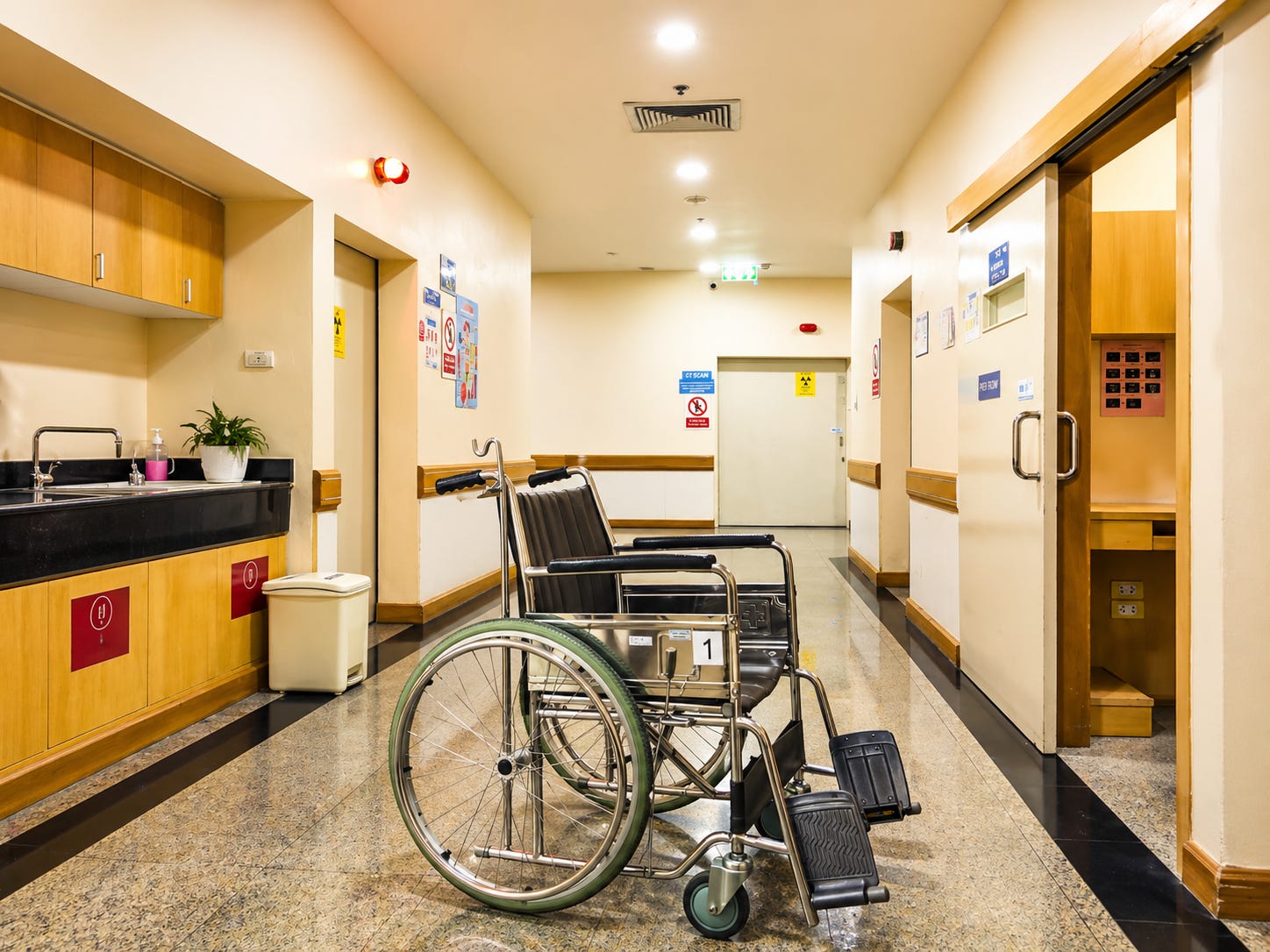
Jamaica has withdrawn 277 Cuban healthcare workers, exposing gaps in public and specialist care.
Cuba’s global programme has deployed more than 600,000 medical professionals across over 160 countries since 1960.
Around 20,000 Cuban doctors remain active in roughly 50 countries, many in underserved regions.
The United States has labelled the programme “forced labour,” prompting visa restrictions and regional pressure.
Patients in Jamaica are already facing higher costs, including procedures now estimated at JMD 350,000 in the private system.
The poorest communities, along with returning elderly residents, are expected to bear the greatest strain as access tightens.
The immediate cause is political and legal, but the consequences are human. A recent report by The Guardian warned that the poorest are likely to suffer most as pressure mounts to end Cuba’s overseas medical missions. Across the Caribbean, that warning is no longer theoretical. In Jamaica, it is already beginning to take shape.
For more than half a century, Cuba has built one of the largest international medical programmes in modern history. Since 1960, over 600,000 Cuban healthcare professionals have worked in more than 160 countries. Even now, around 20,000 remain deployed across roughly 50 nations, often in places where local systems struggle to meet demand. In Jamaica, that presence included 277 doctors and healthcare workers embedded across public facilities, specialist services, and underserved communities.
Their withdrawal in 2026 marks a turning point.
The United States has described the Cuban programme as a form of forced labour, arguing that the state retains a significant share of doctors’ salaries and controls aspects of their movement. This position has been backed by visa restrictions and diplomatic pressure on participating countries. Jamaica, alongside Guyana, Honduras, Guatemala, the Bahamas, Antigua and Barbuda, and St Vincent and the Grenadines, has stepped away from the arrangement in recent months.
Jamaica’s position has been more measured. Officials have pointed to labour law compliance, payment structures, and the need to align with international standards. Efforts were made to renegotiate the programme, including proposals for direct payment to Cuban doctors, but those efforts did not result in a new agreement. Cuba has maintained that its programme is voluntary and rooted in international solidarity, suggesting that external pressure influenced the outcome.
These positions are now well established. What matters more, particularly in Jamaica, is what follows.
The removal of 277 healthcare professionals does not simply reduce staffing levels. It reveals where the system depended on them most. Cuban doctors were often placed in areas already under strain, including rural communities, specialist disciplines, and overstretched public hospitals. Their presence allowed services to function at a level that masked deeper structural gaps.
Without them, those gaps begin to widen.
The impact is already visible in patient experience. Access to care that was once free or subsidised is becoming harder to obtain. In at least one reported case, the loss of Cuban-led services has left a patient facing approximately JMD 350,000 for a procedure that was previously accessible at little or no cost. For many Jamaicans, that figure is not simply high. It is out of reach.
This is where the national conversation intersects with everyday life.
Jamaica’s healthcare system operates across two realities. There is a public system that carries the majority, and a private system that offers faster access at a significantly higher cost. Returning residents, particularly from the United Kingdom and the United States, are often advised to rely on private healthcare when settling back in Jamaica. On paper, the advice appears straightforward. In practice, it is far more complicated.
Pensions do not always stretch as expected. Exchange rates fluctuate. The cost of living continues to rise. Private healthcare, from consultations to diagnostics to surgery, can quickly exceed what many retirees anticipated. What looks manageable in theory becomes difficult in reality.
Access adds another layer of complexity. Healthcare is not only about cost but about responsiveness and infrastructure. Ambulance services are often subscription based or prearranged rather than universally immediate. Equipment standards, while improving, are not always comparable to those in larger systems abroad. Facilities vary. Some are modern and well equipped. Others are still catching up.
These realities have long existed. What has changed is the removal of a layer that helped absorb them.
Cuban doctors, regardless of individual assessments of quality, have been part of Jamaica’s healthcare landscape for years. They filled gaps that might otherwise have gone unaddressed. They extended the reach of services into communities where alternatives were limited. Their presence allowed the system to function in a way that softened its constraints.
With their departure, those constraints become harder to ignore.
For the elderly, this shift carries particular weight. Healthcare is not a secondary concern in later life. It is often the deciding factor in where and how people choose to live. For members of the Jamaican diaspora considering a return home, the question is no longer only about culture, family, or lifestyle. It is about whether the system can support them when they need it most.
Families are taking note. Decisions are being reconsidered. In some cases, plans to return are being delayed. In others, elderly relatives already in Jamaica may be encouraged to remain abroad where systems are more predictable. These are not abstract concerns. They are practical responses to changing conditions.
The implications extend beyond individual households.
Jamaica, like many countries, is managing an ageing population alongside rising healthcare costs. Capacity matters. Confidence matters. If confidence in healthcare declines, the effects ripple outward. They touch housing decisions, retirement planning, and the broader question of national resilience.
For those involved in real estate and national development, the connection is direct. Housing demand is shaped not only by price and location but by the reliability of essential services. Healthcare sits at the centre of that equation. If returning home begins to feel uncertain, that uncertainty carries economic consequences.
At the same time, the burden does not fall evenly.
As highlighted in reporting by The Guardian, the poorest communities are likely to feel the impact first and most severely. Those who cannot afford private care depend almost entirely on the public system. When capacity tightens, their options narrow. Waiting times grow longer. Access becomes more difficult. Outcomes become more uncertain.
Cuban doctors were often positioned precisely within these vulnerable spaces. Their absence therefore lands hardest where resilience is already limited.
The result is a layered pressure across the system.
Those with financial means may absorb higher private costs, though not without strain. Returning residents and pensioners face increasingly complex decisions about affordability and access. The poorest encounter direct barriers to care that did not exist in the same way before.
Across all levels, the margin for error becomes smaller.
There is also a regional dimension that cannot be overlooked. Jamaica is not alone in this transition. Multiple Caribbean nations are experiencing similar withdrawals at the same time. CARICOM has already acknowledged that the issue affects nearly every member state. This means that solutions cannot easily be shared or redistributed. Each country is managing its own version of the same gap.
The broader picture is one of structural change.
Jamaica is moving from a system that included external medical support to one that must rely more heavily on domestic capacity or alternative arrangements. That shift will not happen overnight. Training doctors, expanding infrastructure, and strengthening services require time, investment, and sustained policy focus.
In the meantime, the system must continue to function.
The central question is how the transition is managed.
Policy decisions have been made. International positions have been stated. What remains is the lived reality of healthcare in Jamaica as it adapts to a new balance. For some, the system will hold, though under pressure. For others, it will become more difficult to navigate. For the most vulnerable, it may become a barrier that cannot be overcome without intervention.
The story is not only about the withdrawal of 277 doctors or the global reach of 600,000 medical missions since 1960. It is about what happens when a system that was quietly supported must stand more fully on its own.
In Jamaica, that moment has arrived.