

Power Wheeling Moves Closer to Reality in Jamaica
New energy reforms could reshape how households, developers and businesses manage electricity costs across multiple properties

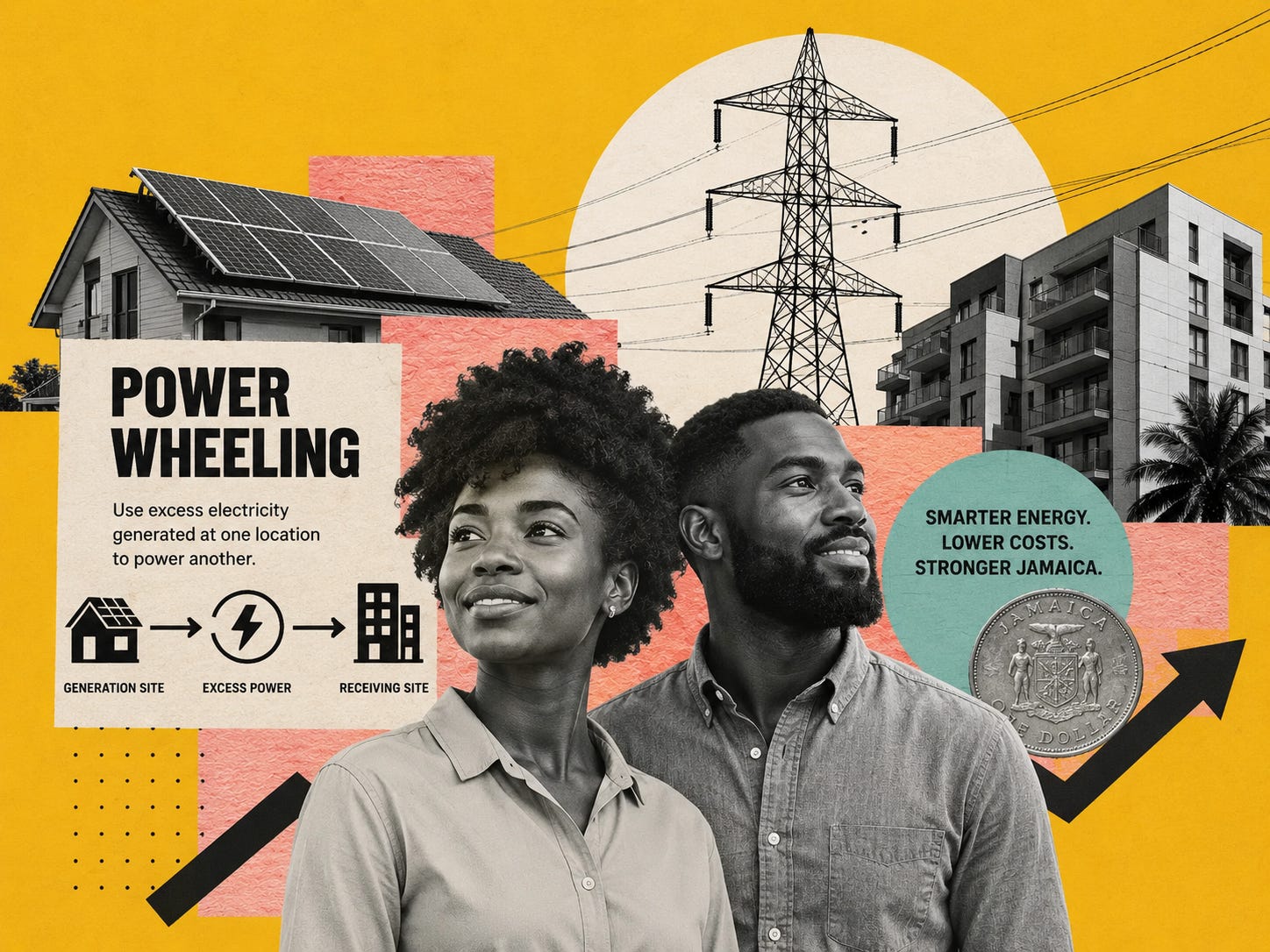
Jamaica is moving closer to implementing power wheeling, a long discussed energy reform that could gradually change how electricity is generated, shared, and financially managed across homes, commercial buildings, and development projects on the island.
The announcement came during the 2026/27 Sectoral Debate in Parliament, where the Energy Ministry confirmed that the required regulations have now been completed and gazetted, with final discussions under way regarding tariffs and billing arrangements.
Power wheeling will allow individuals or companies generating excess electricity at one location to apply those energy credits to another property connected to the national grid. In practical terms, a business owner with solar panels on a warehouse in one parish could potentially offset electricity costs at an office, apartment complex, or commercial building elsewhere.
While the policy is rooted in energy reform, the wider implications extend directly into Jamaica’s property and development landscape.
For years, electricity costs have remained one of the most significant operational pressures facing homeowners, landlords, developers, manufacturers, and commercial property operators across Jamaica. Energy expenses affect everything from apartment maintenance fees and rental affordability to hotel operations, construction viability, and long term investment planning.
The introduction of power wheeling could begin creating a more flexible environment for larger property owners and developers investing in renewable energy infrastructure, particularly solar systems. It may also encourage greater interest in mixed use developments, commercial parks, logistics facilities, and housing schemes capable of producing part of their own electricity needs.
The Government said the broader National Energy Policy and supporting action plans are also being finalised for Cabinet submission. According to the Energy Ministry, the updated framework aims to create a modern energy system that is secure, reliable, affordable, and more resilient to external shocks.
That wider conversation matters deeply for Jamaica’s real estate sector.
Energy resilience is increasingly becoming part of how property value is judged internationally. Buyers and investors are paying closer attention not only to location and aesthetics, but also to utility reliability, operating costs, disaster resilience, and long term sustainability. In Jamaica, where hurricanes, heat pressures, and infrastructure vulnerabilities remain ongoing realities, energy security is gradually becoming intertwined with housing security itself.
The reforms may also arrive at a critical moment for development financing. Construction costs remain elevated globally, while borrowing costs continue to pressure both developers and ordinary households. Measures that improve operational efficiency over time could become increasingly important in determining whether certain projects remain financially viable.
For ordinary Jamaicans, however, the immediate effects may take time to materialise.
The success of power wheeling will likely depend heavily on how tariffs are structured, how accessible renewable technologies become, and whether smaller households can realistically participate in the benefits alongside larger commercial operators. Questions surrounding grid capacity, fairness, infrastructure readiness, and consumer affordability are also expected to shape public debate as implementation advances.
Still, the direction of travel is becoming clearer.
Jamaica’s energy future is increasingly moving toward decentralisation, resilience, and greater integration between infrastructure and property development. Over time, that may influence how communities are designed, how commercial centres operate, and even how future housing schemes are marketed to buyers concerned about long term living costs.
For a country where imported energy has long shaped economic vulnerability, the ability to move electricity value across properties may represent more than a technical reform. It signals a broader shift toward viewing energy not simply as a utility expense, but as part of the wider architecture of national resilience, land use, and economic security.