

Rethinking the Shipping Container Home
How shipping containers are reshaping modern architecture and flexible living


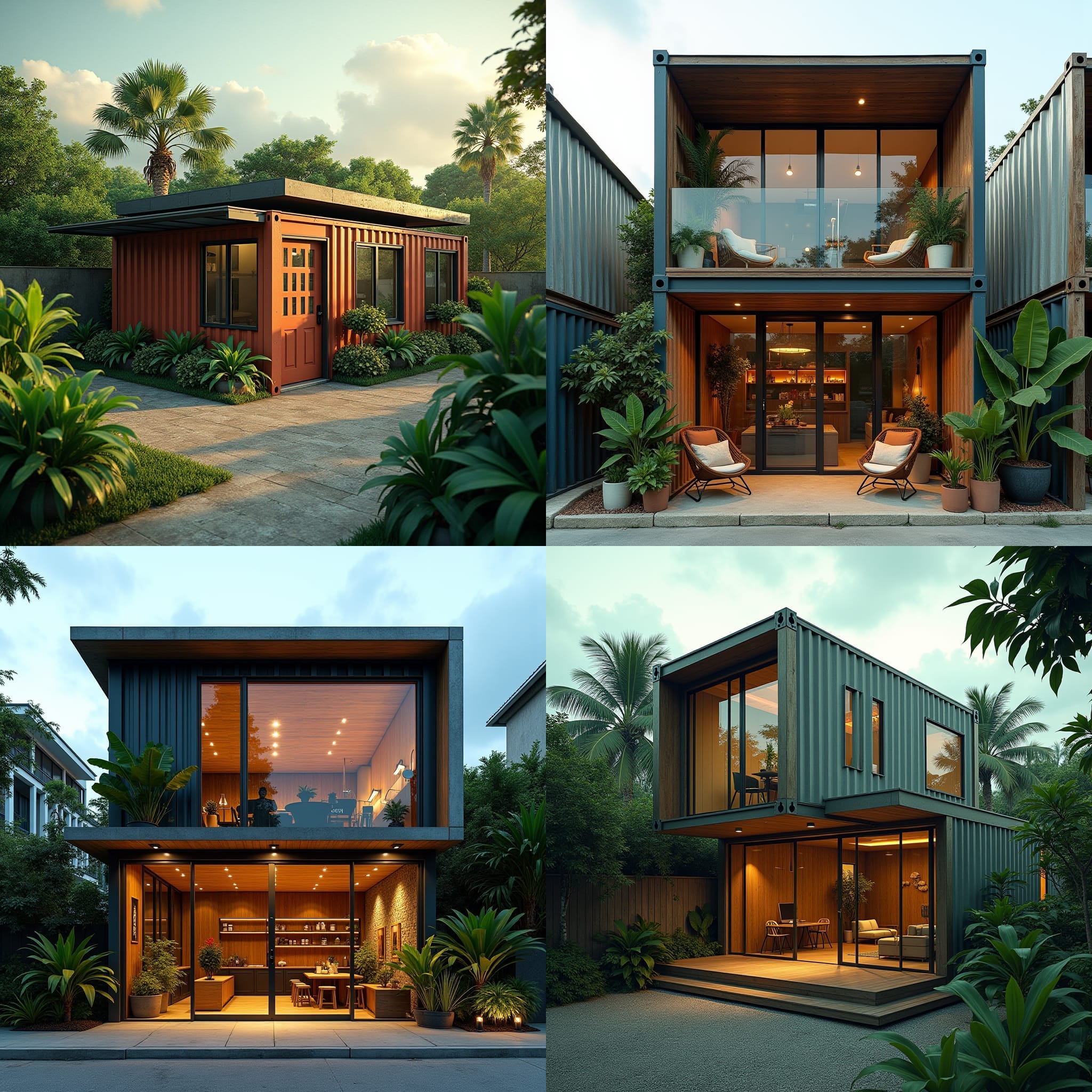
For years, the shipping container home has occupied an awkward place in architecture. It has been celebrated as the future of affordable housing, criticised as a design gimmick, and often reduced to social media images that look impressive but reveal little about how people actually live.
The reality is more complicated.
Container architecture can be clever, sustainable, adaptable, and cost-effective. It can also be uncomfortable, expensive to modify, and poorly suited to tropical climates when executed badly. The difference lies not in the container itself, but in the design.
The concept illustrated here demonstrates both the promise and the challenges of container-based architecture. It moves beyond the novelty factor and explores something far more important: how industrial materials can be transformed into genuine places to live, work, and build community.
The Appeal of Building With Containers
The appeal is easy to understand.
Shipping containers are designed to survive harsh conditions. They are structurally strong, modular, and widely available. Their dimensions create a natural building block that can be stacked, combined, and adapted into countless configurations.
For architects, this offers unusual freedom.
A single container can become a compact studio, home office, retail kiosk, guest suite, or café. Multiple containers can create larger homes, mixed-use developments, co-working spaces, or even hotels.
In regions where construction materials can be expensive or difficult to source, container architecture offers an alternative path.
But that path is often misunderstood.
A shipping container is not automatically a house. It is a steel box. Turning it into a comfortable building requires significant intervention.
The Myth of Cheap Housing
One of the biggest misconceptions surrounding container homes is cost.
Many people assume that buying a used shipping container automatically creates an inexpensive building.
It rarely works that way.
The container itself may represent only a fraction of the final project cost. Foundations, insulation, electrical systems, plumbing, roofing, glazing, ventilation, interior finishes, and professional design services often exceed the cost of the container shell itself.
In some cases, a poorly planned container project can cost as much as a conventional building.
Good architecture is rarely cheap. Good architecture is about value.
The most successful container projects are those that understand where the real costs lie and use the container strategically rather than treating it as a miracle solution.
Designing for the Tropics
This is where container architecture becomes particularly interesting for the Caribbean.
A steel container sitting in direct tropical sunlight can quickly become unbearably hot. Without proper insulation and ventilation, the structure can function more like an oven than a home.
The most successful Caribbean container projects therefore focus less on the container and more on climate-responsive design.
Large overhangs help shade walls and windows.
Cross-ventilation allows air to move naturally through living spaces.
Landscaping reduces heat gain while creating privacy.
Covered outdoor areas extend living spaces beyond the walls of the building.
The illustrations show many of these principles at work. Deep roof projections, extensive glazing, shaded outdoor seating, and lush planting create a softer relationship between architecture and environment.
The result feels less like an industrial structure and more like a contemporary tropical retreat.
Mixed Use Is Where Containers Shine
Perhaps the most compelling aspect of container architecture is flexibility.
A conventional building is often designed for one purpose. Containers can adapt more easily to changing needs.
A small entrepreneur could operate a shop, café, design studio, or professional office on the ground floor while living above.
A family could create rental accommodation alongside their own residence.
A property owner could begin with a single container and expand over time as finances allow.
This adaptability is particularly relevant across developing economies where many households combine living and working spaces within the same property.
Historically, Caribbean communities have always embraced mixed-use living. The corner shop attached to a family home is not a new concept. Container architecture simply offers a modern interpretation of a long-established idea.
Sustainability Beyond the Headlines
Container homes are frequently promoted as environmentally friendly.
Sometimes that claim is justified.
Repurposing an existing container can reduce demand for new structural materials. Modular construction can minimise waste and shorten building timelines.
However, sustainability should not be measured solely by recycled steel.
A building that requires excessive cooling, poor maintenance, or significant future modifications may not be particularly sustainable at all.
True sustainability involves durability, energy efficiency, adaptability, and longevity.
The best container projects succeed because they create buildings that remain useful for decades rather than merely attracting attention for a few years.
The Importance of Architecture
What separates successful container buildings from unsuccessful ones is rarely the container itself.
It is architecture.
Good architecture understands light, climate, proportion, movement, privacy, and human behaviour.
The strongest examples treat the container as a structural framework rather than a design identity. The goal is not to showcase containers. The goal is to create places where people genuinely want to spend time.
That distinction matters.
Many early container projects looked like containers with windows cut into them. Contemporary projects increasingly resemble sophisticated homes and commercial spaces that happen to use containers as their structural backbone.
This evolution represents a maturing of the idea.
A Model for Small Sites
As urban land becomes scarcer and more expensive, container architecture may prove particularly useful on smaller sites.
The compact footprint allows designers to maximise limited land while preserving outdoor space.
This is increasingly relevant in growing Caribbean cities where affordability pressures and population growth continue to reshape development patterns.
Smaller homes do not necessarily mean lower quality of life.
When designed intelligently, compact buildings can feel spacious, efficient, and connected to their surroundings.
The challenge is ensuring that density does not come at the expense of comfort.
Beyond the Trend
Container architecture has now existed long enough to move beyond novelty.
The question is no longer whether homes can be built from shipping containers. That has already been answered.
The more important question is whether they can be designed well.
The projects that endure will not be the most unusual or the most photographed. They will be the ones that solve real problems, respond intelligently to climate, support local economies, and create places people are proud to occupy.
In that sense, the future of container architecture may have very little to do with containers at all.
Its success will depend on the timeless principles that have always defined good architecture: practicality, beauty, adaptability, and a deep understanding of how people live.