


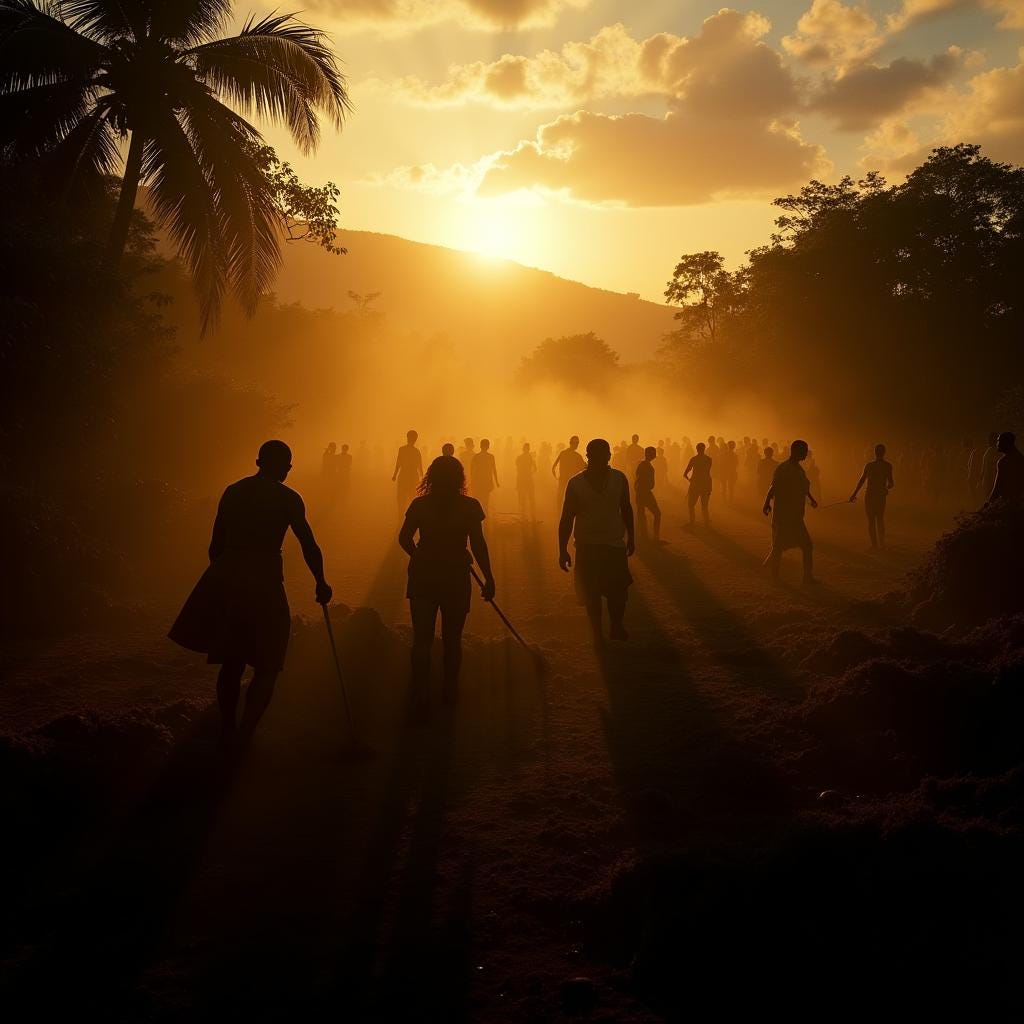
Slavery in Jamaica, which began in the early 17th century following the island’s colonization by the British, was a brutal system where enslaved Africans were forcibly brought to work on sugar plantations. Enslaved people endured harsh conditions, with long hours of labor under severe punishment and minimal living standards. This system was driven by the demand for sugar and other cash crops, making Jamaica a key player in the global slave economy. The impact of slavery was profound, leading to significant demographic, social, and economic changes on the island. The legacy of slavery in Jamaica is still evident today in its cultural diversity, social dynamics, and ongoing struggles for social justice and reparations.