

Spain’s Housing Anger Carries a Warning for Jamaica
Madrid’s protests over rent, tourism pressure and scarce public housing show how quickly a housing market can become a national political fault line.

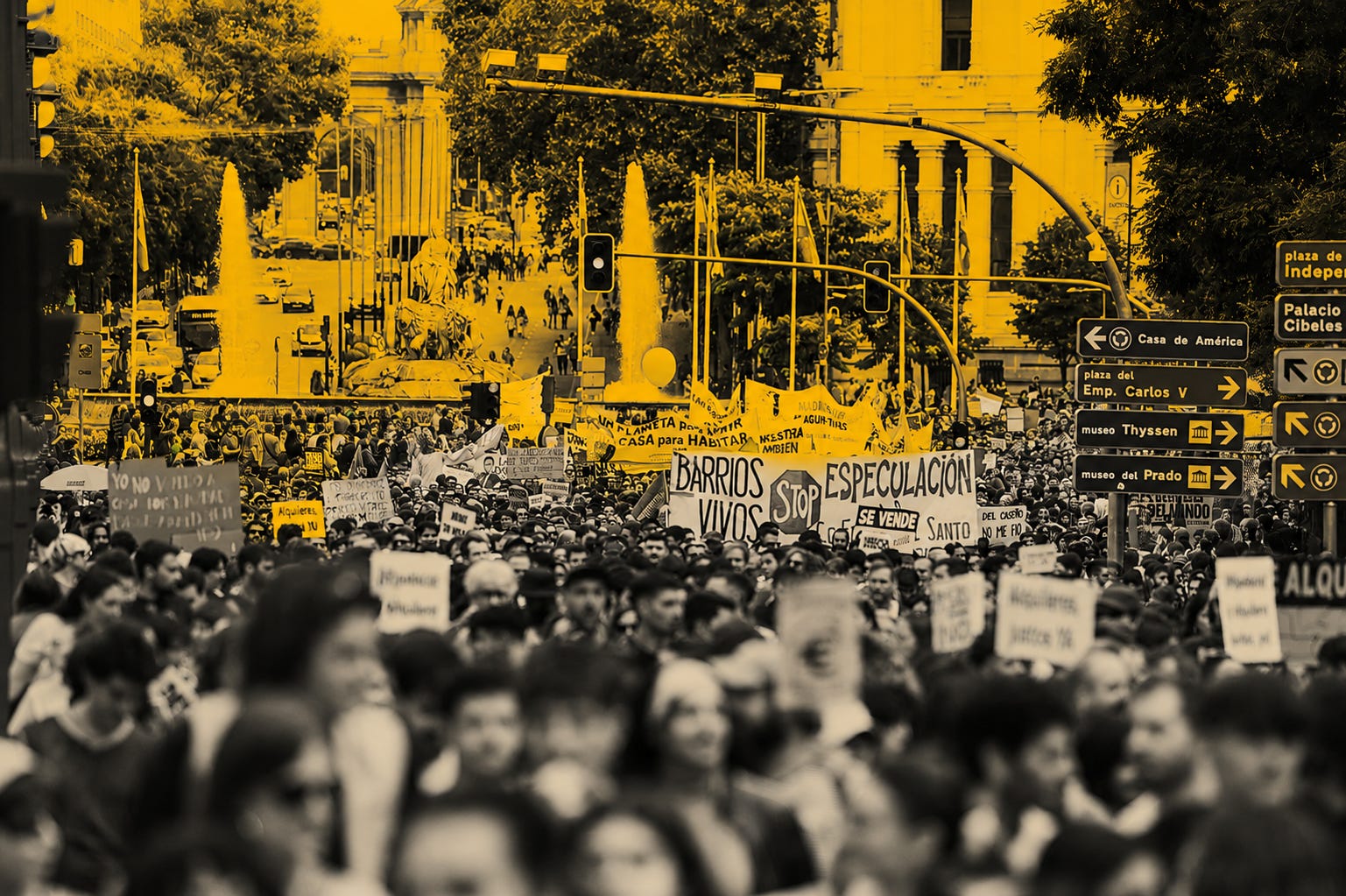
Thousands of people marched in Madrid on Sunday as rising housing costs, tourist rentals and limited public housing pushed Spain’s affordability crisis back into the centre of national politics. The protest matters beyond Europe because the same pressures, housing supply, wages, tourism, land use and access to ownership, are increasingly familiar in Jamaica.
Spain’s government has approved a €7 billion housing plan for 2026 to 2030, aimed at expanding public housing and supporting renters and buyers, but public frustration remains high. The Bank of Spain has estimated a shortage of about 700,000 homes, while housing costs rose nearly 13 percent year on year at the end of 2025.
For Jamaica, the lesson is not that Spain and Jamaica are the same. They are not. But the pattern is worth watching. When housing supply fails to keep pace with demand, when tourism competes with local residential use, and when wages do not match property prices, housing stops being only a market issue. It becomes a question of social stability, generational security and national planning.
Spain’s protesters carried signs saying they wanted neighbours, not tourists. That message will resonate in any country where short term rental demand, foreign buyers, returning residents and local families are all competing for limited well located property. In Jamaica, this tension is most visible in resort areas, coastal towns and urban centres where land is scarce, infrastructure is uneven and new housing often arrives at prices beyond the reach of ordinary workers.
The deeper issue is public housing capacity. Spain’s crisis has been sharpened by a limited stock of public rental housing. Jamaica faces its own long standing challenge, how to produce enough affordable, safe and well located homes while managing construction costs, land availability, planning delays, climate risk and household incomes.
Housing policy cannot rely only on new developments at the upper end of the market. Nor can it depend entirely on private ownership as the single route to security. A mature housing system needs a broader ladder, rental housing, starter homes, serviced lots, public private delivery, financing options and protection against displacement.
The Madrid protest is also a reminder that tourism success can carry housing consequences. Visitors bring income, jobs and investment, but if residential communities are hollowed out by short term rentals or speculative pricing, the economic benefit becomes politically fragile. Jamaica’s tourism and real estate sectors are deeply connected, but that connection must be managed carefully if communities are to remain liveable.
For buyers, renters and developers in Jamaica, the Spanish example points to a simple truth. Housing affordability is not solved by one policy, one development or one subsidy. It depends on the relationship between land, finance, wages, construction, infrastructure and regulation.
Spain’s protests may be taking place thousands of miles away, but the warning is close to home. A country can enjoy economic growth and still leave its people feeling locked out of housing. For Jamaica, the question is whether growth in property, tourism and construction can be shaped into security for households, not just rising values on paper.