


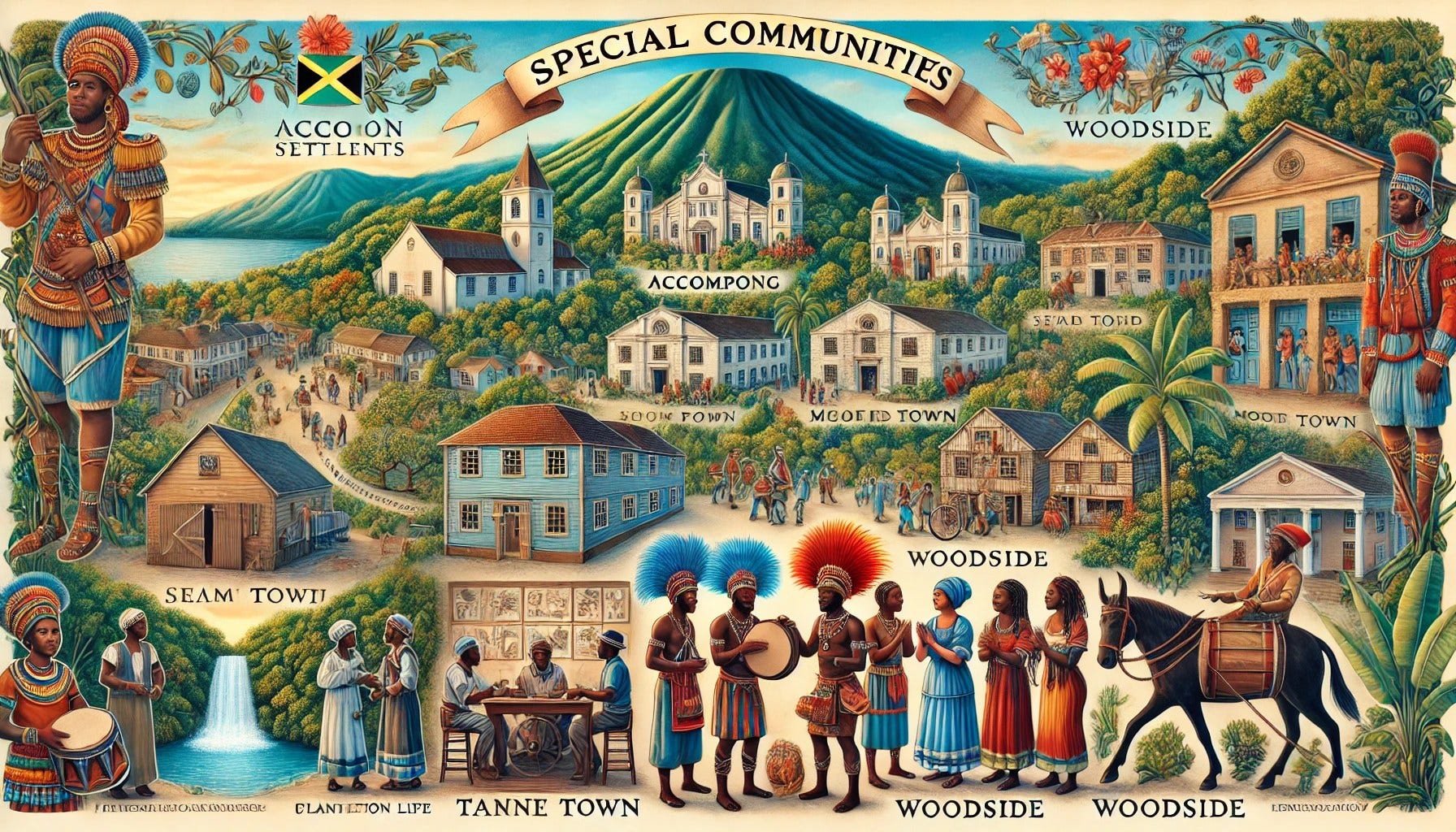
Special communities in Jamaica hold a unique place in the nation’s history, formed under distinct and often challenging circumstances, showcasing resilience, cultural preservation, and heritage. Among these are the Maroon communities, established following the signing of a peace treaty with the British in 1739, which granted the Maroons land and autonomy. Principal settlements such as Accompong in St. Elizabeth, named after its founder and leader Accompong, and Moore Town, formerly New Nanny Town, became centers of cultural and historical significance. Accompong remains a bastion of Maroon heritage, while Moore Town honors Nanny, a national hero and leader in the Maroon resistance. Other Maroon settlements like Charles Town in Portland and Flagstaff in Trelawny reflect the enduring legacy of the Maroons, who fought valiantly during the Maroon Wars. Nanny Town, perched high in the Blue Mountains, remains one of the most famous historical sites, symbolizing the Maroons’ tenacity and strategic prowess.
Seaford Town tells a different story, established in 1835 when over 200 German settlers arrived in Jamaica after the abolition of slavery. Located in St. James, this European enclave reflects the blending of cultures, with descendants of the original settlers maintaining traditions that include distinctive architecture and cuisine. Woodside, another notable community, connects Jamaica’s past from the Taíno era through plantation life and emancipation, preserving layers of history that define its identity. These special communities, whether shaped by the struggle for freedom or the quest for opportunity, stand as enduring testaments to human resilience and cultural fusion, offering lessons and inspirations that extend beyond Jamaica to the rest of the world.
a
c
f
m
n
s
w