


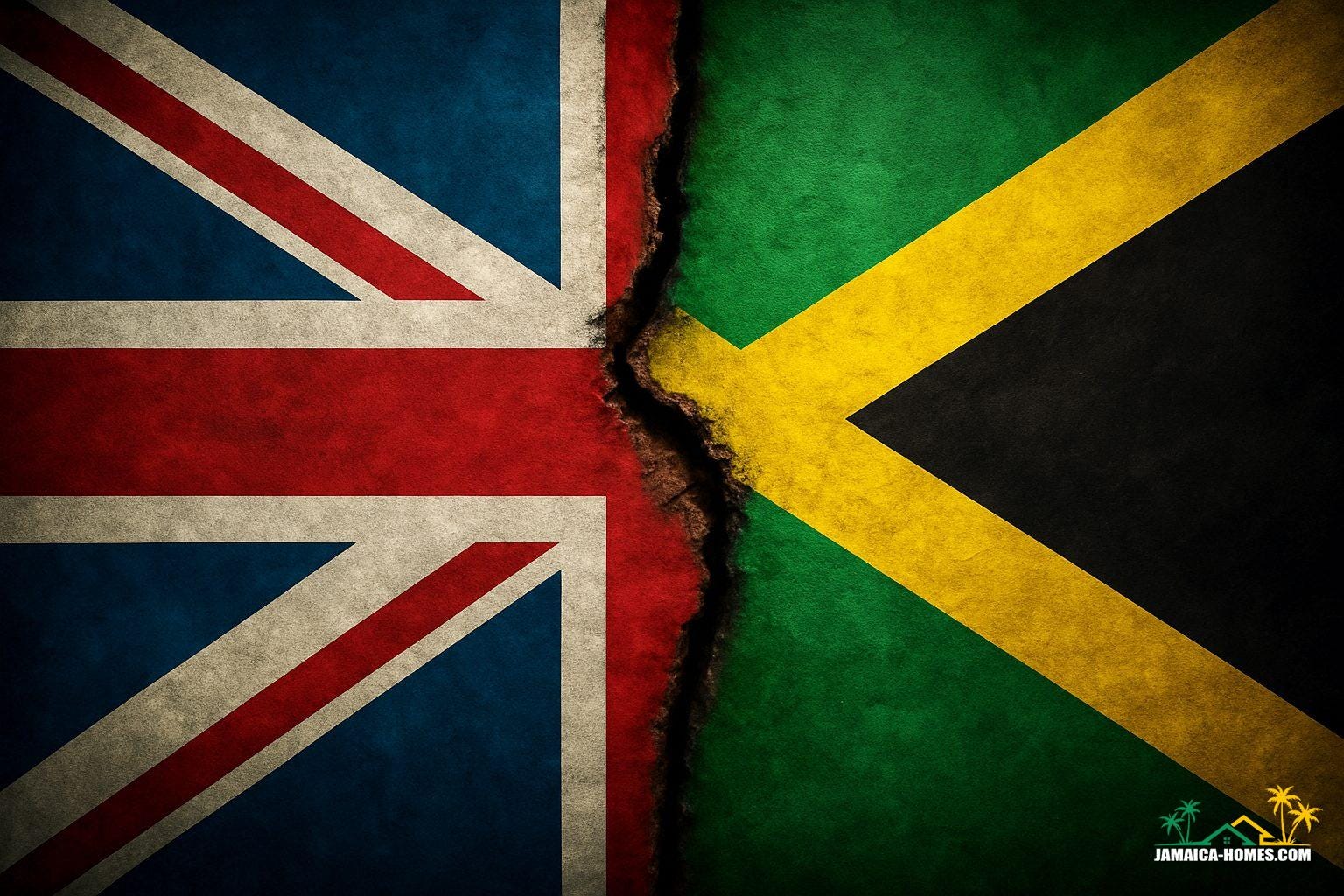
To speak of Jamaica is to speak of layers — not just of soil and stone, but of history itself, stacked and pressed together like sediment after a long geological age. On this island, every ridge, every bay, every crumbling church ruin whispers of lives lived in extremes: of cruelty and courage, of wealth and ruin, of loss and rebirth.
It is a place where empire once cast a long shadow, where the earth itself groaned under the weight of slavery, and yet, against all odds, voices rose, drums beat, and people carved out freedom in the wilderness. This is not simply the history of a Caribbean island; it is the blueprint of resilience — a grand design built by those who refused to vanish.
The Island’s First Foundations
Long before the sails of empire cut across the Caribbean horizon, Jamaica was known as Xaymaca — “land of wood and water.” The Taino, its first inhabitants, lived in harmony with rivers and forests, cultivating cassava and yam, weaving their world into one of balance. But their foundation was fragile, and European arrival, first Spanish and then English, shattered it with a violence that left little trace of their once-flourishing society.
When the British wrested Jamaica from Spain in 1655, it was not simply a change of flag; it was the laying of new foundations — brutal, exploitative, and ambitious. Plantations sprouted like fortresses across the land, their sugar mills creaking as if the earth itself was forced to turn their wheels.
But in every grand construction there are cracks, and here they came in the form of the Maroons — escaped enslaved Africans who fled to the highlands. They were the first great architects of resistance, carving villages into the impenetrable hills, sustaining themselves on yam, plantain, and cunning, using the land as both shield and weapon.
Port Royal: A City of Splendour and Sin
If the Maroons represented independence in its rawest form, Port Royal embodied excess. In the late 1600s, it was the Venice of the West Indies — wealthy, decadent, and perilously overbuilt. Buccaneers thronged its taverns, gold changed hands with reckless abandon, and law seemed more a suggestion than a system.
It was, in every sense, a design doomed to fail. And in 1692, the ground itself gave way. An earthquake split the city apart, pulling streets, churches, and houses into the sea. Survivors staggered across the bay to found Kingston, which itself would grow into the island’s beating heart.
Here we see the first great motif in Jamaica’s story: construction, destruction, and reconstruction. Each collapse was not an end, but an invitation to begin again.
The Sugar Empire
By the 18th century, Jamaica had become the jewel in Britain’s colonial crown. Sugar was king, and enslaved Africans were its unwilling builders. The scale was staggering: fields stretched beyond the eye, mills ground night and day, ships carried cargoes of both sugar and human lives across the Atlantic.
But such grandeur came at a cost. Enslaved people died faster than they were born, their lives consumed like timber fed into an insatiable fire. Rebellions flared, sometimes extinguished, sometimes smouldering for decades. The Maroon Wars in the 18th century showed just how fragile British control truly was, as guerrilla fighters forced governors to the table, wresting freedom from an empire that thought itself unshakable.
And yet, architecture of another kind rose alongside the plantations — churches, courthouses, and estates, symbols of permanence in a land where permanence was always an illusion.
Earthquakes, Revolts, and the Winds of Freedom
Jamaica’s history seems almost architectural in its rhythm: the steady building of systems, followed by collapse. Earthquakes struck, hurricanes levelled crops, and famine claimed thousands. Yet the most powerful tremors were not natural disasters, but human uprisings.
In 1831, Samuel Sharpe led a massive slave rebellion — the “Baptist War” — which, though brutally suppressed, shook Britain to its core. Within seven years, emancipation was declared across the empire. The enslaved were freed, but the plantations began to crumble.
Former slaves left the estates for the hills, planting their own provisions on small plots, building not mansions but villages, not empires but communities. The great sugar machine faltered, and in its ruins grew a new Jamaica, one less predictable, less ordered, but infinitely more alive.
A Crown Colony Reimagined
The mid-19th century brought yet another reconfiguration. Riots at Morant Bay in 1865, led by Paul Bogle, forced the island’s assembly to cede power to the Crown. Martial law followed, as did repression. But the British, too, began to redesign: police forces, railways, irrigation schemes, and schools emerged under colonial governors determined to modernise.
Bananas replaced sugar as the new cash crop, carried to markets by ships owned by foreign companies. A 1907 earthquake shattered Kingston, killing hundreds, but once again the island rebuilt. This rhythm — collapse, reimagination, renewal — continued like a drumbeat into the 20th century.
The Music of the People
If the 18th and 19th centuries were about sugar, the 20th was about sound. From ska to rocksteady to reggae, Jamaica’s music became its most enduring export.
Here, too, was a kind of architecture — not of stone and timber, but of rhythm and resistance. Bob Marley and the Wailers did not build cathedrals, but their songs stood as temples of another kind: sanctuaries for the poor, the exiled, the dreamers of freedom.
Reggae became the soundtrack to a nation still building itself, a sonic structure that carried the stories of Rastafari, of the oppressed, of those who believed Zion was not a place on a map, but a promise.
Independence and the Modern Blueprint
In 1962, the scaffolding of colonial rule was finally dismantled. Jamaica stepped onto the world stage as an independent nation, its flag unfurled, its people no longer subjects but citizens. Yet independence did not mean an end to construction challenges.
Governments rose and fell, parties traded power, and the nation wrestled with debt, violence, and external pressures. At times, the design seemed precarious, the structure straining under the weight of expectations.
And yet, as always, Jamaica adapted. Tourism, bauxite, and remittances reshaped the economy. Musicians, athletes, and thinkers carried its culture across the globe. When Usain Bolt sprinted into Olympic history, it was not just speed on display, but the embodiment of Jamaica’s perpetual ability to astonish the world.
A Grand Design Still in Progress
To walk through Jamaica today is to walk through a building site that never truly closes. Colonial fortresses crumble beside modern hotels. Churches that once rang with hymns of empire now stand as quiet reminders of resilience. Streets hum with reggae basslines, markets overflow with colour, and murals of national heroes stare down at the crowds below.
It is a nation forever under construction — not unfinished, but ever-evolving. The Maroons, the planters, the missionaries, the revolutionaries, the musicians — all left their mark, each a layer in the architecture of this island.
Like every great design, Jamaica is not defined by perfection, but by persistence. It is the story of a people who, again and again, were forced to rebuild — and who, in rebuilding, created something remarkable.
Disclaimer
This article is a historical and cultural reflection, written for informational purposes. It does not seek to romanticise or diminish the suffering endured, nor to promote political or economic agendas. All historical references are grounded in documented events and scholarship.