


For generations, the Caribbean has lived with a paradox.
The region sits astride some of the world’s most strategically important sea lanes. It has produced global cultural movements, attracted hundreds of millions of visitors, and occupies a geographic position that larger nations would envy. Yet it remains heavily dependent on imported energy, leaving many islands exposed to global price shocks, supply disruptions and economic uncertainty.
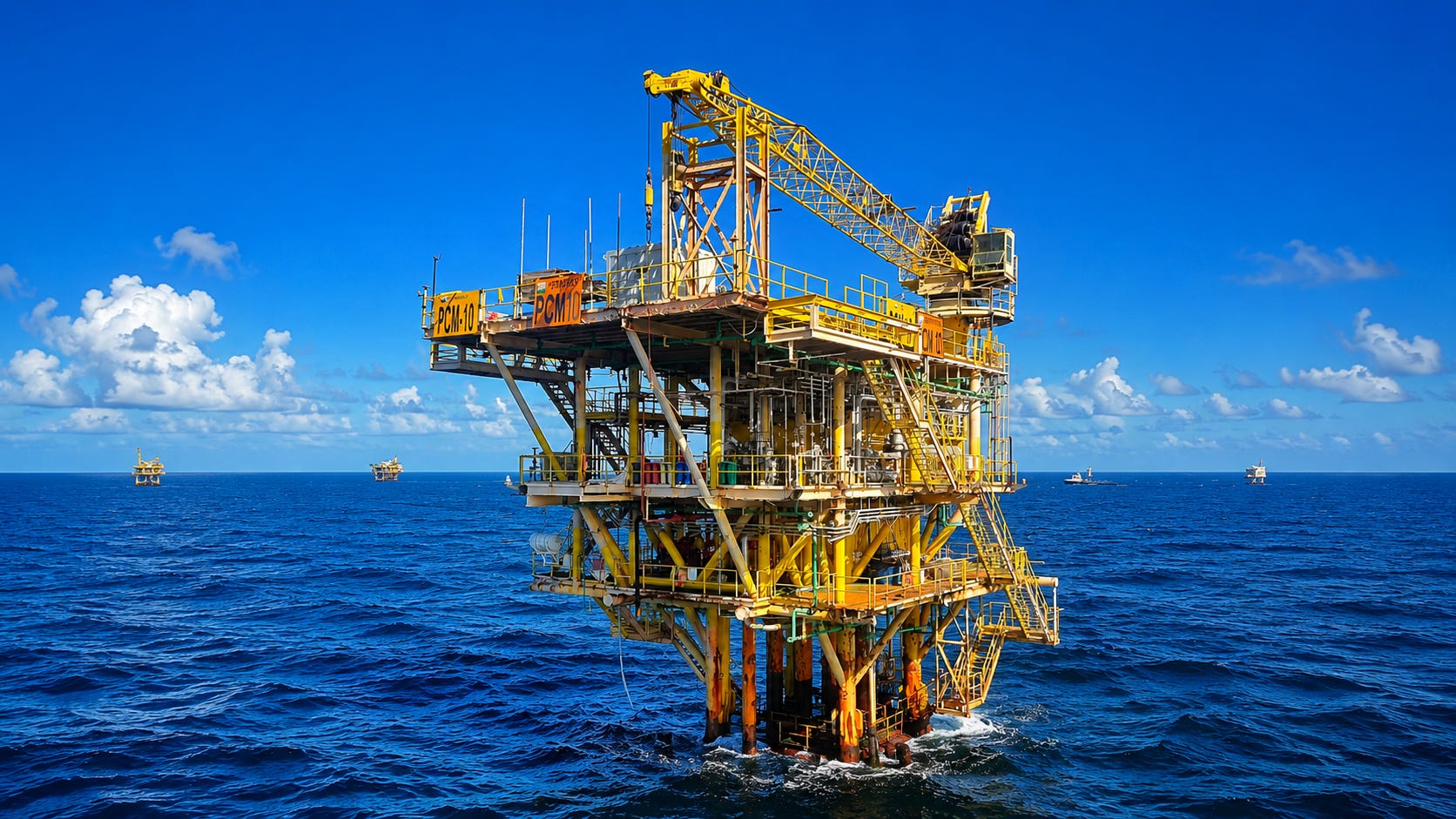
That is why Barbados’ decision to open 19 ultra deepwater offshore blocks for oil and natural gas exploration deserves far more attention than it has received.
On the surface, this is a story about hydrocarbons. Beneath the surface, it is a story about sovereignty, development and whether the Caribbean is prepared to rethink its economic future.
Barbados believes its offshore waters may contain significant oil and gas resources. Government officials have cited estimates suggesting the possibility of 13 billion barrels of oil in place and more than 40 trillion cubic feet of natural gas. Those figures remain speculative until drilling proves otherwise, but they are large enough to attract international attention and raise important questions across the region.
The first question is obvious.
What if Barbados succeeds?
The second question is more uncomfortable.
What if it succeeds and its neighbours do nothing?
The shadow hanging over every Caribbean energy discussion today is Guyana. Before 2015, few people outside the industry viewed Guyana as a future energy giant. Today it is one of the fastest growing economies on Earth. The discovery of vast offshore reserves has altered the country’s trajectory and changed the way investors view the wider Caribbean basin.
Energy companies are now asking a question that would have seemed improbable a decade ago.
Where is the next Guyana?
Barbados is clearly hoping that it might be a candidate. Jamaica, Suriname, The Bahamas and others will undoubtedly be watching closely.
The debate surrounding offshore exploration often becomes trapped between two extremes. One side sees oil and gas as a golden ticket to prosperity. The other sees any new hydrocarbon development as incompatible with climate goals.
Reality is more complicated.
No country has ever become prosperous merely by discovering oil. Plenty have discovered resources and remained poor. Others have used resource wealth to transform infrastructure, strengthen institutions and invest in future generations.
The lesson is not that oil makes countries rich.
The lesson is that good governance does.
That distinction matters because the Caribbean’s greatest challenge is unlikely to be foreign opposition. Contrary to popular belief, neither Washington nor Brussels can simply prohibit sovereign Caribbean nations from developing resources within their own waters.
The larger obstacles are far more practical.
Exploration is expensive. Deepwater drilling can cost hundreds of millions of dollars. Commercial quantities must actually exist. Environmental standards must be maintained. Regulatory systems must be robust. Public trust must be earned.
In many ways, geology is a greater threat to these ambitions than geopolitics.
Yet there is another dimension to this story that may prove even more significant.
Perhaps the Caribbean should stop viewing energy solely through a national lens.
Oil, gas, renewables, storage, transmission and resilience are increasingly part of the same conversation. A fragmented region of small states will always struggle to compete with larger markets. A cooperative region sharing expertise, standards and strategic planning would have a stronger hand.
That does not mean surrendering national resources to a regional authority. Few voters in Jamaica, Barbados or Guyana would support such an arrangement. It does mean recognising that energy security, environmental protection and economic resilience are challenges that transcend national borders.
The Caribbean has already learned to cooperate in trade, diplomacy, disaster response and sport. Energy may be the next frontier.
What makes Barbados’ announcement particularly fascinating is the timing.
The world is simultaneously pursuing two seemingly contradictory goals. It wants cleaner energy and greater energy security. The war in Ukraine, instability in the Middle East and disruptions to global supply chains have reminded governments that energy independence still matters.
Small island states understand this better than most.
Every tanker delayed, every price spike and every disruption to global markets is eventually reflected in electricity bills, business costs and household budgets throughout the Caribbean.
That is why the most important question may not be whether Barbados finds oil.
It may be whether the Caribbean can develop a coherent vision for energy in the twenty first century.
If significant discoveries are made, the region will face choices that previous generations never imagined. How should revenues be invested? How can environmental risks be managed? How can resource wealth support long term development rather than short term consumption? How can today’s opportunities strengthen tomorrow’s resilience?
These are not technical questions.
They are nation building questions.
And perhaps that is the real significance of Barbados’ latest move.
The offshore blocks being offered today may or may not contain commercially recoverable oil and gas. The drilling may confirm great expectations or disappoint them.
But the larger conversation has already begun.
For the first time in decades, the Caribbean is being forced to consider not only what lies beneath its waters, but what kind of future it wants to build above them.