

The End of the Jamaican Mansion?
How a New Generation Is Redefining the Dream of Homeownership


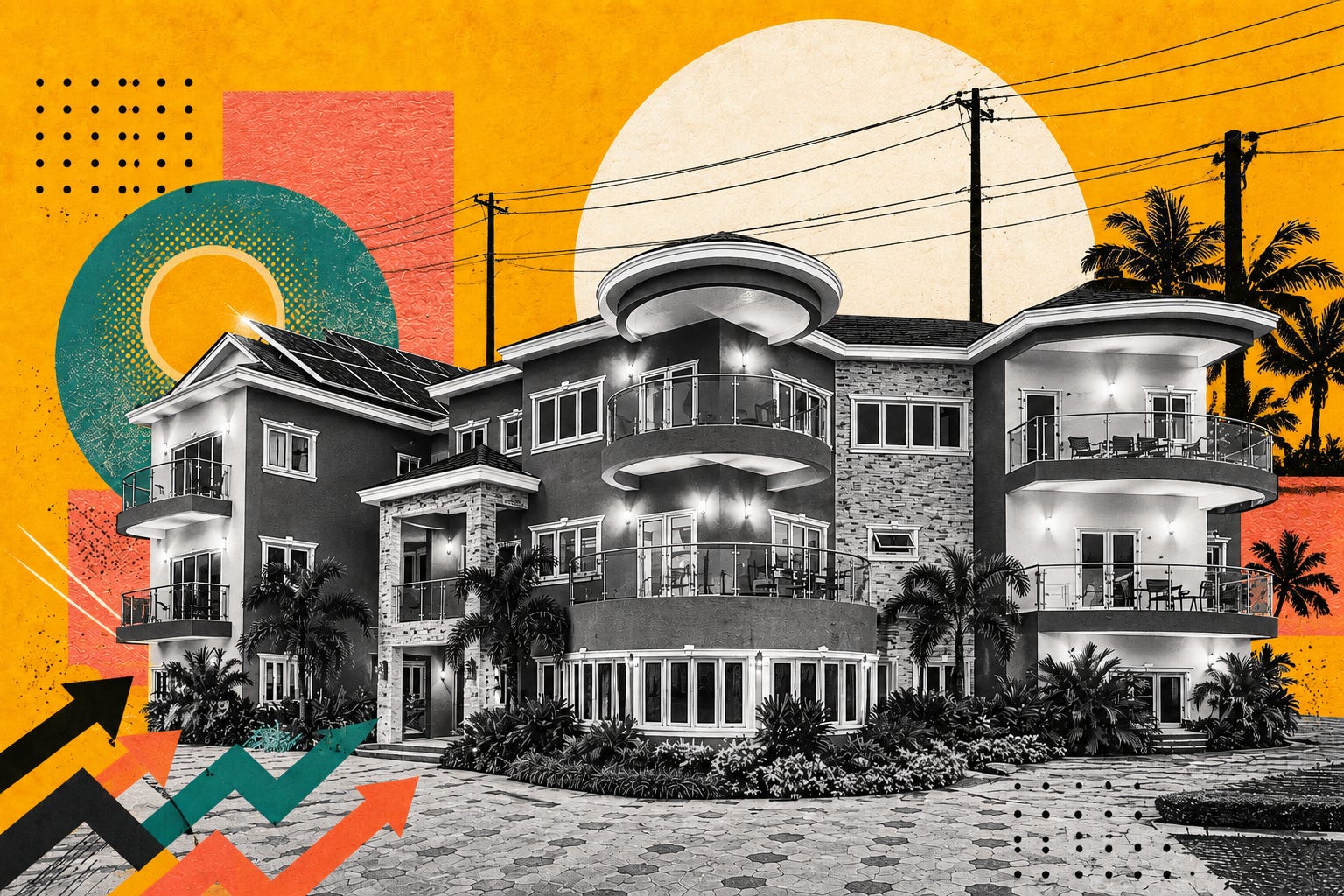
For decades, one of the most powerful dreams in Jamaican society began thousands of miles away.
It started in factories and foundries in Birmingham, on London construction sites, in Canadian hospitals, New York apartment buildings, and countless workplaces across Britain, North America, and beyond.
Many Jamaicans who left the island in the 1960s, 1970s, and 1980s carried with them a simple ambition: one day they would return home.
And when they did, they would build.
Not merely a house, but something substantial. Something permanent. Something that reflected a lifetime of sacrifice.
Across Jamaica, particularly from the 1970s onwards, large family homes began appearing in towns, villages, and rural communities. Six bedrooms. Eight bedrooms. Sometimes ten or more. Multi-storey structures perched on hillsides or spread across generous parcels of land.
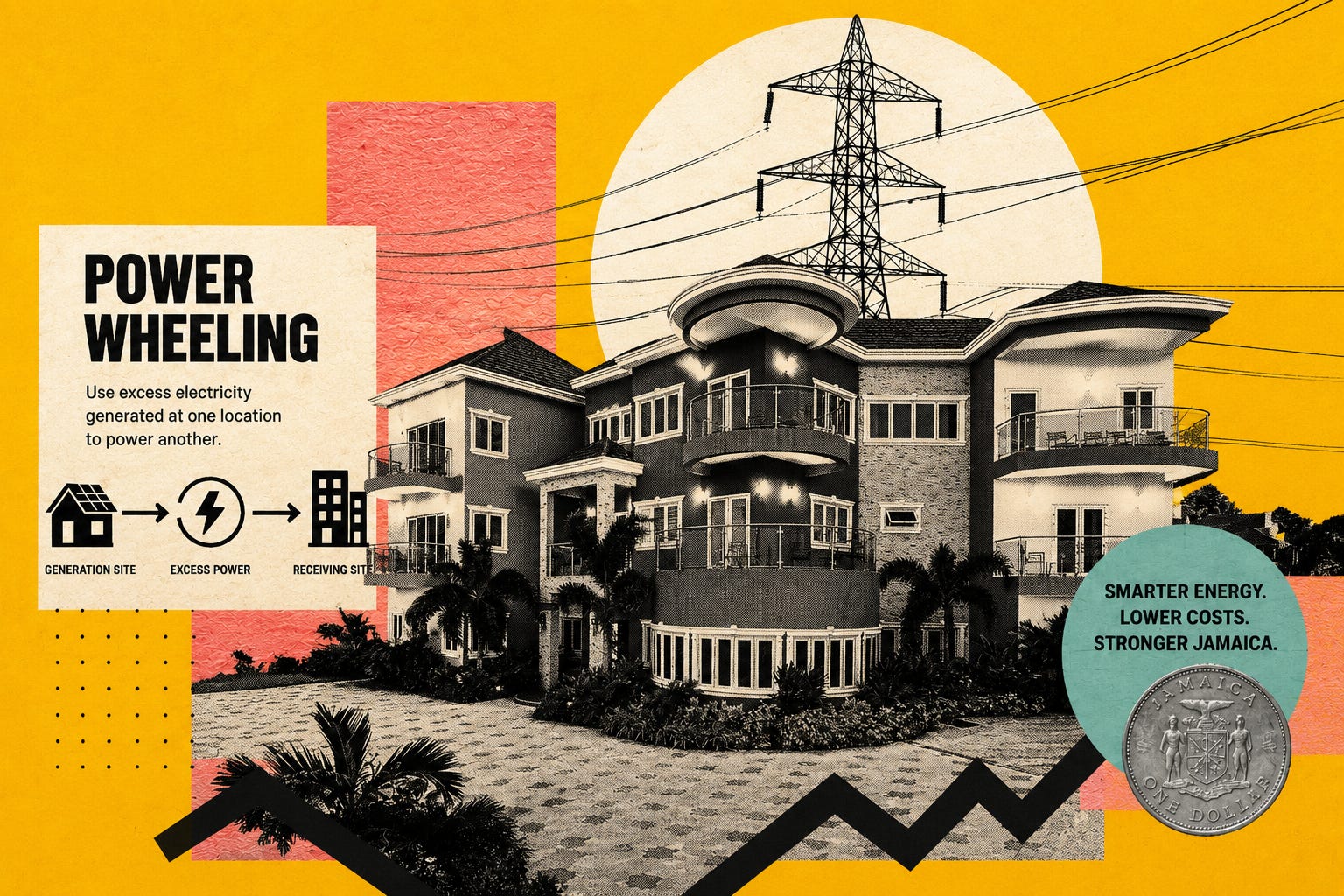
These homes were often described as mansions, but that label sometimes misses the deeper story.
For many members of the Windrush generation and those who followed, these houses were not primarily about showing off. They were symbols of achievement, belonging, and return. After years of working abroad, often in difficult circumstances, building a substantial home in Jamaica represented success in its purest form.
The house was expected to serve not only its owner but generations to come.
Children would return.
Grandchildren would visit.
Relatives would stay.
Family gatherings would fill every room.
The dream was not just a house.
It was a legacy.
Yet as Jamaica moves deeper into the twenty-first century, that dream is changing.
Not because Jamaicans no longer aspire to own beautiful homes.
But because the realities of modern life are forcing buyers to ask different questions.
Increasingly, the future of Jamaican housing appears to be moving away from the oversized family compound and toward something smaller, more manageable, and often more practical.
The shift may prove to be one of the most significant transformations in Jamaica’s property market in decades.
When the Dream Meets Reality
The challenge facing many owners of large homes is not difficult to understand.
A large house requires large maintenance budgets.
Roofs age.
Paint fades.
Water tanks need replacing.
Driveways crack.
Windows deteriorate.
Gardens require constant attention.
Security costs increase.
Insurance premiums rise.
Utilities become more expensive.
The very features that once made these homes attractive can eventually become burdensome.
In many cases, the children and grandchildren for whom the homes were built never permanently returned to Jamaica. Careers, marriages, and opportunities often kept them overseas.
What remained was a house designed for a large family occupied by one or two people.
Across the island, stories can be found of retirees living in homes where entire wings remain unused.
Others have converted sections into rental accommodation.
Some properties are occupied by extended family members.
Others sit largely closed for much of the year.
A few have become physical monuments to a vision of family life that no longer exists.
This is not a criticism of those homes.
Many remain beautiful properties filled with memories.
But it does highlight an important truth.
The housing needs of one generation are not always the housing needs of the next.
The Rise of a Different Dream
While the traditional Jamaican mansion remains admired, a different housing aspiration has quietly emerged.
Increasingly, both local buyers and returning residents are choosing gated communities, townhouses, apartments, and smaller detached homes.
The reasons are practical.
Security is often built into the development.
Roads and common areas are maintained collectively.
Neighbours are nearby.
Owners can travel with greater peace of mind.
The property is generally easier to manage.
For many buyers, particularly those who divide their time between Jamaica and overseas, convenience has become one of the most valuable amenities of all.
A house does not generate much enjoyment if every visit begins with a list of repairs.
As Dean Jones, Founder of Jamaica Homes and Realtor Associate, observes:
“For decades Jamaicans dreamed of building the biggest house they could afford. Today, many are looking for the smartest home they can comfortably maintain.”
That shift says less about changing ambitions and more about changing priorities.
People still want quality.
They still want comfort.
They still want space.
But increasingly they also want flexibility.
The Trade-Off Nobody Talks About
There is, however, an important tension emerging in the Jamaican housing market.
Many buyers want the benefits of a gated community while simultaneously wanting the freedoms associated with traditional Jamaican homeownership.
They want security.
They want managed infrastructure.
They want neighbours nearby.
They want the ability to lock up and leave for months at a time.
Yet they also want large yards.
They want room for fruit trees.
They want space for expansion.
They want backyard farming.
They want a detached workshop.
They want the freedom to customise their property without restriction.
The reality is that these objectives often conflict with one another.
Planned developments depend on density.
Infrastructure costs must be spread across multiple homes.
Road networks, drainage systems, utilities, and community facilities all require efficient land use.
As a result, the quarter-acre lot that many Jamaicans remember from previous generations is becoming increasingly difficult to find within modern housing schemes.
In many respects, buyers are being asked to choose between two versions of the Jamaican dream.
The first is independence and space.
The second is convenience and security.
Neither is inherently better.
But increasingly, the market appears to be favouring the latter.
Why Smaller Does Not Necessarily Mean Less
One of the most common misconceptions in real estate is the belief that larger automatically means better.
In reality, value is often determined by functionality rather than size.
A well-designed home with excellent natural light, thoughtful storage, strong airflow, and efficient use of space can feel significantly more comfortable than a much larger property with a poor layout.
Modern buyers are increasingly recognizing this.
The conversation is slowly shifting away from square footage and toward lifestyle.
How long is the commute?
How secure is the community?
How expensive is the maintenance?
How resilient is the property?
How much time will ownership require?
These questions are becoming just as important as the number of bedrooms.
As Dean Jones notes:
“A house should support your future, not compete with it. The best homes create freedom, not financial exhaustion.”
That idea resonates particularly strongly at a time when many families are carefully balancing housing costs against other priorities.
Affordability Is Part of the Story
Of course, affordability remains an important factor.
Property prices have risen significantly in many parts of Jamaica.
Construction costs remain elevated.
Financing costs continue to influence purchasing decisions.
For many first-time buyers, entering the market with a smaller property may simply be the most realistic option.
Yet framing smaller homes solely as a budget decision misses the broader picture.
Many buyers who could afford larger homes are still choosing more compact options.
They are making a conscious decision to reduce maintenance obligations, improve convenience, and preserve flexibility.
That represents a philosophical shift rather than merely a financial one.
The goal is no longer necessarily to own the largest possible property.
The goal is increasingly to own the property that best supports the life being lived.
Communities Are Becoming Part of the Home
Another major factor influencing buyer behaviour is the growth of community-centred developments.
Historically, much of the emphasis was placed on the house itself.
Today, buyers are paying greater attention to the environment surrounding it.
Walking paths.
Recreational areas.
Green spaces.
Clubhouses.
Fitness facilities.
Shared amenities.
Professional management.
Security infrastructure.
In these developments, the value proposition extends beyond the walls of the home.
The community itself becomes part of the living experience.
A slightly smaller house can feel substantially larger when supported by well-designed communal spaces.
This is particularly attractive to younger professionals, retirees, and returning residents seeking a simpler lifestyle.
A Quiet Cultural Shift
What is happening in Jamaica today is about more than architecture or real estate.
It reflects a broader cultural evolution.
Previous generations often measured success through physical expansion. Bigger houses, larger lots, more rooms.
Today’s buyers frequently place greater emphasis on experiences, flexibility, security, and convenience.
The definition of success is changing.
For some, luxury now means less maintenance rather than more square footage.
For others, it means being able to leave the island for several weeks without worrying about the property.
And for many, it means having financial breathing room rather than directing every available dollar toward housing costs.
There is also a certain irony in homeownership that many Jamaicans eventually discover.
The extra bedrooms that seemed essential during construction often become highly sophisticated storage facilities for items nobody has touched since the last general election.
The laughter that follows that observation usually comes from experience.
The Future of the Jamaican Home
The large family home is unlikely to disappear entirely.
There will always be buyers who value space, privacy, land, and the flexibility that comes with owning larger properties.
Nor should there be anything wrong with that aspiration.
The Jamaican mansion remains an important chapter in the country’s social history.
It tells the story of migration, sacrifice, resilience, and hope.
But a new chapter is clearly being written.
The emerging Jamaican housing dream appears less concerned with size and more concerned with balance.
Balance between ownership and lifestyle.
Balance between security and freedom.
Balance between ambition and practicality.
Balance between today and tomorrow.
As Dean Jones, Founder of Jamaica Homes and Realtor Associate, puts it:
“A home’s true size is measured not by its square footage, but by the opportunities it creates for the people living inside it.”
That may ultimately become the defining principle of Jamaica’s next housing era.
The future may not belong to the biggest house on the hill.
It may belong to the home that best fits the life its owner wants to live.