


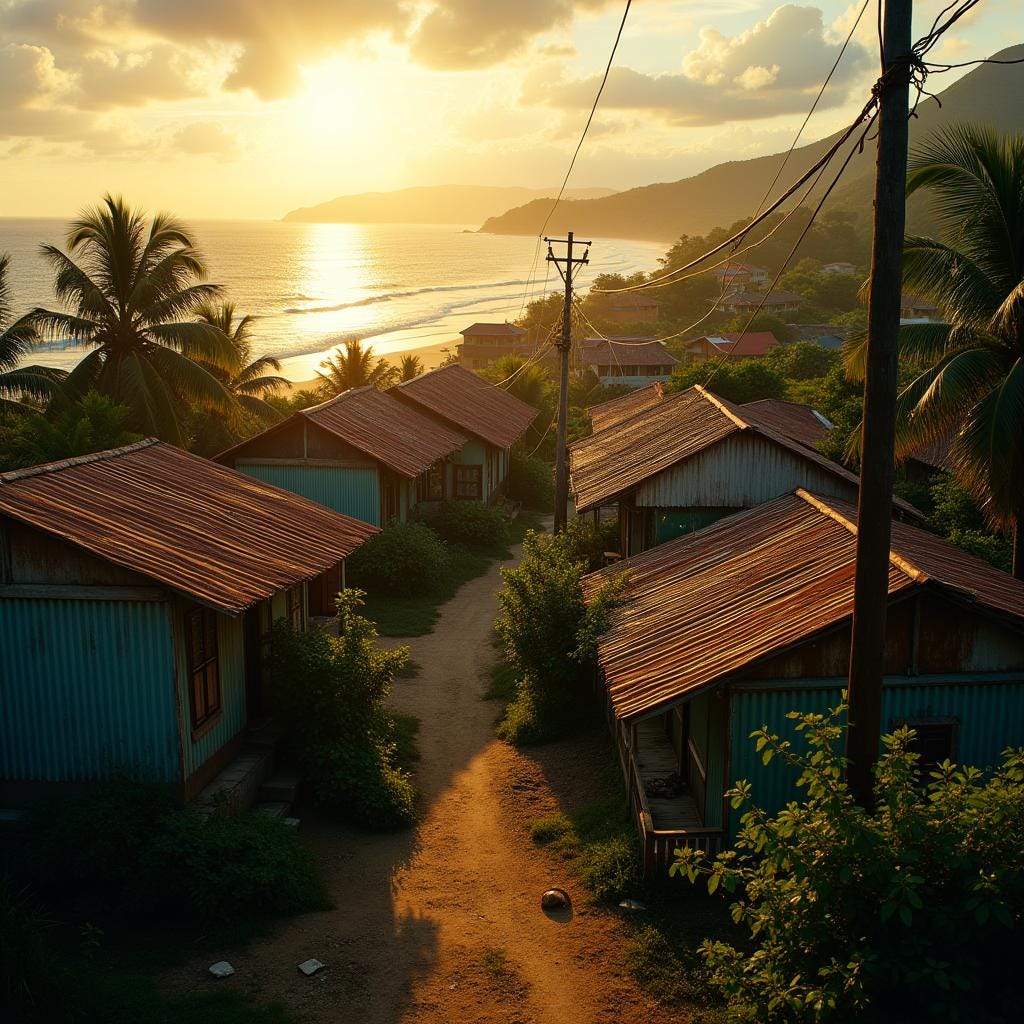
Jamaica’s political landscape has always been intertwined with the question of land ownership and property rights. From the colonial era to the present day, the evolution of politics in this island nation has often centered on who holds the land, how it is distributed, and the socioeconomic implications of such ownership. Understanding the trajectory of this relationship is crucial to appreciating both the challenges we face today as a nation and the opportunities that lie ahead for a more equitable future.
Colonial Foundations and Land Ownership
To understand the history of property in Jamaica, we must begin with the colonial period, a time when the land was the primary source of wealth and power. Under British rule, property ownership was a privilege enjoyed by a select few, predominantly white European settlers who were granted vast estates. The introduction of the sugar plantation economy in the 17th century further cemented land as a critical element of wealth and control.
The plantocracy – the ruling class of plantation owners – became the dominant political force, wielding considerable influence over both local governance and colonial policy. These plantations, sustained by the brutal labor of enslaved Africans, were the economic backbone of the colony. For the enslaved, property ownership was a distant dream, while the plantocracy thrived on the exploitation of both land and people.
This system of land ownership not only created a stark division between the wealthy landowners and the enslaved population but also laid the foundation for a deeply unequal society. Politics, in this era, was not the domain of the people but the realm of those who controlled the land and, by extension, the lives of those who worked it.
Emancipation and the Quest for Land
The abolition of slavery in 1834 marked a turning point in Jamaica’s political and social history. Formerly enslaved Africans, now free, saw land ownership as a means to gain autonomy and security. However, the reality was far from straightforward. While freedom was granted, the vast majority of the island’s land remained in the hands of the former plantocracy. Access to land became a central issue, and for many freedmen, the promise of true freedom remained elusive without it.
In the years following emancipation, political movements began to emerge, advocating for land reform and greater access to property for the black majority. These movements, often spearheaded by leaders like George William Gordon and Paul Bogle, highlighted the deep inequalities in land distribution. The Morant Bay Rebellion of 1865, a pivotal moment in Jamaica’s history, was fueled by the grievances of poor, landless black people who sought economic justice. The rebellion was violently suppressed, but it ignited a broader conversation about land ownership and political power.
The late 19th century saw a gradual shift towards smallholder farming as some freedmen managed to acquire land, but systemic barriers remained. Land ownership was still largely concentrated in the hands of a few, and political power remained tied to property rights, with voting rights restricted to those who owned land or met a high property threshold. This period laid bare the need for a political system that represented the interests of the landless majority.
The Rise of Political Parties and Land Reform
The 20th century heralded a new era in Jamaican politics, marked by the formation of political parties and the push for greater political representation for the masses. Central to this political evolution was the question of Land reform and Property rights. The People’s National Party (PNP), founded in 1938 under the leadership of Norman Manley, championed social justice and Land reform as part of its broader platform for independence and economic self-determination. The Jamaica Labour Party (JLP), formed in 1943 by Alexander Bustamante, also recognized the importance of Land as a tool for economic empowerment and political participation.
With the advent of universal adult suffrage in 1944, the political landscape shifted dramatically. For the first time, the majority of Jamaicans, regardless of Land ownership, had a say in the governance of the country. This expansion of political rights brought the issue of Land reform to the forefront of political discourse.
In the post-independence era, both the PNP and JLP grappled with the challenge of addressing Land inequality. Land settlement schemes were introduced, aiming to redistribute Land to the poor and promote small-scale farming. These efforts, while significant, were often hampered by bureaucratic inefficiencies and a lack of political will to fully dismantle the entrenched systems of Land ownership.
Urbanization, Squatting, and the Politics of Property
As Jamaica’s economy industrialized and urbanized in the mid-20th century, the nature of the land issue evolved. The migration from rural areas to cities like Kingston created new challenges in the realm of property and housing. Urbanization led to an increase in informal settlements, with large numbers of Jamaicans living in squatter communities due to the lack of affordable housing options.
The politics of property took on a new dimension as successive governments sought to balance the demands of economic development with the need for social equity. Land titling programs and housing schemes became central to the political agenda, as the government recognized the importance of securing property rights for all Jamaicans, not just the wealthy elite. However, squatting remains a contentious issue, reflecting ongoing tensions between land ownership and economic opportunity.
In more recent times, the rise of large-scale tourism and foreign investment in Jamaica’s real estate market has further complicated the landscape. While these developments have brought economic growth, they have also exacerbated concerns about land access for ordinary Jamaicans, particularly in coastal areas where prime real estate is often sold to foreign investors.
The Role of Property in Modern Jamaican Politics
Today, the politics of property in Jamaica is as relevant as ever. Land remains a critical asset for both economic development and social mobility. Successive governments have recognized that secure property rights are essential for creating a stable and prosperous society. The formalization of land titles, housing developments, and the promotion of homeownership have been key pillars of government policy.
However, challenges persist. The legacy of unequal land distribution, dating back to the colonial era, continues to shape the economic realities of many Jamaicans. Access to land, particularly for the rural poor and urban squatters, remains a pressing issue. Political leaders must continue to address these challenges with policies that prioritize land reform, affordable housing, and sustainable development.
The Path Forward
As we look to the future, the relationship between politics and property in Jamaica must be one of inclusivity and opportunity. The government must ensure that all Jamaicans, regardless of their socioeconomic background, have access to land and the means to secure their property rights. This is not only a matter of economic justice but also of political stability and social cohesion.
The journey from colonialism to independence, and now towards full economic self-sufficiency, has been marked by the ongoing struggle for land and property. Jamaica’s political leaders must continue to advocate for policies that address the historical inequalities in land ownership, while also embracing the opportunities that come with a modern, dynamic economy.
Our goal must be to build a Jamaica where every citizen has the opportunity to own property, contribute to the economy, and share in the nation’s prosperity. This is the promise of true independence and the path to a brighter future for all Jamaicans.
The Way Forward
The history of politics and property in Jamaica is a testament to the power of land in shaping societies. From the colonial era to the modern day, the distribution and ownership of property have been at the heart of political struggles and economic development. As we move forward, our commitment to addressing these historical challenges and creating a more equitable Jamaica remains unwavering. Land, after all, is not just an asset—it is the foundation upon which we will build a prosperous and just society.
General Disclaimer
The information provided in this document is for general informational purposes only. While every effort has been made to ensure the accuracy and reliability of the content, it is not intended to serve as legal, financial, or professional advice. Readers are encouraged to seek appropriate legal or professional counsel regarding their specific circumstances. The author and publisher assume no responsibility or liability for any errors or omissions or for any actions taken based on the content of this document. All opinions expressed herein are those of the author and do not necessarily reflect the views of any affiliated organizations or entities.