


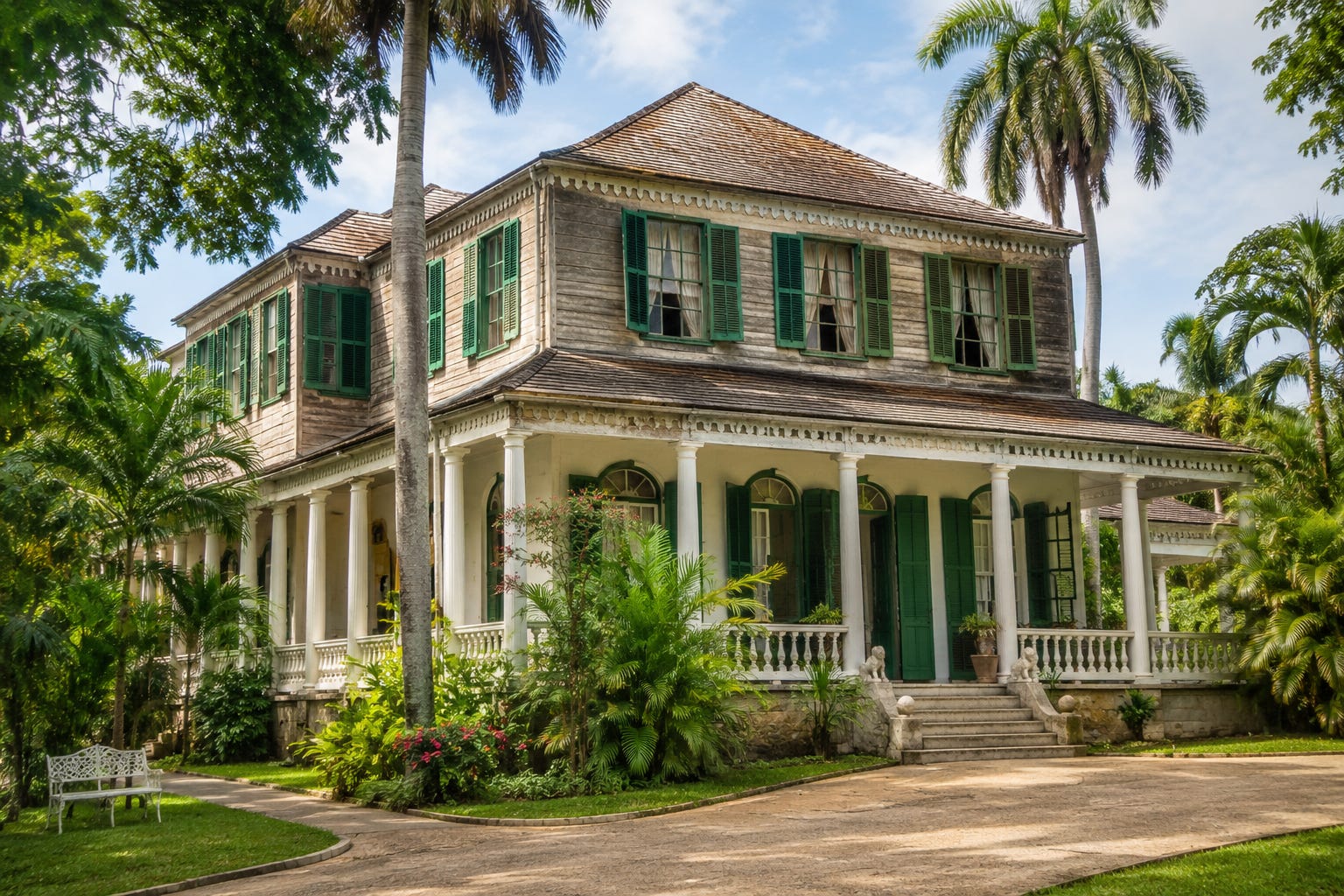
There is a particular kind of house you see across Jamaica.
You find it behind zinc fences and old fruit trees. Sometimes perched above a road cut into the hills. Sometimes tucked between newer apartment blocks in Kingston. Sometimes sitting quietly near the sea in St Ann, St Elizabeth or Portland, slowly ageing beneath salt wind and rain.
The paint fades first.
Then the veranda sags a little.
A grandchild moves into one room. An uncle occupies another. Somebody starts a shop at the front. Somebody migrates to England. Somebody else says they paid for the roof from foreign. Nobody quite agrees who owns what anymore.
And eventually, the house itself becomes suspended in time.
Not abandoned exactly. But trapped.
Across Jamaica and much of the Caribbean, one of the region’s biggest hidden crises is sitting quietly inside ordinary family homes and parcels of land. It is the inheritance crisis.
Not inheritance in the billionaire sense. Not sprawling estates and trust funds. This is something far more Caribbean. A board house extended block by block over forty years. A small farm left by grandparents. A family lot divided verbally at a funeral. A title never updated because “everybody know who fi get it.”
The emotional weight of these properties is enormous. They are not just assets. They are memory. Migration. Sacrifice. Christmas dinner. Barrels from foreign. School fees. Funeral collections. Entire family histories poured into concrete, timber and land.
But modern economies do not run on memory.
Banks want title.
Courts want documentation.
Developers want certainty.
And that collision between informal family understanding and formal legal systems is creating quiet paralysis across the Caribbean.
Jamaica’s Administrator General has reportedly managed more than J$50 billion in property assets linked largely to estates and inheritance matters. That figure alone hints at the scale of the issue. Yet even that likely captures only a fraction of the wider reality involving unresolved family land, untitled property and estates never formally administered.
The deeper problem is that many families never complete probate or transfer ownership after someone dies. In straightforward cases, estates can sometimes be resolved within months. In reality, many Caribbean properties remain unresolved for decades. One death becomes two. Then three. Then grandchildren inherit confusion instead of clarity.
Over time, ownership splinters.
One house can eventually end up with ten, twenty or even more potential heirs spread across Kingston, Birmingham, Toronto, Brooklyn and Fort Lauderdale. Some may not even realise they legally own a share. Others return years later believing the property belongs entirely to them because they “sent money all along.”
Meanwhile, the relatives who stayed behind often feel morally entitled because they maintained the property physically and financially for years.
That is where the emotional explosion begins.
“You never helped.”
“I paid the taxes.”
“I took care of Mommy.”
“Daddy promised me this side.”
Inheritance disputes in Jamaica are rarely just legal disputes. They are arguments about migration, sacrifice, abandonment, identity and survival.
The Caribbean’s migration story made this almost inevitable.
From the Windrush era onward, Caribbean families became transnational. Parents migrated while children stayed behind. Siblings scattered across continents. Remittances became one of the region’s economic lifelines. In Jamaica alone, remittance inflows regularly exceed US$3 billion annually, shaping everything from house construction to education and daily survival.
Entire homes were built through money wired from overseas.
But many of those arrangements were informal.
No written agreements.
No proper transfers.
No updated titles.
No wills.
And when death enters the picture, those emotional understandings suddenly collide with legal reality.
One of the most dangerous myths in Jamaica remains the belief that long occupation automatically equals ownership.
“Mi live yah all mi life.”
Legally, that may not be enough.
People genuinely believe they own land because they maintained it, built onto it, paid bills or were verbally promised it by parents. But under modern property systems, ownership depends heavily on documented legal processes. That reality usually only becomes visible when somebody tries to sell the property, obtain financing or challenge another relative’s claim.
The economic consequences are enormous.
Unresolved estates quietly freeze development across the Caribbean.
Banks are reluctant to lend against disputed property.
Developers avoid uncertain title histories.
Families cannot unlock equity.
Housing stock deteriorates while legal arguments continue for years.
In Kingston especially, there are older homes sitting on increasingly valuable land that cannot easily be redeveloped because ownership is tangled across generations. At the same time, Jamaica continues facing housing shortages, rising construction costs and growing affordability pressure.
The inheritance crisis is therefore not just emotional.
It is economic.
It affects housing supply, lending, redevelopment and wealth creation itself.
Then there is the cultural silence surrounding death planning.
Many Caribbean families simply do not discuss wills openly. Some fear appearing greedy. Others believe talking about death invites death. In some households, parents avoid clarity intentionally because they do not want conflict while alive.
Ironically, that silence often guarantees conflict after death.
When no will exists, intestacy laws take over. And what families expect emotionally may differ dramatically from what the law recognises. Stepchildren may discover they have no entitlement. Common law relationships can trigger disputes. Children from outside relationships may suddenly emerge during estate proceedings.
The result is not just legal confusion. It is emotional devastation.
Brothers stop speaking.
Cousins become enemies.
Funerals become tense.
Children inherit bitterness instead of security.
Sometimes the legal fees consume a shocking portion of the property’s value itself.
Women often carry the hidden burden of all this.
Across the Caribbean, daughters, sisters and mothers frequently become the unpaid administrators of ageing parents, funerals, family homes and emotional mediation. Yet caregiving rarely translates neatly into legal entitlement. That creates another layer of resentment when inheritance discussions finally erupt.
Now add climate pressure and rising land values into the equation.
As tourism expands and coastal land becomes more valuable, dormant inheritance disputes are likely to intensify. Families that ignored a piece of land for twenty years may suddenly begin fighting over it once developers arrive or nearby property prices rise sharply.
Climate change may ultimately make the inheritance crisis even worse, particularly in vulnerable coastal regions where redevelopment pressure is increasing rapidly.
What makes this crisis so difficult is that it is rooted in history itself.
After emancipation, land represented freedom and dignity for formerly enslaved people across the Caribbean. Family land systems emerged partly because formal legal systems were expensive, inaccessible and deeply distrusted. Informal inheritance became woven into Caribbean culture over generations.
In many ways, family land was resistance.
But today, those same informal systems increasingly collide with modern finance, urbanisation and legal reality.
The uncomfortable truth is that some Caribbean families are now land rich but economically trapped. They may technically sit on valuable property while being unable to finance it, develop it, sell it cleanly or even agree internally about who owns it.
And so the house slowly waits.
The curtains fade.
The zinc rusts.
The mango tree keeps growing.
And another generation inherits uncertainty instead of stability.
The inheritance crisis is no longer simply a private family matter hidden behind concrete walls and old photographs. It is becoming one of the Caribbean’s quietest economic and social emergencies.
This is fascinating and tragic. You brought to light an issue that very few know about here in the U.S. I think inheritance often brings out the worst in people in all cultures. I have seen so many families toward apart fighting over property and money. Property is both a gift and a burden and tending to it can be quite costly both financially and in terms of sweat equity. Is part of the struggle in Jamaica involve a legal system out of synch with the traditional culture? It sounds like many people are not navigating the legal system and I'm curious as to the why.