


There is a lazy way to talk about real estate in Jamaica, and then there is the honest way.
The lazy way is to reduce the whole subject to listings, rates, square footage, gated communities, luxury developments, diaspora buyers, and the latest rush for apartments in Kingston or villas on the coast. That version is neat. Marketable. Sanitised. It offends no one. It also misses the truth.
The honest way is harder. It says that real estate in Jamaica has never only been about land. It has always been about family, discipline, sacrifice, migration, memory, endurance, class, race, faith, storms, pride, and the moral habits that allow one generation to leave something solid for the next. Property, in the Jamaican story, was never merely property. It was survival made visible. It was struggle poured into concrete. It was a statement that said: we were here, we worked, we suffered, we saved, and we built.
That is the story too many people now want to flatten into a brochure.
I am not interested in brochures.
I am interested in truth.
And the truth is that if you want to understand investing in real estate in Jamaica, you have to understand the kind of people who believed in building before they had money, who saved before they showed off, who partnered before the banks ever respected them, who left Jamaica for Britain and met contempt with composure, and who still sent money home, bought land, raised walls, roofed houses, fed family, hosted church people, held communities together, and kept dreaming beyond their own lifetimes.
That is where the real history lives.
It does not begin in a boardroom. It begins in the yard.
It begins in the old family house.
It begins with grandparents.
It begins with standards.
It begins with the matriarch and the patriarch who understood something modern society has worked very hard to forget: a home is not just where you sleep. A home is where values are trained, where children are watched, where adults are corrected, where meals are shared, where stories are handed down, where respect is enforced, where sorrow is carried, where hope is repaired, and where the future is planned.
Once upon a time in Jamaica, that was normal.
The grandparents were not decorative figures wheeled out for special occasions. They were the centre of gravity. They were the ones people gathered around. They were respected in the family and known in the community. They kept order. They were often the Saturday worshippers or the Sunday worshippers, depending on the tradition, and the rhythm of the week moved around that moral centre. Children came. Their children came. Then their children came. Family would gather, eat, talk, laugh, catch up, be corrected, be encouraged, and be reminded that life was not only about the individual. It was about belonging to something greater than your own appetite.
That matters in any society. It matters even more in a country like Jamaica, where community has always had to do some of the work that institutions failed to do.
I grew up inside that kind of family system. I know what it looked like when the grandparents set the tone. I know what it meant to see a house function as more than a structure. It was a meeting place, a refuge, a moral training ground, a place of memory, and a platform. Not a platform of luxury. A platform of support. There is a difference. Too many people today think a platform means being born with a silver spoon. It does not. Sometimes a platform is simply a stable roof, a cooked meal, an adult who cares, rules that are enforced, and the quiet assurance that somebody expects something from you.
That alone can change a life.
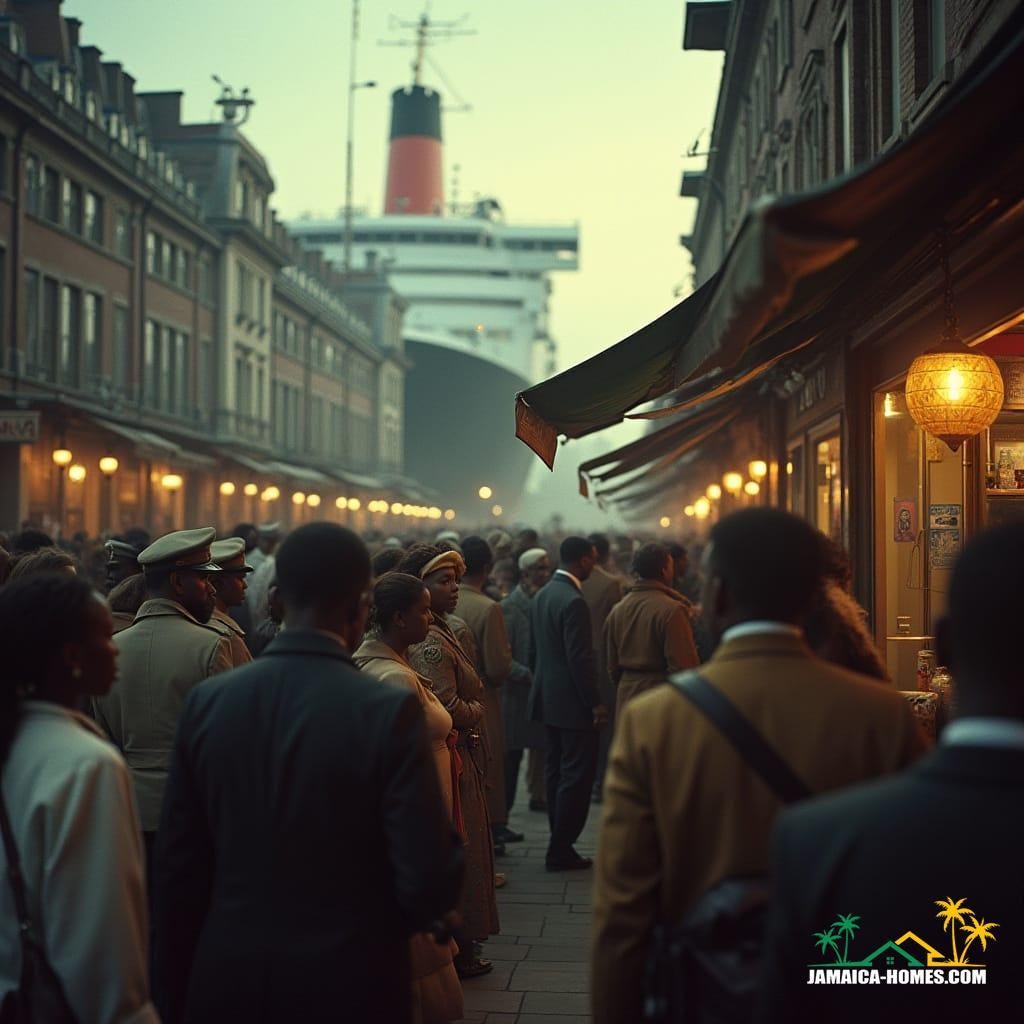
My family story, like the story of so many Caribbean families, runs through Jamaica and Britain together. It cannot be told honestly any other way. The Windrush period and the years around it were not just about movement. They were about strategy. Caribbean people did not simply board ships and planes in search of adventure. They went because opportunity, labour, and necessity pulled them. Britain wanted workers. The Caribbean had people with strength, skill, discipline, and ambition. And many of those who travelled were not coming from some moral wasteland. They came from homes with standards. They came from families that understood respectability, presentation, work, worship, sacrifice, and mutual obligation.
Let us also stop telling lies about those migrants. They were not all destitute, directionless, and broken. Many were decent, upstanding Jamaicans who went abroad not because they lacked dignity, but because they had the courage to go where the work was and the discipline to endure what came with it.
And what came with it was not always kindness.
Let us be plain. Caribbean people in Britain were insulted, spat on, humiliated, boxed out, looked down on, and in some cases terrorised. Bottles were thrown through windows. Fire and alcohol were thrown at homes. People were treated as though their labour was useful but their humanity negotiable. That is part of the story. It should not be softened for anybody’s comfort. A great many West Indian families endured ugliness with a level of restraint and resilience that still does not get the respect it deserves.
And yet what did many of them do?
They worked.
They saved.
They partnered.
They bought.
They built.
That is the part that should shame our laziness today.
While being insulted, they were organising themselves economically. While people were spitting at them, they were buying houses. While being told they did not belong, they were creating stability and wealth through patience. They understood that property was not only about status. Property was protection. Property was income. Property was leverage. Property was what allowed a family not to be at the mercy of every landlord, every whim, every bad season, every insult.
My grandparents understood that.
My grandfather worked in the factories when he got to England. He saw what many men of his generation saw: that labour without dignity has limits. Eventually, because of poor treatment and not being paid properly, he left that path and created his own carpentry business. He worked for himself until the day he died. That matters. It matters because it reveals a mindset. He was not content to be exploited forever. He believed in earning, building, and standing on his own feet.
My grandmother Mrs Isaacs worked too. She cleaned. She rose. She became a ward clerk. She took pride in standards, cleanliness, order, and the doing of things properly. Together they worked hard, and like so many Jamaican couples of that generation, they were not wasteful people. They were strategic people.
They partnered.
They saved.
They trusted one another.
My grandfather Mr Isaacs gave money to my grandmother because she was trusted. She put away what needed to be put away. She paid the bills. She managed the household. She stretched what had to stretch. She somehow found a way to buy plenty of food without blowing the budget. She cooked for twenty even when fewer turned up, because her house was not run on a miser’s mentality. It was run on abundance married to discipline. Those are not opposites. That is one of the old lessons modern people have forgotten.
And the house itself was never just their house. It was a place where people stayed. My grandfather believed in buying big. He used to say, in effect, what is a tiny house going to do for you? How is that going to make money? How is that going to help anybody? He bought a large house in England and there were other Jamaican families living there too. That was not random. That was economic intelligence. That was community economics before people started dressing it up in polished language.
He always thought bigger than himself.
That is a lesson Jamaica desperately needs again.
Today too many people want the appearance of wealth without the architecture of it. They want the car before the corner lot. They want the image before the asset. They want the outfit before the ownership. But the older generation understood sequence. They knew that if you got the order wrong, you could spend your whole life looking prosperous while remaining economically fragile.
“The old generation did not invest in display. They invested in durability. They wanted something that would still be standing when the applause died.”
That is real estate wisdom.
The Jamaica that shaped many of us was not perfect, but it had forms of social glue that we should be very careful not to laugh away as old-fashioned. There was stricter parenting. There was more community oversight. There was more expectation that children should be neat, respectful, and mindful of how they carried themselves. There were rituals around preparation, around worship, around meals, around gathering, around rest. There were lines. There was structure. And structure, though unfashionable to modern ears, is one of the hidden foundations of every successful household.
You cannot talk seriously about homes while pretending that the culture inside them does not matter.
It matters greatly.
A nation is not held together first by slogans. It is held together by habits.
And the home is where habits are made.
That is why the breakdown of the family system matters so much, not only morally but economically. This point must be handled honestly and carefully. It is not an attack on single mothers. Far from it. Many single mothers do heroic work and deserve profound respect. Plenty have raised excellent children under enormous pressure. That should be acknowledged without hesitation.
But acknowledging that truth does not require us to ignore another truth: two committed adults building together often have a stronger platform from which to plan, save, buy, and raise children. Two incomes can change the mathematics of a mortgage. Two responsible adults can spread pressure. One can work while another covers home. One can hold the line when another is tired. The point is not to romanticise marriage or condemn anyone else. The point is to recognise that alignment, cooperation, and shared responsibility make long-term investment easier.
The old people understood this instinctively.
“When two disciplined people pull in the same direction, the dream stops being fantasy and starts becoming a floor plan.”
That is not poetry for poetry’s sake. It is practical truth.
A stable family structure often feeds directly into stable property ownership. A stable property base often feeds directly into better outcomes for children. Better outcomes for children shape better communities. Better communities shape stronger countries. This is not complicated. We keep trying to outthink what the old generation already knew.
And while we are speaking plainly, let us speak about bad mind too.
Bad mind is one of the great unspoken taxes on Jamaican progress. It destroys cooperation. It poisons families. It ruins partnerships. It turns another person’s blessing into your personal irritation. It stops people from learning. It makes them spectators of their own decline.
There are Jamaicans who would rather complain about what another person is building than study how they built it. That mentality is crippling. If somebody close to you is doing well, that should not threaten you. It should teach you. It should sharpen you. It should encourage you. It should remind you that progress is possible. But bad mind makes people try to drag down the person instead of developing themselves.
“Bad mind has buried more Jamaican opportunity than lack of talent ever could.”
That is hard, but it is true.
The old culture of partnering proved that Jamaicans know how to pool resources when the mindset is right. Four families can still buy land together. Two families can still build in stages. A family can still purchase a plot and put up one structure, then another, then another. Not every route into real estate has to begin with a commercial bank and a polished brochure. Some of the strongest property legacies in Jamaican families were built incrementally, with trust, sacrifice, and vision.
That is how many people built “back home” while living abroad. They worked in England and built in Jamaica. They sent barrels, remittances, plans, materials, instructions, hopes. They bought land in St Catherine, St Mary, Kingston, Clarendon, St Ann, and elsewhere. They returned in retirement. They came back for part of the year. They built family homes, income-generating spaces, and rental opportunities long before “diaspora investment” became a marketing phrase.
To some, that looked slow. To those who understood, it looked wise.
I know what it was to move between worlds. I remember Jamaica vividly. I remember Hellshire Beach when it still felt like a proper beach. I remember floating around in a truck tyre as a little child, enjoying the simple wonder of the sea. I remember festival and fish. I remember that the real joy was often not in the food alone but in the movement, the outing, the ride on the back of a pickup truck, the company, the freedom. I remember St Catherine and Spanish Town, moving around, feeling that sense that people knew people, that a name meant something, that a family was known. There was community. There was identity. There was memory in the streets.
I did not love every trip to country as a child. The mosquitoes could test your religion. But even that is part of the memory. Jamaica was varied. Town had one rhythm, country another. St Mary was not Spanish Town. Guys Hill was not Hellshire. But all of it was education. All of it was teaching. All of it was quietly shaping a sense of what home means and what poverty looks like and what possibility feels like.
Seeing poverty up close can do one of two things. It can break your spirit or sharpen your resolve. For me, it sharpened resolve. It showed me early that life would not hand out guarantees. It pressed into me the importance of trying, striving, learning, pushing, building. That drive does not come from nowhere. It comes from environment, from family influence, from seeing enough to know that drifting is dangerous.
My own path was not free of difficulty. I dealt with learning challenges early on. But I did not let that define the ceiling of my life. I leaned into what I was good at. I pursued design. I ended up at Central Saint Martins in London, at a time when I was the only Black student there in that context. I kept going. I studied further. I completed more qualifications. Project management, surveying, leadership, charterships, professional development, years of learning and practice. None of that happened in a vacuum. It happened because there was backing. There was family. There was support. There was somewhere to stand.
That is why I keep returning to this point: home matters.
Not the decorative idea of home. The functional reality of it.
A roof over your head matters.
A stable environment matters.
Being known matters.
Being supported matters.
Children raised with support may not have wealth handed to them, but they gain something else: a platform from which to move. That platform can be emotional, moral, practical, educational. It can be the difference between somebody collapsing under life and somebody pressing through it.
Real estate, then, is not merely about ownership papers. It is about giving your family a platform.
“The greatest thing a home can give a child is not luxury. It is emotional footing.”
That is one reason the history of real estate in Jamaica cannot be separated from storms, rebuilding, and resilience. Families built, lost, repaired, and built again. Hurricane Gilbert left its mark on Jamaica. Houses suffered. Communities suffered. But Jamaicans rebuilt. Long before and after that, families kept finding ways to put things back together after damage, scarcity, migration, separation, and strain. Building back stronger is not a slogan in the Jamaican story. It is a recurring discipline.
That discipline matters now more than ever because Jamaica is in danger of talking itself out of its own inheritance. We complain too much and plan too little. We talk as though opportunity should arrive fully assembled. We make noise about returnees, foreigners, contracts, development, ownership, and who is coming in and taking what. Some of the complaints are understandable. Any country should think seriously about control of land, the terms of development, and the public interest. But too often the complaining becomes a substitute for strategy.
Let us be honest: the person coming to Jamaica to invest will usually negotiate in their own interest. That is normal. It is not their job to love Jamaica more than Jamaicans do. The duty of care lies with those representing Jamaican interests. Stop blaming outsiders for having a plan while insiders drift without one.
And stop despising returnees who come back to build.
Returnees bring capital, ideas, labour demand, and confidence. They employ people. They spend money. They improve properties. They contribute to tax, trade, and local demand. Rather than grumbling at them, we should be asking how Jamaica can better channel that energy into broader national strengthening.
The old people would have understood this instinctively. They believed in making something. They believed in using what you had. They believed in planning beyond this week.
Today, too many contracts are signed for today and not for tomorrow. Too many decisions are made for immediate benefit with no thought for heritage, for legacy, for the children who have to live with the consequences. That is what happens when the family imagination weakens. When a man or woman is rooted only in self, they think in quarters and months. When a person is rooted in family, they are more likely to think in generations.
And that is where real estate becomes moral again.
Property is not only an economic tool. It is a moral statement about whether you are willing to think beyond yourself.
So here is the hard truth.
Jamaica does not only need more houses.
Jamaica needs more builders in the deepest sense.
More people willing to cooperate.
More people willing to save.
More people willing to delay vanity.
More people willing to pool resources.
More people willing to think generationally.
More people willing to restore standards in the home.
More people willing to encourage rather than envy.
More people willing to stop cursing every opportunity and start structuring one.
We must not throw away old-time values simply because we live in a technological age. Progress does not require amnesia. A society can modernise without becoming morally loose, culturally forgetful, or economically foolish. We can embrace technology and still keep discipline. We can build apartments and still build families. We can pursue profit and still honour principles. We can go global and still remember the yard.
That is the challenge.
That is the opportunity.
That is the rebuke.
And yes, it is a rebuke, because some rebuke is needed. Jamaica cannot keep pretending that broken thinking has no consequence. Family breakdown has consequences. Bad mind has consequences. Short-term thinking has consequences. Mocking discipline has consequences. Worshipping appearance has consequences. Neglecting legacy has consequences.
But this is not a hopeless message. It is the opposite.
It is a wake-up call.
We still know how to build.
The memory is still in us.
It is in the grandmother who could feed twenty from a modest budget.
It is in the grandfather who said buy the bigger house and think beyond yourself.
It is in the migrants who endured humiliation and still acquired property.
It is in the families who partnered and built back home board by board, block by block.
It is in the returnees who come back and start again.
It is in the child who grows up between worlds and decides to create something useful from what he has seen.
That is why Jamaica Homes exists as more than a platform for buying and selling. It exists as part of a larger idea: that property should help Jamaicans imagine permanence again. Not only transaction. Permanence. Legacy. Stability. Possibility.
Because in the end, the best real estate investment is not always the flashiest one. It is the one that gives your family footing, gives your children memory, gives your elders dignity, gives your community continuity, and gives the next generation something better to start from than you had.
That is what the old generation was trying to teach us all along.
Not just how to own.
How to build.
Not just how to build.
How to last.
Dean Jones, founder of Jamaica Homes