

The Hurricane Hit Last Year. The Lessons Shouldn't Wait Until The Next One
From damaged roofs to flooded homes, Jamaica's households have only days left to fix the weaknesses Hurricane Melissa exposed.

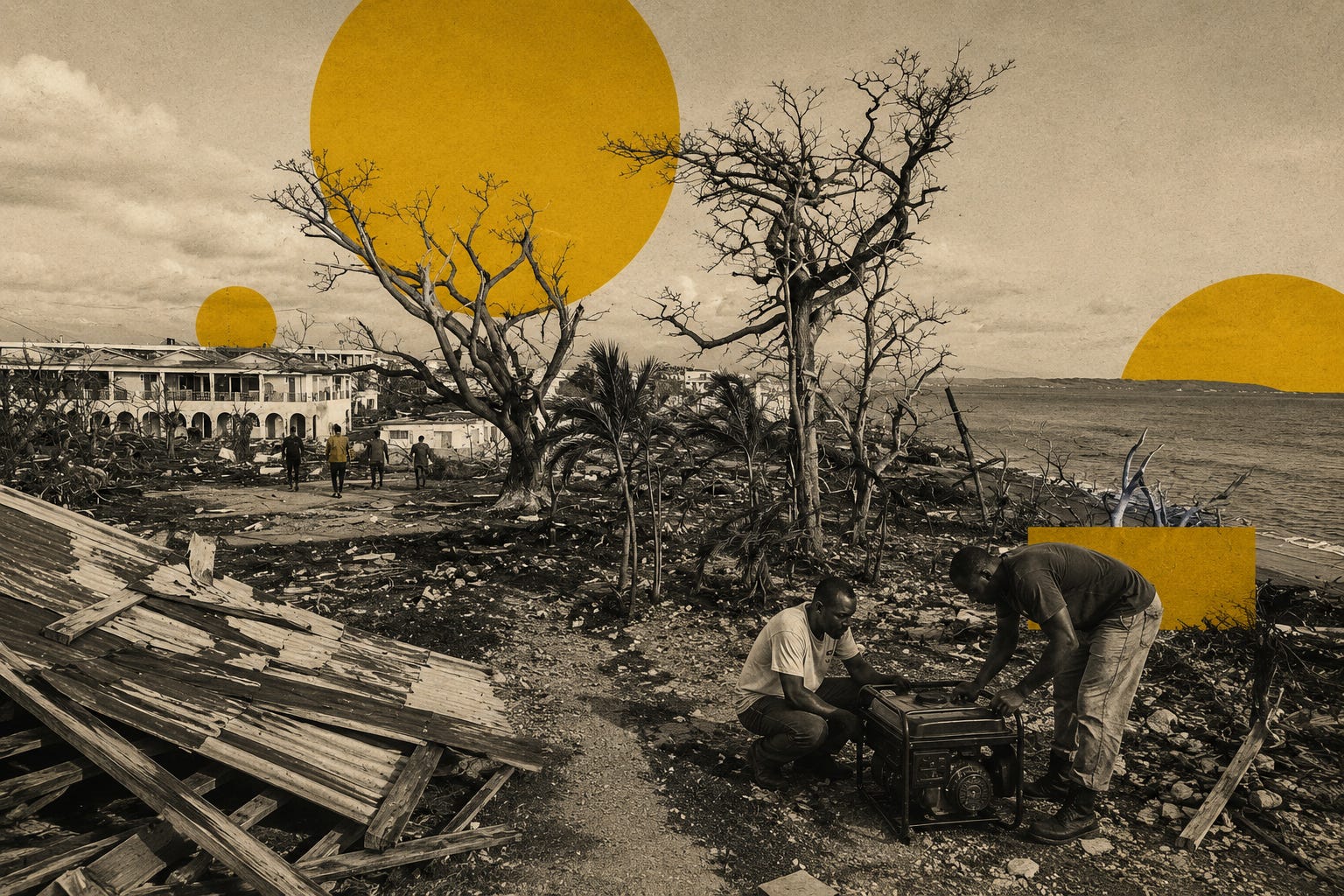
Prime Minister Andrew Holness is right when he says preparedness begins in households. The challenge is that many Jamaican households are entering this hurricane season carrying the scars of the last one. Some roofs remain partially repaired. Some ceilings still show water stains. Some families are still dealing with recurring flooding whenever heavy rain falls. Others escaped damage entirely and may be assuming they will be lucky twice.
The reality is that Jamaica is entering this hurricane season with three very different groups of people. The first group never fully recovered from Hurricane Melissa and may still be living under tarpaulins, patched roofs, damaged ceilings, or temporary repairs. The second group carried out repairs but may still have hidden weaknesses that only become visible during heavy rain or strong winds. The third group escaped with little or no damage and may feel that preparation is less urgent because their area was spared.
What Hurricane Melissa Revealed
Prime Minister Holness told the National Disaster Risk Management Council that Hurricane Melissa tested Jamaica’s assumptions about readiness, communications, logistics, shelter management, relief distribution, and recovery. The same could be said for thousands of homes across the island. The storm exposed weaknesses that had often been ignored for years.
Many of those weaknesses are still there today.
If Your Roof Was Damaged Last Year
For households that suffered roof damage, now is the time for a thorough inspection. A hurricane does not need to remove an entire roof to create a disaster.
Many homeowners are still living beneath patched zinc sheets, loose ridge caps, cracked concrete tiles, damaged soffits, weakened rafters, and ceilings stained by months of water intrusion. What survived Melissa may not survive the next storm.
Homeowners should inspect every roof fastener, replace missing tiles, secure water tanks, repair damaged gutters, check roof straps, investigate ceiling stains, and remove loose materials from yards.
The most dangerous assumption is believing a roof is safe simply because it remains standing.
The Hidden Danger Above Your Head
Those with tiled roofs should pay particular attention. A single loose tile may seem insignificant during normal weather, but in hurricane-force winds it can become a projectile capable of damaging neighbouring homes, vehicles, and power lines.
Likewise, a small ceiling stain often indicates a larger problem above it. Water entering through tiny cracks today can weaken structural timbers over months and create a much bigger failure when severe weather arrives.
If Flooding Entered Your Home
The Prime Minister spoke about resilience, but for many Jamaicans resilience starts with a shovel, a drain, and proper water management. Thousands of households discovered that floodwaters often cause greater financial losses than wind.
If water entered a home once, households should assume it can happen again.
Drains should be cleared, gullies checked for blockages, retaining walls inspected for cracks, and downpipes redirected away from foundations where necessary. Important documents should be stored in waterproof containers or digitally backed up.
Electrical items should be elevated where practical, and households in known flood-prone areas should consider acquiring sandbags before supplies become scarce.
The Danger of Being Lucky
Perhaps the greatest risk this year belongs to households that escaped damage altogether.
Melissa was not equally destructive across Jamaica. Some communities endured devastating losses while others experienced little more than strong rain and gusty winds.
That difference should not be mistaken for safety.
Every homeowner should walk around their property and ask difficult questions. Is there a loose roof tile? Is there a rusting zinc sheet? Is that ceiling stain getting larger? Is that tree leaning more than it was last year? Does water collect in the same area every time it rains?
Small defects have a habit of becoming major failures when winds exceed 100 kilometres per hour.
Beyond The House Itself
Preparedness extends beyond the physical structure of a house.
Prime Minister Holness emphasised the importance of continuity planning for water, electricity, telecommunications, health services, and emergency response systems. Households should think in exactly the same way.
Every family should maintain a supply of drinking water, non-perishable food, prescription medications, battery-powered lighting, power banks, first aid supplies, cash, copies of important documents, and emergency contact information.
Families should also identify their nearest shelter, discuss evacuation plans, and make arrangements for elderly relatives, children, and pets before an emergency develops.
A Plan That Lives Only In Your Head Is Not A Plan
One of the strongest points made by the Prime Minister was that a plan which exists only in someone’s head is not really a plan. The same principle applies at home.
Every household should know where emergency supplies are stored, who is responsible for securing the property, how family members will communicate if mobile networks fail, and where everyone will meet if they become separated.
One Storm Is Enough
The National Oceanic and Atmospheric Administration currently gives the 2026 Atlantic hurricane season a 55 per cent chance of being below normal. Yet seasonal forecasts can create a false sense of security. Jamaica does not need five hurricanes to experience a disaster. It only takes one storm making landfall in the wrong place at the wrong time to alter thousands of lives.
That may be the most important lesson from Melissa. The next hurricane will not ask whether a homeowner intended to repair the roof, planned to clear the drain, or meant to trim the tree. It will simply test whether those things were done.
Preparedness is not really about hurricanes. It is about identifying weaknesses while there is still time to fix them. For many Jamaican households, that work should already have started.