

The Island Between Storms
As wealth searches for refuge in a breaking world, Jamaica stands not as an escape, but as a question


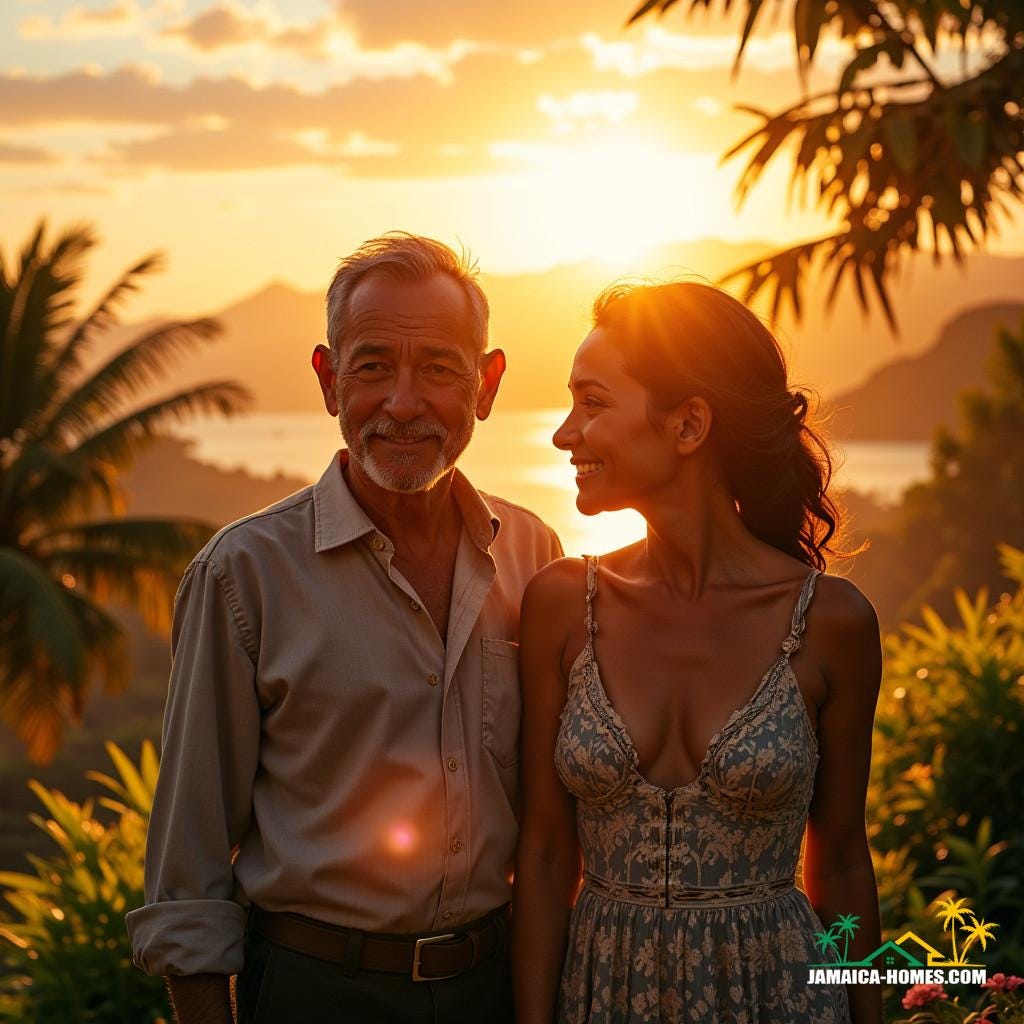
There is a moment, just before a storm arrives, when the air changes. It is subtle. The birds go quiet. The wind hesitates. The sea, strangely, looks calm—too calm. Those who know, move early. Not in panic, but in preparation. This is where we are now. Across the world, wealth is not reacting, it is repositioning. Not loudly. Not dramatically. Quietly.
In the past year, the United Kingdom, long considered one of the world’s most stable homes for wealth, has seen a notable outflow of high-net-worth individuals. Reports suggest thousands of millionaires have left, driven by tax changes, economic uncertainty, and a broader sense that the ground beneath old institutions is shifting. London, once the unquestioned capital of global capital, is no longer unquestioned.
Elsewhere, the illusion of permanence is cracking. Dubai, often presented as the flawless sanctuary of modern wealth, has recently found itself in a different light. Regional tensions, particularly involving Iran and neighboring Gulf dynamics, have exposed a truth that wealth has always understood, even if it pretended otherwise: no place is untouchable.
A city can rise from the desert. It can build towers that touch the sky. It can engineer water out of salt and create the appearance of endless abundance. But when systems falter—when desalination stops, when supply chains strain, the question becomes brutally simple:
What remains when the machinery pauses?
Jamaica answers that question differently. Not perfectly. Not completely. But differently. This is an island where water does not only come from pipes. It flows from rivers, springs, hillsides. It falls from the sky and settles into the land. It is not engineered into existence, it is inherited. This is a place where food, even in scarcity, can still be found growing. Breadfruit trees do not ask for permission from global markets. Mango seasons do not wait for shipping routes to stabilize. The land, despite everything, still remembers how to provide. And that matters more than we have been willing to admit.
History, if we are honest, has already told us this story. After the World War II, Britain stood exhausted. The empire had not collapsed overnight, but its certainty had. In that moment, parts of its elite did something telling: they did not abandon Britain, they diversified away from its immediate pressures. They came to Jamaica. Not as tourists, not entirely. They came as people looking for space. For distance without disconnection. For somewhere the world felt a little less compressed. Places like Round Hill and Tryall were not accidents. They were quiet strategies. Sanctuaries built not just on beauty, but on geography, discretion, and resilience. The pattern was clear then. It is becoming clear again now.
But there is a difference this time. The stakes are higher. Today’s instability is not confined to one region or one war. It is layered. Financial systems are tightening. Artificial intelligence is reshaping labour. Energy markets are volatile. Conflicts simmer in multiple theatres at once. Even the idea of “safe” is being renegotiated in real time.And so wealth is asking a deeper question than before:
Not just where can I grow my money?
But where can I survive with it?
Jamaica, by instinct, feels like part of the answer. But by structure, it is not yet ready. That is the tension. Our economy remains exposed. Tourism, for all its success, is a borrowed heartbeat. It rises and falls on decisions made elsewhere—on flights booked in cities far away, on economies we do not control. Business process outsourcing, once a sign of modernisation, is already facing erosion as automation advances. These are not foundations. They are currents.
And currents change.
“This is not diversification, it is dependence dressed as progress,” one might observe. “If the external tide turns sharply, the internal structure has nowhere to stand.”
Jamaica cannot afford to be surprised by that. If the island is to become a haven again, not in the romantic sense, but in the strategic one—it must move deliberately.
Tourism must evolve. Not more rooms. Not more crowds. More value. The future is not in volume, it is in quality. Privacy over density. Experience over throughput. The model already exists in fragments, exclusive estates, quiet coastlines, places where space itself is the luxury. These must not remain exceptions. They must become the blueprint. Where the yachts dock, capital does not visit. It settles.
Agriculture must be reclaimed, not as nostalgia, but as security. There is something almost uncomfortable in saying this in a modern economy, but it is true: a country that cannot feed itself is always negotiating from weakness. Jamaica imports too much of what it consumes. In stable times, this is inefficient. In unstable times, it is dangerous. Yet the island holds an advantage many nations would envy. Fertile land. A climate that supports growth year-round. Water that still moves naturally.
“To ignore agriculture in a world like this is not just an economic oversight, it is a strategic blind spot,” the argument goes. “Food is not just sustenance, it is sovereignty.”
And sovereignty, increasingly, is what wealth is seeking to be close to. Then there is the future of work. The global labour model is shifting beneath our feet. Tasks that once required entire offices are being replaced by systems that require fewer people, but more skill. Jamaica cannot compete indefinitely on cost. That window is closing. It must compete on capability.
Digital services, innovation, technology-driven enterprise, these are not optional upgrades. They are the next layer of survival. The island has talent. It has youth. It has adaptability woven into its culture. But these must be aligned with infrastructure and education that match the moment. Otherwise, the opportunity passes. Quietly. Like everything else.
And still, beneath all of this, there is a deeper layer. Something harder to quantify. The world is tired. Not just economically. Spiritually. Emotionally. There are wars that dominate headlines and others that live quietly in the background. Families displaced. Cities reduced. Uncertainty that seeps into everyday life. Even in places untouched by direct conflict, there is a sense that something is shifting, and no one is entirely sure where it will settle.
People feel it. Wealth feels it too. And this is where Jamaica holds something no policy document can fully capture. A certain rhythm. A way the land breathes. A sense that, even when things are uncertain, life continues with a kind of groundedness that cannot be manufactured. It is not perfect. It is not immune. But it is real.
There is a quiet irony in all of this. The same things Jamaicans sometimes overlook, trees heavy with fruit, rivers running without permission, land that still produces—are the very things others are beginning to value again. It is almost enough to make you smile. Not because it is funny, but because it is familiar. Like finding out the thing you grew up with, the thing you took for granted, has quietly become rare.
But opportunity, like the stillness before a storm, does not wait forever. If Jamaica does not position itself—intentionally, intelligently, this moment will pass. Wealth will find other shores. Other jurisdictions will build the frameworks, create the pathways, offer the stability and flexibility that global capital is searching for. And it will happen without announcement. Without ceremony. Just movement.
“The question is not whether capital is searching,” one might say. “It is whether we are prepared to be found.”
Because here is the truth, stripped of all sentiment: Jamaica could become a haven. Not because it is trying to be one, but because it already carries the foundations of one, geography, resilience, culture, and a kind of natural abundance that the modern world has spent decades engineering out of itself. But foundations are not enough. They must be built upon.
The world is repositioning. Quietly. Decisively. Like those who sense the storm before it arrives. And Jamaica? Jamaica stands, as it has before, between storms.
Not yet overwhelmed. Not entirely untouched. Watching. Waiting. Holding within it both the memory of what it has been—and the possibility of what it could become. The window is narrow. But it is open.
I have been wanting to visit Jamaica. My grandmother was born there.