

The Market Is Breathing Again: Jamaica’s Quiet Surge in Property Choice
Across Jamaica, the housing market is beginning to shift in a way that is easy to miss, but increasingly difficult to ignore.


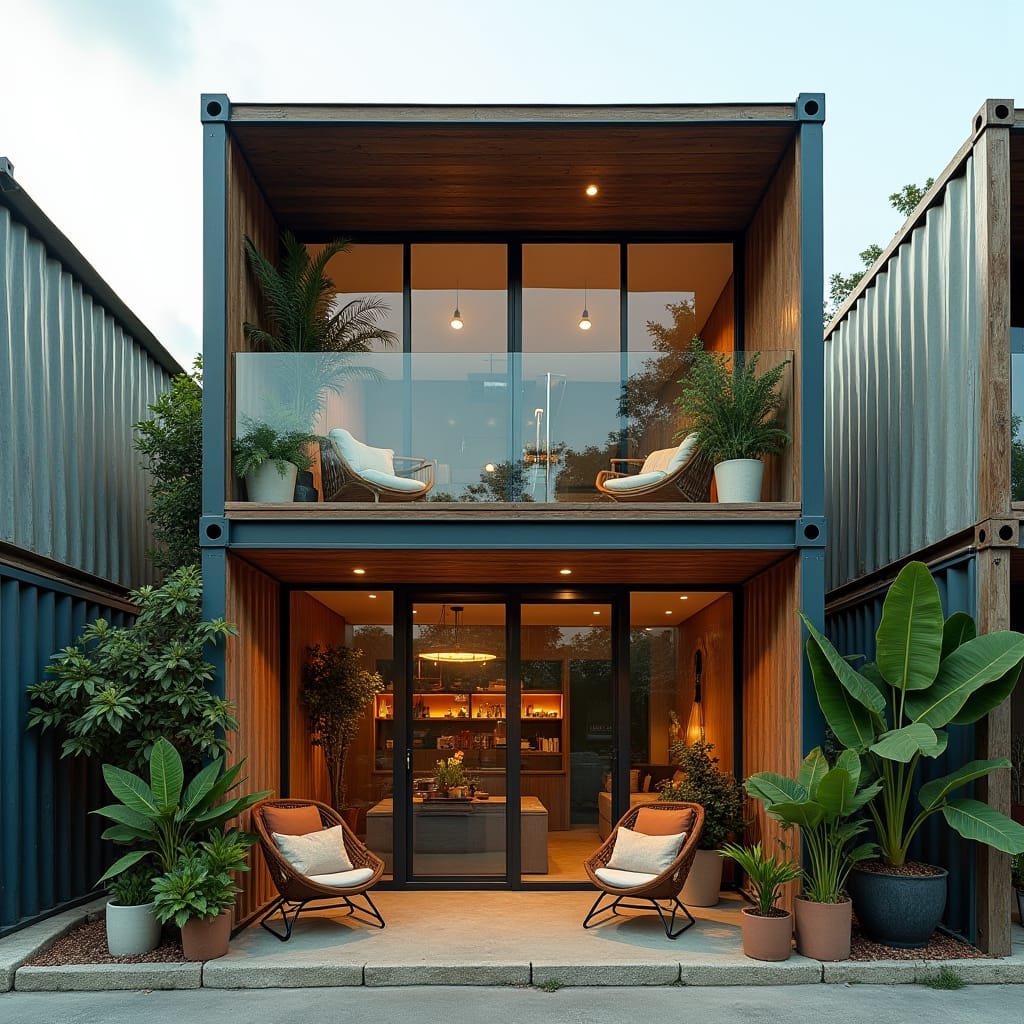
There is a quiet change taking place across Jamaica’s housing market, and it is not being driven by headlines or sudden shocks, but by something far more subtle: the return of choice.
After a prolonged period where suitable homes felt scarce and decision-making was rushed, publicly available information now suggests that available residential listings across Jamaica run into the low thousands, spanning houses, townhouses, apartments, and a smaller but distinct pool of resort villas. While these figures do not capture the full extent of the market, particularly where private sales and developer-led transactions sit outside public view, they offer a reliable window into a system that is beginning to loosen.
For buyers who paused their search in recent months, often out of frustration rather than indecision, this shift may prove meaningful.
Not because the market has suddenly become easy.
But because it is becoming, slowly, more navigable.
From Pressure to Possibility
For much of the past two years, the Jamaican property market operated under a kind of quiet compression. Supply was limited, demand remained persistent, and the gap between what was available and what buyers actually wanted was often wide.
In Kingston and St. Andrew, buyers faced intense competition for well-located homes. In St. Catherine and emerging areas, options existed, but often required compromise, whether in finish, location, or long-term value. Along the North Coast, lifestyle-driven demand continued to support higher-end properties, even as affordability became a growing concern for local purchasers.
The result was a market where many people stepped back.
Not because they lacked intent, but because the conditions did not justify action.
That environment is now beginning to change.
Across multiple parishes and property types, the volume and variety of listings has started to expand, creating a market that feels less constrained than it did even six months ago. Houses and townhouses still form the largest share of available properties, but apartments are appearing more frequently, particularly in urban corridors, while resort villas continue to hold their place within the investment and second-home segment.
This is not a surge. It is a recalibration.
Understanding the Shape of What’s Available
The most important insight is not simply that there are more homes on the market, but that the structure of supply is evolving.
Houses and townhouses remain dominant, reflecting Jamaica’s long-standing preference for space, independence, and land ownership. These properties account for the majority of visible listings, ranging from modest starter homes to high-value residences in established communities.
Apartments, however, are becoming more prominent. In Kingston especially, the number of apartment listings now represents a meaningful share of available stock. This is not accidental. Rising land costs, planning realities, and shifting lifestyle preferences are gradually pushing the market toward higher-density solutions.
Resort villas, while fewer in number, continue to represent a distinct layer of the market. These properties, often located along key tourism corridors, are closely tied to diaspora demand and international investment flows. Their presence, even in smaller numbers, reflects confidence in Jamaica as both a lifestyle destination and a long-term asset base.
As Dean Jones, founder of Jamaica Homes and Realtor Associate, puts it:
“A market doesn’t change when more homes appear, it changes when different types of homes begin to compete for attention.”
That competition is now becoming more visible.
More Listings Does Not Mean an Easier Market
It would be tempting to interpret this increase in listings as a clear signal that the market is easing. In reality, the situation is more complex.
While overall availability has improved, accessibility has not improved evenly.
Entry-level housing remains under pressure. For many first-time buyers, affordability continues to be shaped by construction costs, financing conditions, and the limited availability of truly entry-level stock. The increase in listings has not yet translated into a meaningful expansion of affordable options at the lower end.
At the mid-market level, there are early signs of greater balance. Buyers in this segment may now find themselves able to compare properties more effectively, rather than moving quickly on the first viable option.
At the upper end, particularly in higher-value homes and certain apartment developments, there are indications that properties are taking longer to move. This does not suggest weakness, but rather a market where buyers are exercising greater discretion.
In other words, choice is returning, but power is not shifting uniformly.
A Market That Is Not Fully Visible
One of the defining characteristics of Jamaica’s property market is that it is only partially visible.
Publicly available listings provide a useful and credible view, but they do not capture the full extent of activity. A portion of the market continues to operate through private channels, including direct developer sales, relationship-driven transactions, and off-market opportunities that never formally appear in listings.
This is particularly true in:
New housing developments, where units may be sold before reaching public platforms
Higher-value properties, where discretion is often preferred
Diaspora-driven transactions, which frequently operate through networks rather than listings
As a result, the true level of available supply is likely broader than what is immediately visible, even if it remains unevenly distributed.
That dual-layer structure, part public, part private, is not a flaw. It is a defining feature of how the Jamaican market functions.
The Psychology of a Market with More Choice
Perhaps the most important shift is not numerical, but behavioural.
When listings are scarce, buyers act quickly. Decisions are compressed. Compromise becomes normal.
When listings increase, even modestly, behaviour begins to change.
Buyers slow down. They compare. They question.
And in doing so, they begin to reshape the market itself.
Dean Jones reflects on this shift:
“When buyers stop chasing and start choosing, the market moves from pressure to purpose. That’s when better decisions are made, and better outcomes follow.”
That transition is now beginning to take hold.
A Quiet but Important Turning Point
There is a tendency to look for dramatic turning points in property markets, sudden drops, rapid increases, clear signals.
Jamaica rarely behaves that way.
Instead, it moves in increments.
A few more listings here. A little more time to decide there. A gradual widening of what is possible.
Taken in isolation, these changes may seem small. Taken together, they represent something more meaningful: a market that is beginning to rebalance itself.
And like any system finding its balance, it does so not with noise, but with quiet adjustment.
Somewhere between urgency and hesitation, the market is finding its footing again.
Or, to put it another way, the door is no longer closed, it is simply no longer being held shut.
What This Means for Buyers and Sellers
For buyers, this is an opportunity, but not an invitation to rush.
More listings mean more chances to find the right fit, but they also require clarity. Knowing what matters, location, build quality, long-term value, becomes even more important in a market where options are expanding.
For sellers, the message is equally clear.
More competition is emerging.
Properties that are well-positioned, properly priced, and thoughtfully presented will stand out. Those that are not may take longer to move, particularly as buyers become more selective.
As Dean Jones notes:
“In a market with more choice, visibility is earned, not assumed. The properties that succeed are the ones that understand the buyer before the buyer even walks through the door.”
The Bottom Line
Jamaica’s property market is not surging, and it is not slowing dramatically.
It is adjusting. More homes are becoming visible. More variety is entering the market. And for the first time in a while, buyers are beginning to feel that the search may be worth restarting.
But this is not a moment defined by speed. It is a moment defined by awareness.
Because in a market where options are returning, the real advantage is not how quickly you move.
It is how clearly you see.