

The Race for Oil
What Guyana's Boom Could Teach Jamaica About the Biggest Economic Opportunity and Risk of a Generation


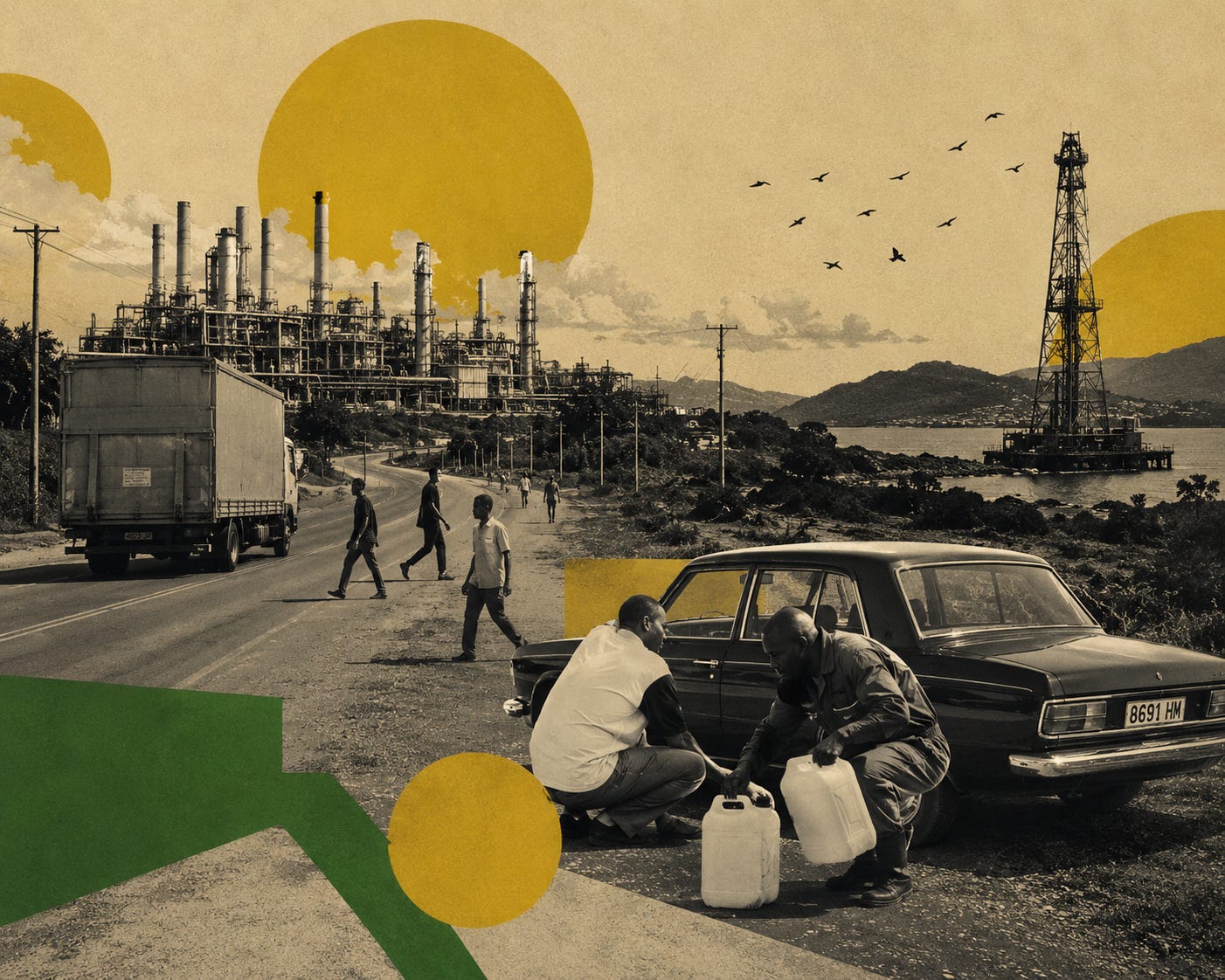
A few years ago, Guyana was best known for its rainforests, sugar estates, gold mining, and the occasional border dispute. Today it is one of the fastest-growing economies on Earth.
Since the discovery of offshore oil in 2015, Guyana has transformed itself from a relatively small Caribbean economy into a country frequently compared to Qatar. Government revenues have surged, international investors have arrived in force, infrastructure spending has accelerated, and new housing developments, hotels, roads, offices, hospitals and commercial projects are appearing across the country.
Now Jamaica finds itself asking a question that once seemed almost unimaginable.
Could it be next?
Recent testing in the Walton Morant Basin off Jamaica’s south coast identified hydrocarbons that suggest crude oil may exist beneath the seabed. While no commercial discovery has yet been confirmed, Jamaica is closer to a drilling decision than at any point in its history.
For many observers, the debate centres on climate change, environmental risks and Jamaica’s green commitments.
But for Jamaica Homes readers, the bigger question may be something entirely different.
What would oil mean for Jamaica’s housing market?
The answer could reshape the country for decades.
The Guyana Lesson
What happened in Guyana was not simply an energy story.
It quickly became a housing story.
As investment flowed into the country, demand for accommodation exploded. Construction activity accelerated. Land values rose. Rental prices increased. International companies arrived requiring office space, housing, logistics facilities and supporting infrastructure.
Entire communities were transformed.
Roads that once served small settlements suddenly became strategic development corridors. Previously overlooked land became valuable. New residential developments emerged to serve workers, executives and investors.
The oil itself was only part of the story.
The real transformation came from everything that followed.
Why Jamaica Could Be Different
Jamaica’s economy is far larger and more diversified than Guyana’s was before oil.
Tourism generates billions of dollars annually. The country already has an established financial sector, construction industry, logistics network and international reputation.
That means any future oil discovery would enter an economy that is already functioning on a much larger scale.
The effects could therefore spread more widely.
Government revenues could increase.
Foreign direct investment could increase.
Major infrastructure projects could accelerate.
New roads, ports, industrial parks and utility upgrades could become financially feasible.
Each of those developments would eventually find their way into property values.
Because property is where economic growth becomes visible.
The Housing Market Impact
If commercial quantities of oil are discovered, housing demand could increase in several ways.
Construction workers need places to live.
Engineers need places to live.
Support industries need warehouses, offices and accommodation.
International firms need operational bases.
Government agencies expand.
Local businesses expand.
Service industries expand.
Every new job creates demand for housing somewhere.
The result is often a chain reaction.
More jobs create more income.
More income creates more demand for homes.
More demand creates pressure on supply.
And when supply struggles to keep pace, prices typically rise.
This is exactly what many oil-producing regions around the world have experienced.
Infrastructure Changes Everything
One of the most overlooked consequences of economic growth is infrastructure.
Infrastructure often creates more property wealth than the resource itself.
A new highway can transform agricultural land into development land.
A new port can create demand for industrial property.
A new airport expansion can create demand for hotels and commercial development.
A new utility corridor can unlock land that was previously uneconomic to build on.
If oil revenues were used intelligently, Jamaica could potentially accelerate long-discussed projects across transportation, housing, water systems, flood mitigation and energy infrastructure.
The property implications would be enormous.
The Climate Contradiction
The challenge is that Jamaica also finds itself on the front line of climate change.
The island is still recovering from Hurricane Melissa, which caused billions of dollars in damage. Coastal erosion continues to threaten communities. Insurance costs are rising. Heatwaves and drought conditions are becoming increasingly common.
Critics argue that pursuing oil while simultaneously calling for climate action creates a contradiction.
Supporters argue that Jamaica cannot afford to ignore a potentially transformative economic opportunity while still facing significant development challenges.
It is a debate that will become increasingly difficult as more exploration data emerges.
The Real Estate Risk
Property investors should also recognise that oil wealth does not automatically create prosperity.
History is filled with examples of resource-rich countries that struggled with inflation, inequality, corruption and economic distortions.
Rapid growth can push housing beyond the reach of ordinary citizens.
Land speculation can create artificial shortages.
Infrastructure can struggle to keep pace with population growth.
The challenge is not finding oil.
The challenge is managing success.
Guyana is currently facing many of these questions.
Jamaica would face them too.
The Bigger Question
The real question may not be whether Jamaica discovers oil.
The real question is what Jamaica would do if it did.
Would revenues be invested into affordable housing?
Would infrastructure be modernised?
Would flood defences be strengthened?
Would healthcare and education improve?
Would renewable energy still remain a priority?
Would ordinary Jamaicans benefit?
Guyana’s experience suggests that oil can change a country remarkably quickly.
For Jamaica Homes readers, that matters because almost every major economic transformation eventually shows up in the property market.
If commercial quantities are eventually discovered beneath Jamaican waters, the consequences will extend far beyond energy policy.
They could reshape housing demand, infrastructure spending, government finances, construction activity, foreign investment, employment patterns, exchange rates, land values and ultimately the future direction of Jamaica’s property market.
The oil itself may be offshore.
But the consequences could reach every community onshore.