

To build or to buy
The Jamaican Housing Decision That Quietly Shapes People’s Lives

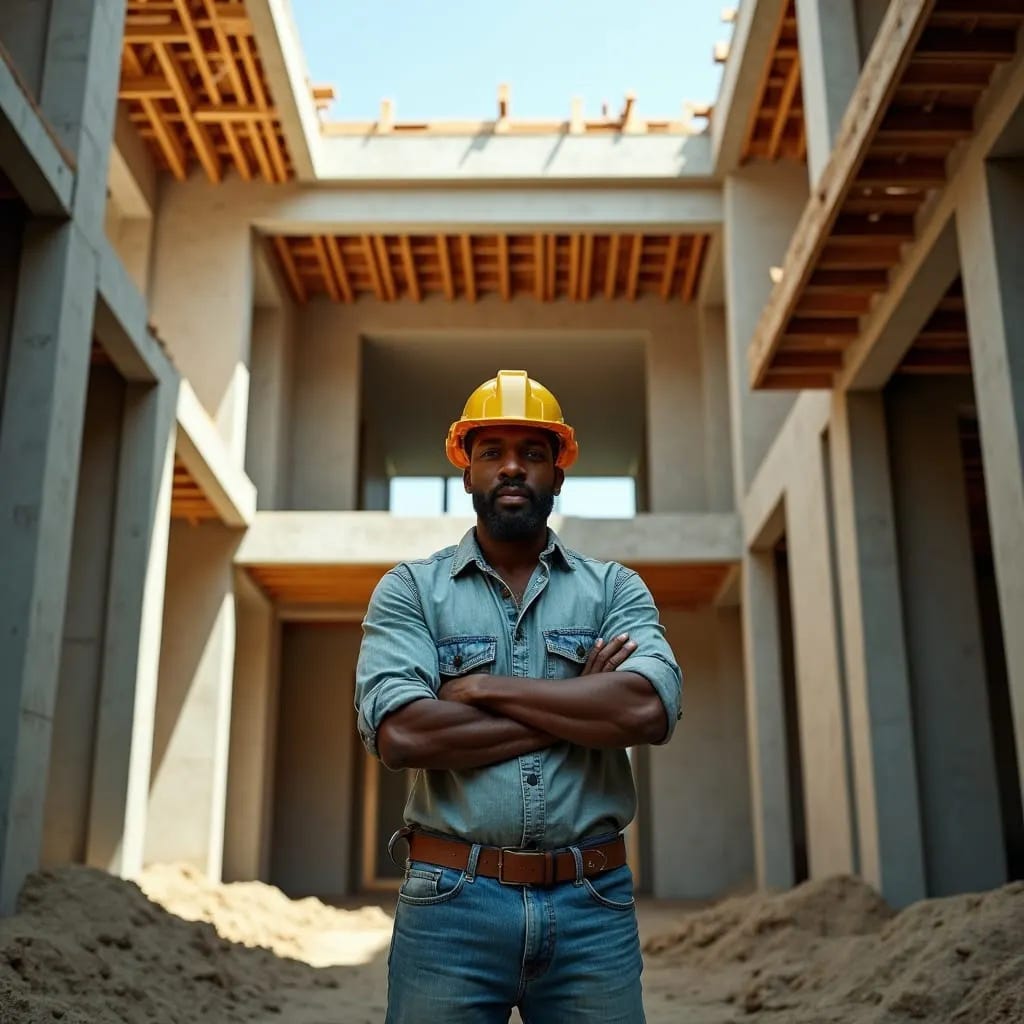
For many Jamaicans, the decision to build or buy a home begins as a dream but quickly turns into a financial equation.
Not a simple one either.
It is a calculation involving mortgage rates, Loan To Value ratios (LTV), construction inflation, land appreciation, cash flow, contractor reliability, infrastructure costs, and the uncomfortable reality that one wrong decision can affect finances for decades.
And yet, despite all the spreadsheets and approvals, the choice often comes down to something far more human: certainty versus control.
Buying a home offers certainty. Building offers control.
The challenge is that control can become very expensive.
Across Jamaica, many aspiring homeowners underestimate what happens after purchasing land. The land itself is often only the beginning of the spending cycle. Site preparation, retaining walls, drainage systems, utility connections, surveying, architectural drawings, engineering approvals, security, labour, and fluctuating material prices can quickly transform a manageable budget into something far larger.
Construction costs in Jamaica now commonly range between roughly J$8,000 and J$18,000 per square foot depending on finish quality, terrain, labour structure, and location. Custom builds in premium areas can exceed that significantly. Imported materials, exchange rate movement, shipping costs, and global commodity pricing continue to affect local construction budgets in ways many first time builders do not initially anticipate.
That volatility matters because construction financing behaves differently from traditional home purchasing.
One of the most overlooked concepts in the build versus buy conversation is the Loan To Value ratio, commonly called LTV.
LTV simply refers to how much a lender is willing to finance compared to the value of the property.
If a bank offers a 90 per cent LTV mortgage on a completed property worth J$20 million, the borrower may only need a 10 per cent deposit, or J$2 million, excluding closing costs.
Construction loans are often different.
Many lenders apply lower LTV ratios to land purchases and self build projects because unfinished homes carry higher risk. Banks know construction delays happen. Budgets change. Contractors disappear. Material prices rise. Weather interferes. Projects stall.
A partially completed house is harder for a lender to recover value from than a finished, occupied property in an established development.
That means buyers trying to build may need larger upfront cash reserves than buyers purchasing completed homes.
This is where many projects quietly collapse.
The structure reaches roof height, money tightens, and construction pauses for months or years while exposed steel slowly rusts into the Caribbean air.
Buying, meanwhile, compresses uncertainty.
You can inspect the finished product. You can evaluate the neighbourhood. You can test commute times. You can identify cracks, drainage problems, low water pressure, flooding risks, or signs of poor workmanship before signing a mortgage agreement.
For many middle income Jamaicans, especially first time buyers, that certainty increasingly matters more than the romantic idea of building from scratch.
There is also the issue of absorption rates and inventory levels within the housing market itself.
In softer markets where inventory remains on the market longer, buyers may gain negotiating power. Developers carrying unsold units often become more flexible on pricing, upgrades, or closing arrangements. That creates opportunities which sometimes make buying more financially efficient than building independently.
At the same time, land within Kingston and St Andrew continues to face supply pressure. Suitable lots in established communities are becoming increasingly scarce, particularly in centrally located areas where infrastructure already exists.
That scarcity changes the economics.
Building may appear cheaper on paper, but the hidden costs associated with urban land development can be substantial. Hillside excavation, retaining structures, access roads, drainage engineering, and utility expansion can dramatically alter final budgets.
And then there are carrying costs.
Many people focus heavily on monthly mortgage payments while ignoring the broader Total Cost of Ownership.
Property tax. Home insurance. Strata fees. Maintenance reserves. Water storage systems. Security systems. Emergency repairs. Appliance replacement. Interest rate fluctuations.
These costs affect affordability long after the excitement of ownership fades.
The National Housing Trust has attempted to improve affordability through increased loan limits. As of 2026, individual contributors may access up to J$9 million for open market purchases and higher limits for construction related borrowing depending on category and qualification requirements. Co applicants may qualify for significantly larger combined financing packages.
But access to financing alone does not remove risk.
Debt service ratios still matter. Interest coverage matters. Cash reserves matter.
One unexpected job loss or construction overrun can quickly destabilise even carefully planned budgets.
This is why experienced professionals often advise buyers to budget beyond the bank’s approval amount. Just because a lender approves a figure does not mean that figure is comfortable.
The smartest homeowners usually leave financial breathing room.
Still, building retains one enormous advantage: flexibility.
A self built home can evolve over time. Additional floors can be added later. Income generating rental sections can be incorporated. Multigenerational living arrangements can be designed from the beginning. Storage, parking, future expansion, and even business use can all be planned strategically.
In Jamaica especially, homes often function as economic assets as much as private residences.
That reality makes the build versus buy decision deeply personal.
For some people, buying a completed apartment in a gated development represents security, convenience, and predictability.
For others, owning land and slowly constructing a family home represents independence, legacy, and long term control.
Neither decision is universally right.
But both require realism.
Because beneath the glossy brochures, polished tiles, and social media house tours lies the real truth about property ownership in Jamaica:
The biggest cost is rarely the house itself.
It is underestimating what comes after.