



The real estate industry in Jamaica has long faced challenges such as delays, high transaction costs, and a lack of transparency. However, with the rise of blockchain technology, there’s a powerful solution on the horizon: smart contracts. These self-executing contracts, powered by blockchain, could revThe real estate sector in Jamaica has long grappled with challenges such as bureaucratic delays, high transaction costs, and a lack of transparency. However, with the emergence of blockchain technology, a groundbreaking solution is on the horizon: smart contracts. These self-executing digital agreements have the potential to revolutionize how property transactions are conducted, simplifying complex processes like buying, selling, renting, and managing real estate. Here’s how smart contracts could reshape Jamaica’s real estate landscape.
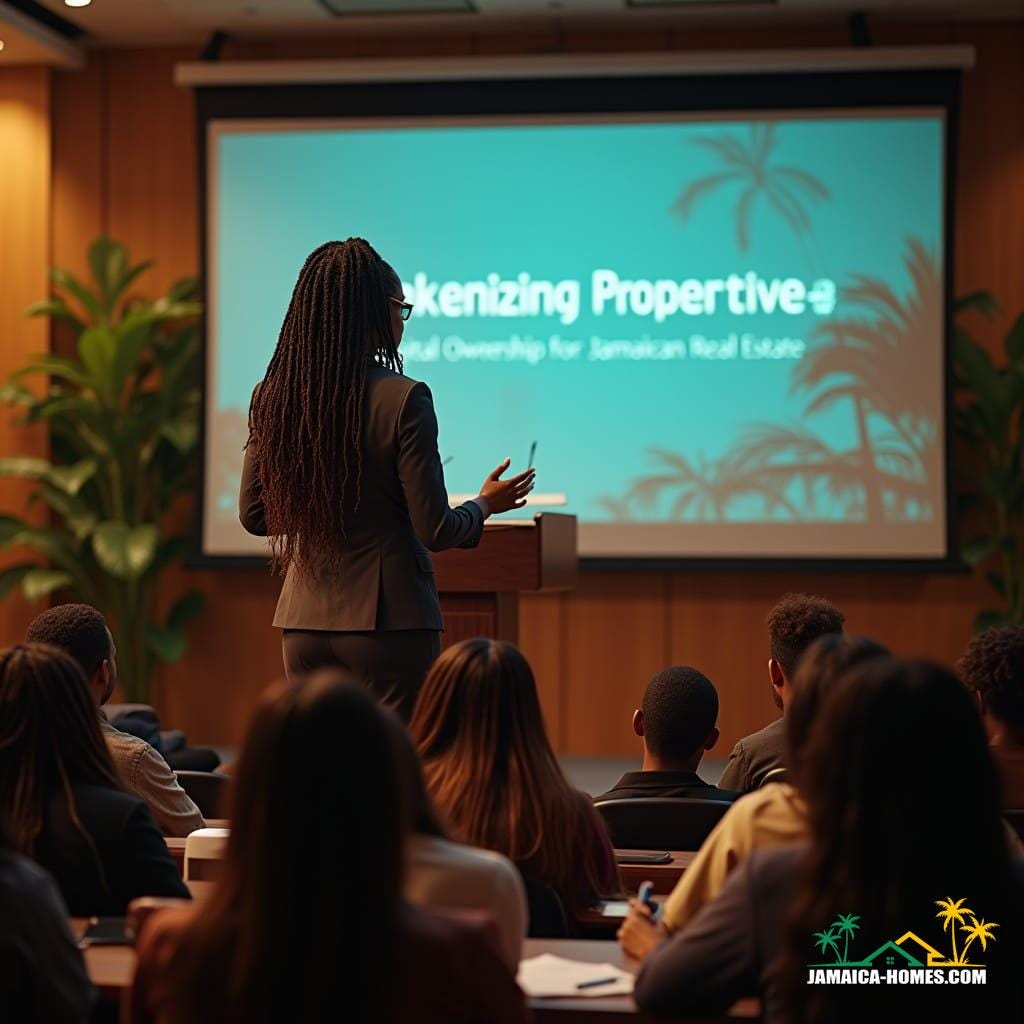
1. Tokenizing Property: Digital Ownership for Jamaican Real Estate

One of the most exciting applications of smart contracts in Jamaica is property tokenization. Using blockchain technology, properties can be transformed into Non-Fungible Tokens (NFTs), which serve as unique digital proof of ownership. Each property would be assigned a one-of-a-kind digital identity securely stored on the blockchain.
This would ensure transparent and secure record-keeping, creating a more efficient and reliable system for proving ownership. The immutability of blockchain technology would make transferring property ownership straightforward and secure, reducing fraud and legal disputes.
2. Streamlining Transactions: Faster, More Efficient Buying and Renting
Currently, real estate transactions in Jamaica involve multiple intermediaries—brokers, notaries, and attorneys—all of whom add time and cost to the process. Smart contracts can automate key steps, eliminating the need for middlemen and accelerating the transaction timeline.
For Sales: A smart contract can be programmed to transfer property ownership instantly once payment is verified. This eliminates lengthy waiting periods and cumbersome paperwork.
For Rentals: Smart contracts can automate lease agreements, ensuring timely renewals and eliminating confusion over contract terms.
By cutting costs and reducing delays, smart contracts offer a more efficient and cost-effective way to conduct real estate transactions in Jamaica.
3. Immutable Records: Reducing Land Disputes with Transparency
Jamaica has a long history of land disputes, often stemming from unclear or falsified ownership records. Smart contracts can address this issue by ensuring that all property information—ownership history, renovations, and title deeds—is securely stored on the blockchain.
Since blockchain records are tamper-proof, once information is recorded, it cannot be altered. This increased transparency would significantly reduce the chances of fraud and disputes, ensuring that property transactions are based on trustworthy data.
4. Faster, More Secure Transfers: Completing Transactions in Seconds
Traditional real estate transactions, especially those involving international buyers, can take weeks or months to finalize. Smart contracts, however, can complete secure transactions in seconds.
By enabling digital identity verification for buyers, sellers, and properties, smart contracts ensure that transactions are legitimate and fully verified. This feature would be particularly attractive to overseas investors looking to purchase property in Jamaica without the usual bureaucratic hurdles.
5. Fractional Ownership: Making Real Estate Investment More Accessible
One of the most innovative aspects of smart contracts is their ability to facilitate fractional ownership of real estate. Through tokenization, a single property can be divided into digital tokens, allowing multiple investors to own a share.
For example, a group of investors could collectively own a beachfront villa and share rental income based on their token holdings. This lowers the financial barrier to entry, making real estate investment more accessible to local Jamaicans who may not have the funds to purchase an entire property outright.
6. Automating Processes: Simplifying Administrative Tasks
Beyond buying and selling, smart contracts can automate various administrative tasks in the real estate sector. Processes such as mortgage applications, tax payments, and real estate record management can be streamlined through blockchain technology, reducing the burden of paperwork and improving overall efficiency.
7. The Evolving Role of Real Estate Agents
While smart contracts could reduce the reliance on traditional intermediaries, real estate agents in Jamaica will still have a vital role to play. Instead of acting solely as brokers, they can become trusted advisors, helping buyers and sellers navigate the blockchain-powered real estate market.
Agents can also assist with property tokenization and help clients connect on blockchain-based platforms. Additionally, through smart contracts, agents could earn royalties on resales, ensuring continued financial benefits in a more streamlined system.
A Brighter Future for Jamaican Real Estate
The potential for smart contracts in Jamaica’s real estate sector is vast. By streamlining land title transfers, reducing transaction costs, and enabling fractional ownership, these blockchain-based solutions could modernize the industry and attract more local and international investors.
Furthermore, by making property ownership more secure, efficient, and accessible, smart contracts could unlock new economic opportunities, stimulating growth in Jamaica’s real estate market. This shift towards digital transformation has the power to create a more inclusive, transparent, and prosperous real estate sector for all Jamaicans.
This timeline is speculative and dependent on regulatory decisions, technological advancements, and industry adoption rates. Unforeseen challenges may impact the pace of implementation.
YearMilestoneKey Developments2025Awareness & Early Adoption– Government and private sector discussions on blockchain regulations.
– Pilot projects for property tokenization and smart contract implementation.
– Early adoption by tech-savvy real estate firms and startups.2026Regulatory Framework & Initial Use Cases– Introduction of regulatory guidelines for blockchain-based real estate transactions.
– Government explores blockchain for land registry modernization.
– Early smart contract transactions for rentals and fractional ownership.2027Industry-Wide Testing & Scaling– Large real estate developers begin tokenizing properties.
– Financial institutions integrate blockchain for mortgage approvals and property financing.
– Increased public awareness and investment in blockchain real estate solutions.2028Government Integration & Adoption Acceleration– Jamaica’s Land Agency begins adopting blockchain for title registration.
– Smart contracts become more widely used for sales, leases, and investment transactions.
– International investors increasingly utilize blockchain for real estate deals in Jamaica.2029Mass Adoption & Market Transformation– Majority of real estate transactions conducted via blockchain and smart contracts.
– Significant reduction in fraud and land disputes due to immutable blockchain records.
– Real estate agents and legal professionals shift towards advisory roles in blockchain transactions.2030+Fully Digital & Automated Real Estate Market– Blockchain and smart contracts become the standard for real estate transactions in Jamaica.
– AI and automation further enhance real estate processes.
– Jamaica emerges as a leading example of blockchain-powered real estate in the Caribbean.
General Questions
1. What is blockchain technology, and how does it relate to real estate?
Blockchain is a decentralized, tamper-proof digital ledger that records transactions securely and transparently. In real estate, it can be used for secure land title records, fraud prevention, and automated property transactions.
2. What are smart contracts, and how do they work in real estate?
Smart contracts are self-executing digital agreements stored on a blockchain. They automatically enforce contract terms—such as transferring property ownership once payment is received—without intermediaries like banks or lawyers.
3. How can blockchain improve Jamaica’s real estate industry?
Blockchain can:
Reduce delays and bureaucracy in property transactions.
Lower transaction costs by removing intermediaries.
Increase transparency, reducing fraud and land disputes.
Enable fractional ownership, making property investment more accessible.
Adoption in Jamaica
4. Is blockchain technology legal for real estate transactions in Jamaica?
Currently, Jamaica does not have specific laws regulating blockchain in real estate. However, discussions on regulatory frameworks are ongoing, and government support could accelerate adoption.
5. Will the Jamaican government support blockchain-based land registries?
If the government invests in blockchain for land registries, it could significantly reduce title fraud and disputes. Some countries, like Sweden and the UAE, have already implemented blockchain in their land records.
6. What role will real estate agents play in a blockchain-powered market?
Real estate agents will shift from traditional brokers to trusted advisors, helping clients navigate blockchain transactions, property tokenization, and smart contract agreements.
Security & Practicality
7. Can smart contracts be hacked or manipulated?
Smart contracts are highly secure because they operate on blockchain technology. However, coding errors can create vulnerabilities. Proper auditing and regulation can help prevent these risks.
8. What happens if there is a dispute in a smart contract transaction?
Disputes are minimized because blockchain transactions are immutable and transparent. However, smart contracts can include built-in dispute resolution mechanisms or link to Jamaica’s legal system for arbitration.
9. Can international buyers use smart contracts for Jamaican real estate?
Yes! Blockchain can streamline international transactions by eliminating the need for physical paperwork and middlemen. This could attract more foreign investors to Jamaica’s real estate market.
Financial & Investment Aspects
10. What is property tokenization, and how does it benefit investors?
Property tokenization converts real estate into digital tokens on a blockchain, allowing multiple investors to own shares of a property. This makes investing more affordable and accessible.
11. Will blockchain reduce real estate transaction costs in Jamaica?
Yes. By automating processes and removing intermediaries, smart contracts can significantly lower fees for buyers, sellers, and investors.
12. How soon can blockchain and smart contracts become mainstream in Jamaica?
With strong government support, regulatory frameworks, and investment, blockchain adoption in Jamaica’s real estate sector could accelerate within 5–10 years. Without proper funding or regulations, progress will be slower.
Disclaimer:
The information provided in this article is for educational and informational purposes only and should not be construed as financial, legal, or professional advice. While we strive to present accurate and up-to-date content, we do not guarantee the completeness, reliability, or suitability of the information for any specific purpose.
https://jamaica-homes.com/docs/how-do-smart-contracts-work-in-real-estate/
https://news.jamaica-homes.com/2025/01/transforming-jamaicas-real-estate.html