


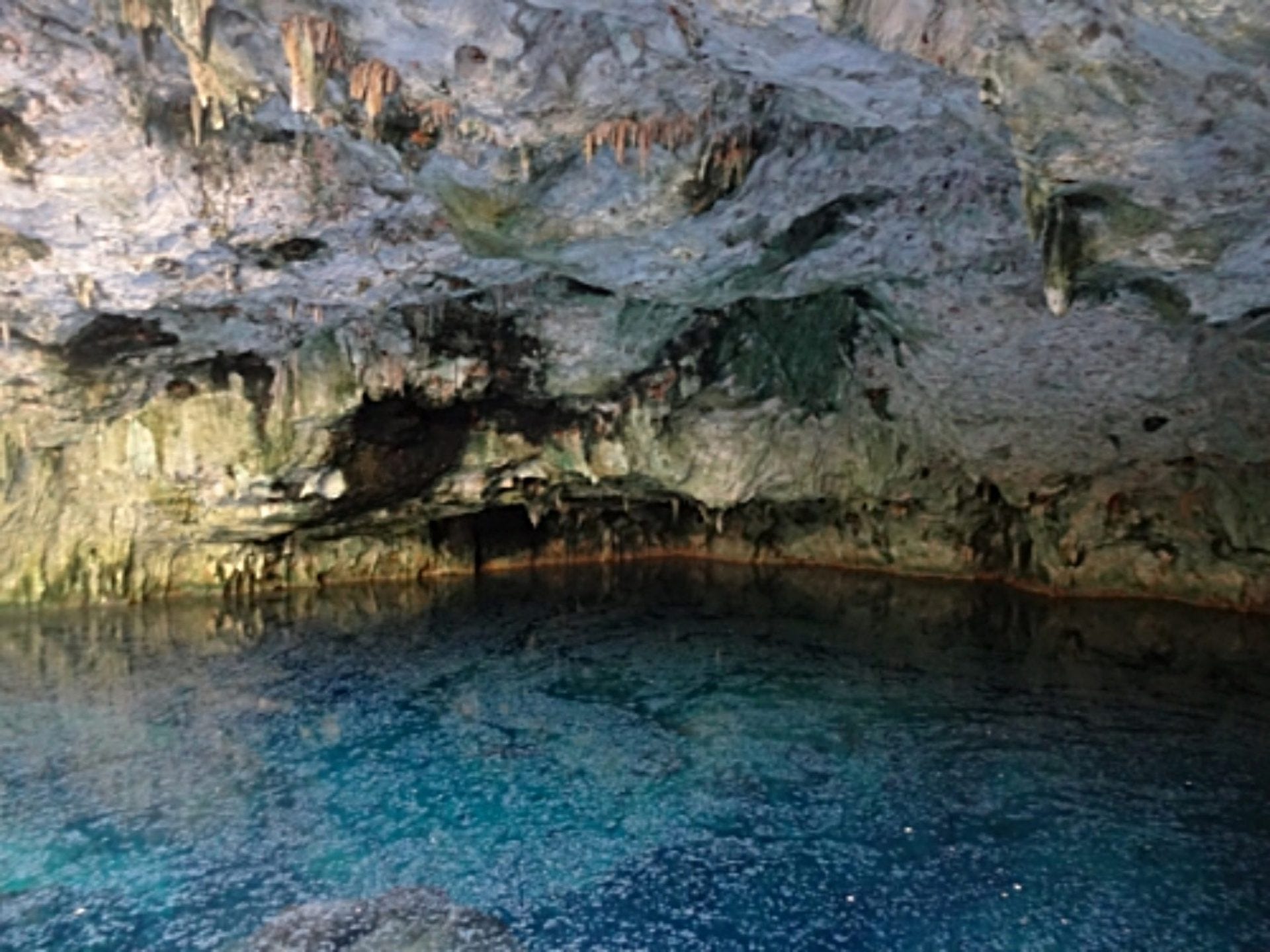
Nestled in the limestone-rich Hellshire Hills of St. Catherine, Two Sisters Cave is a fascinating natural landmark with deep historical and cultural significance. The cave gets its name from two interconnected caverns, each featuring a large sinkhole filled with fresh water. These reservoirs may have once been vital sources of fresh water for Jamaica’s first inhabitants, the Tainos. The fresh, clear water in the sinkholes continues to add to the cave’s charm and mystery.
Beneath the surface, the caves are part of a larger network of tunnels and caverns that stretch across the limestone terrain for miles in all directions. This vast subterranean system hints at the natural wonder of the area, shaped by thousands of years of geological activity. Within the cave, visitors can find a remarkable piece of Taino history: a petroglyph, or rock carving, depicting a human face. This carving is estimated to be about 700 years old, offering a tangible link to the island’s ancient past.
Archaeologists and historians believe the Tainos used the cave for ceremonial purposes rather than as a living space. The lack of domestic artifacts, such as tools or evidence of habitation, supports this theory. The Tainos often carved effigies of themselves or their gods into stone as a way to honor and respect their deities, and it’s likely that the petroglyph in Two Sisters Cave served this spiritual purpose.
Today, Two Sisters Cave remains a site of intrigue for both nature enthusiasts and history buffs. Its blend of natural beauty, with its fresh water reservoirs and limestone formations, and its cultural heritage, marked by the ancient petroglyph, makes it a significant location in understanding Jamaica’s past. Visitors to the Hellshire Hills can experience the awe of standing in a place once sacred to the Tainos, connecting with both the natural world and the island’s rich history.