


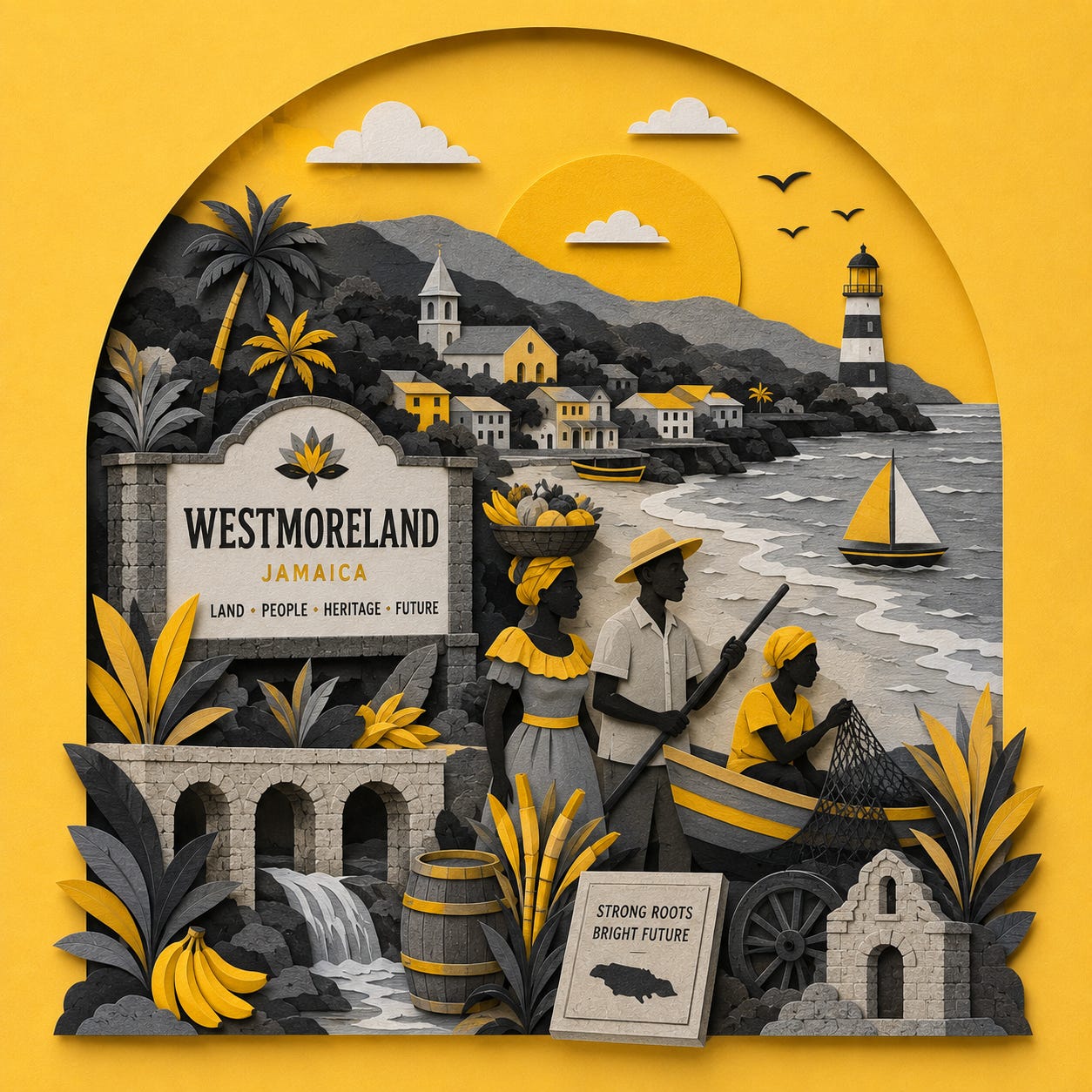
There are places in Jamaica that feel finished. Places where the story seems already written. Westmoreland is not one of them.
Westmoreland still feels like a parish in motion. A place balancing memory and ambition at the same time. A parish where fishing boats drift past luxury villas, where old sugar lands now sit beside Airbnb developments, where churches and sound systems compete for the same Saturday night air, and where people still speak about land not simply as property, but as inheritance, survival, identity and escape.
To understand Westmoreland properly, you cannot look at it only through tourism brochures or real estate listings. You have to understand the layers beneath it. The land itself carries centuries of history. Indigenous settlements, colonial conquest, slavery, rebellion, migration, religion, hurricanes, farming, tourism, remittances and resilience all shaped the parish long before modern investors arrived looking for ocean views and short term rental yields.
And perhaps that is what makes Westmoreland so fascinating as an investment story today.
It is not simply a place where people buy property.
It is a place where Jamaica’s past and future are colliding in real time.
Before the Hotels Came
Long before Negril became one of the Caribbean’s most recognised tourism brands, Westmoreland was already deeply important to Jamaica.
The Taíno people settled sections of the parish because of its rivers, fertile plains, wetlands and coastal access. Fishing and farming shaped early life there long before Europeans arrived.
Then came the Spanish in 1494, bringing cattle, horses, European crops and slavery. Later, the British transformed Jamaica into one of the wealthiest plantation colonies in the world. Westmoreland became central to that system.
Sugar changed the landscape entirely.
Forests were cleared. Rivers redirected. Wetlands altered. Vast estates spread across Savanna la Mar, Frome, Whitehouse and surrounding plains. Thousands of enslaved Africans were forced onto plantations under brutal conditions.
And yet even then, resistance never stopped.
Maroons moved through western Jamaica’s difficult terrain, helping enslaved Africans escape and proving that colonial control was never complete.
That tension between power and resistance still echoes through Westmoreland today.
Because even modern real estate tells a story about land ownership, exclusion, migration and survival.
Savanna la Mar and the Memory of Water
Savanna la Mar became one of Jamaica’s major trading towns during the colonial era. Ships moved sugar, rum, livestock and produce through its harbour. Merchants and plantation owners built wealth there.
But Westmoreland also learned early that nature can erase prosperity in a single night.
The Great Hurricane of 1780 devastated Savanna la Mar almost beyond recognition. Storm surge reportedly pushed ships inland. Entire sections of the town disappeared beneath water. Thousands died across the Caribbean.
That history matters today more than many investors realise.
Because climate risk is no longer theoretical in Westmoreland. Coastal flooding, erosion, hurricanes and drainage problems continue shaping both insurance costs and development decisions. The same sea that gives Westmoreland beauty also gives it vulnerability.
And increasingly, smart investors are beginning to understand that Caribbean real estate is not only about location anymore.
It is about resilience.
Freedom, Farming and the Rural Jamaican Dream
After emancipation in 1838, Westmoreland changed again.
Formerly enslaved people began building villages, churches, markets and farming communities across the parish. Land ownership remained unequal, poverty remained widespread, but ordinary Jamaicans slowly rebuilt life through small farming and community networks.
This period shaped much of modern Westmoreland.
Yam, banana, livestock, pimento, fishing and small agriculture became central to rural survival. Families built slowly over generations. Churches became social centres. Revivalist traditions blended Christianity with African spirituality.
Even today, you can still feel that older Jamaica in Westmoreland.
Not the polished tourism version.
The real one.
Roadside cookshops. District football. Family land disputes. Markets. Patois. Small churches on hilltops. Zinc fences beside million dollar villas. Old men talking politics under trees.
Westmoreland still feels lived in.
That matters.
Because investors often misunderstand what gives a place lasting value. It is not always luxury. Sometimes it is continuity. Sometimes it is community.
Migration Built the Modern Parish
Like much of rural Jamaica, Westmoreland became deeply shaped by migration during the twentieth century.
People left for Kingston, Cuba, Panama, Britain, Canada and the United States searching for work and opportunity. Remittances later transformed entire communities. Barrel culture became part of everyday life. Returning residents began building homes across the parish.
This created something unusual.
Westmoreland became partly Jamaican and partly international at the same time.
Families existed across borders. Land purchases were funded from London, Toronto, New York and Miami. Retirement homes appeared beside traditional board houses. Entire districts became linked to overseas communities.
And that diaspora connection remains one of Westmoreland’s most important real estate drivers today.
Because many buyers are not simply purchasing investment assets.
They are buying reconnection.
Then Came Negril
Few places transformed Jamaica more dramatically than Negril.
In the 1960s and 1970s, backpackers, musicians, artists and foreign travellers began arriving on the western coast looking for something slower, freer and less commercial.
At the time, Negril was remote. Roads were rough. Infrastructure was limited. But the beach, the cliffs, the sunsets and the atmosphere gave the area something impossible to manufacture.
Authenticity.
Tourism exploded slowly at first, then all at once.
Hotels expanded. Villas appeared. Restaurants multiplied. Foreign buyers arrived. Short term rentals spread. Property values climbed.
And Westmoreland’s identity changed forever.
Today, when people think about investing in Westmoreland, Negril is usually the first place they mention.
For good reason.
Negril remains one of Jamaica’s strongest international tourism brands. It attracts diaspora buyers, Airbnb investors, retirees and hospitality developers looking for long term tourism demand.
The strongest areas include West End, Norman Manley Boulevard, sections near Little Bay Country Club and emerging inland communities such as Orange Hill.
But Negril also reveals the contradictions of Caribbean development.
Tourism brought jobs and foreign exchange. It also brought coastal erosion, rising land prices, environmental pressure and widening inequality.
The paradise economy always comes with tension.
The Real Estate Geography of Westmoreland
One mistake many people make is treating Westmoreland like a single market.
It is not.
It is several different Jamaicas existing side by side.
Negril is the global tourism face.
Savanna la Mar is the practical commercial centre.
Little London is becoming a growth corridor.
Bluefields represents quiet coastal luxury.
The deep rural interior remains agricultural and slower moving.
Each attracts different types of investors.
Negril
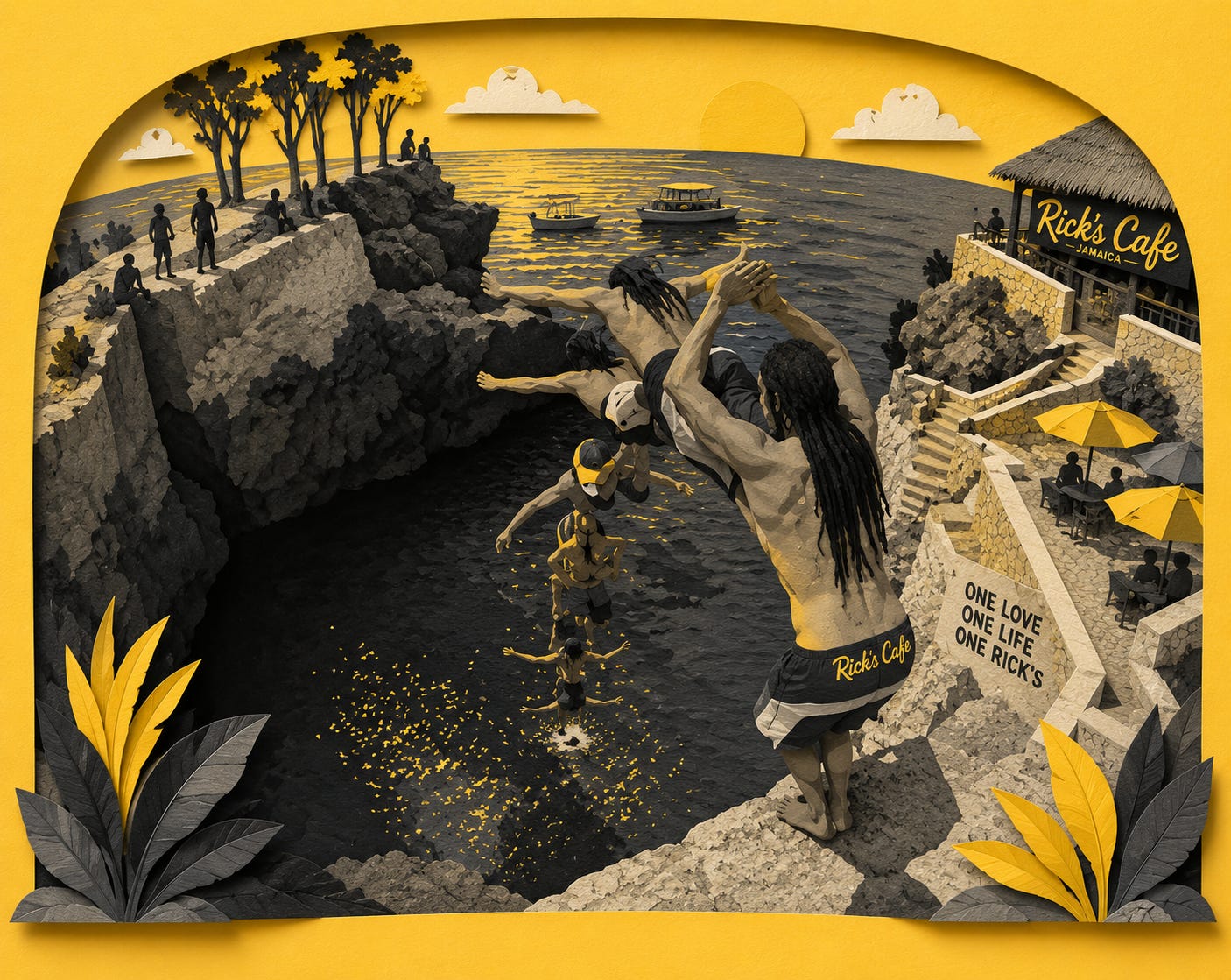
Still the king of the parish from an international investment perspective. Best suited for villas, boutique hotels, Airbnb, retirement homes and tourism driven developments.
The opportunities remain strong, but so do the risks. Coastal exposure, infrastructure strain and rising prices mean investors must be realistic.
Not every sea view becomes a successful tourism asset.
Savanna la Mar
Sav may not appear in glossy brochures, but economically it matters enormously.
Government offices, schools, transport links, retail activity and commercial demand make it one of the parish’s most important long term investment zones.
Commercial buildings, apartments, warehouses and rental units often make more practical sense here than luxury projects.
The lesson is simple.
Sometimes the strongest investments are not the most glamorous ones.
Little London
This is one of the parish’s most interesting strategic growth areas.
As Negril becomes more expensive, people connected to tourism increasingly move inland looking for affordable housing and land.
That matters because population pressure eventually reshapes surrounding communities.
The airport discussion has added another layer of speculation. Reports have suggested that future expansion around the Negril region could involve areas closer to Little London. Investors are watching carefully.
But wise investors avoid buying based purely on rumours.
Speculation can create fortunes.
It can also trap people in overpriced land for decades.
Bluefields and Whitehouse
These areas represent a quieter version of coastal Jamaica.
Sea views. Privacy. Villas. Fishing communities. Eco tourism potential. Returning resident appeal.
The attraction here is not mass tourism.
It is lifestyle.
And increasingly, wealthy buyers are searching for precisely that.
The New Caribbean Question
There was a time when Caribbean real estate was sold almost entirely on beauty.
Beachfront.
Sunsets.
Palm trees.
Ocean breeze.
That is changing.
Today, serious investors ask harder questions.
What is the drainage like?
How far above sea level is the property?
Can the roads survive heavy rain?
Is insurance available?
What happens during hurricanes?
How reliable is water supply?
How resilient is the electricity network?
Westmoreland sits directly inside that new conversation.
The parish faces major environmental pressures including coastal erosion, flooding, sea level rise and hurricane vulnerability.
Climate change is no longer some distant academic concept in Jamaica.
It is becoming a property issue.
A financing issue.
An insurance issue.
A national economic issue.
And in many ways, Westmoreland sits right at the centre of that reality.
Why People Still Believe in Westmoreland
Despite everything, people continue investing there.
Why?
Because Westmoreland still offers something many places have lost.
Space.
Character.
Potential.
There are still areas where buyers can acquire larger lots at prices that would feel impossible in Kingston or Montego Bay. There are still communities where tourism has not entirely erased local identity. There are still stretches of coastline that feel surprisingly untouched.
And perhaps most importantly, there is still emotional connection.
Many Jamaicans abroad dream about returning one day. Westmoreland often fits that dream. A house near the sea. A slower life. A connection to family. A retirement plan. A guest house. A small farm. A piece of land to pass on to children.
Real estate in Westmoreland is rarely only financial.
It is emotional.
The Future of the Parish
Westmoreland now sits at a crossroads.
Tourism expansion will continue.
Diaspora investment will continue.
Infrastructure pressure will continue.
Climate risks will continue.
And the parish will likely become more valuable over time, particularly around strategic corridors linked to tourism and housing demand.
But the future will reward disciplined investors more than speculative dreamers.
The smartest buyers increasingly focus on:
Clear title
Road access
Water supply
Elevation
Flood resilience
Nearby employment
Stable communities
Practical demand
Because the old Caribbean fantasy of buying any random piece of land near the sea and becoming wealthy no longer works automatically.
The real opportunities are now more sophisticated than that.
Westmoreland’s future may not belong only to beachfront luxury.
It may belong equally to worker housing, mixed use developments, inland growth corridors, resilient construction and practical communities connected to tourism economies.
That is the quieter story unfolding beneath the headlines.
The Parish That Keeps Going
In the end, Westmoreland matters because it reveals Jamaica honestly.
Its history contains conquest, slavery, resistance, migration, religion, tourism, inequality, beauty, struggle and survival all at once.
You can still drive through the parish and see centuries layered together in a single afternoon.
Colonial ruins behind modern houses.
Luxury villas beside fishing communities.
Old churches beside dancehall bars.
Tourists drinking cocktails while farmers sell yam by the roadside.
The past never fully disappeared there.
And perhaps that is why Westmoreland feels so compelling.
It still feels unfinished.
Still becoming.
Still negotiating what Jamaica itself is trying to become.
A place shaped by memory, migration, land, tourism, resilience and hope.
A place where the sea continues rolling in, the hills continue watching quietly from the interior, and ordinary people continue building life despite every storm that history has thrown at them.