

What US$1 Million Gets You in Jamaica in 2026 Might Surprise You
Concrete Dreams and Caribbean Reality

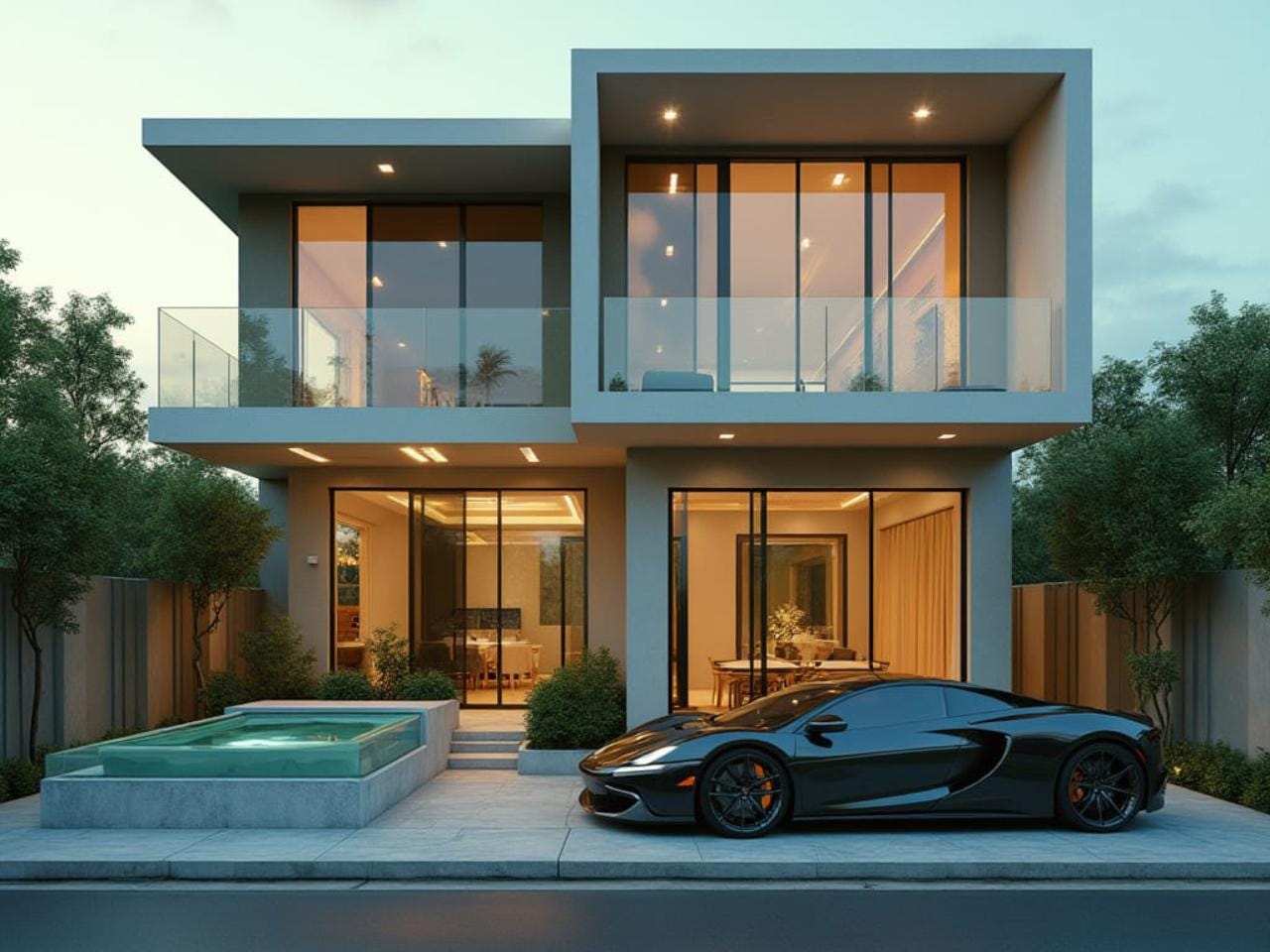
A million dollars still sounds like a magical number in conversation. It rolls off the tongue with the weight of certainty, comfort, and arrival. But in Jamaica today, especially in real estate, a million dollars means something very different depending on where you stand, what you value, and whether you are buying for status, survival, legacy, or peace of mind.
Globally, reports continue to compare how many square feet or square meters one million U.S. dollars can purchase in cities like Monaco, London, Hong Kong, or New York. Yet Jamaica cannot be measured purely by the same tape measure. Here, land is emotional. Property is generational. A house is rarely just a financial instrument. It is memory, migration, sacrifice, return, and identity wrapped together beneath zinc, shingles, concrete, or cedar.
And perhaps that is why the Jamaican market behaves differently.
A million U.S. dollars in Jamaica, roughly JMD $155–160 million depending on exchange rates, can still buy extraordinary things. But it can also disappear surprisingly fast depending on the parish, the ambition, and the appetite of the buyer. In some communities it buys prestige. In others it buys privacy. In a few places, it buys possibility.
What it no longer guarantees is simplicity.
Kingston, for instance, has evolved into a fascinating contradiction. A million dollars can secure a luxury penthouse overlooking the city skyline, complete with backup water systems, solar integration, electronic gates, and enough imported finishes to make Miami blush politely in the corner. Yet the same figure may barely touch the upper edge of elite properties in highly sought-after enclaves where land values alone now carry astonishing weight.
Montego Bay tells a different story. There, lifestyle often competes with practicality. Ocean-view villas, gated communities, and tourism-driven developments continue to attract returning residents, investors, and overseas Jamaicans searching for a foothold back home. But what buyers are increasingly discovering is that they are not simply purchasing a structure. They are buying resilience, elevation, drainage, hurricane-conscious construction, access roads, utility reliability, and community infrastructure now matter more than glossy countertops.
A beautiful home without proper grading in Jamaica is like buying a luxury umbrella with holes in it. Sooner or later, the weather exposes the truth.
The island’s real estate conversation has matured. Jamaicans are asking harder questions now. Not just “How big is the house?” but “How will this property survive?” Not just “What is the view?” but “What happens after three days of heavy rain?” Buyers have become more thoughtful, more cautious, and in many cases, more strategic.
That shift matters.
Because one million dollars in Jamaica can still stretch remarkably far outside the traditional prestige zones. In parts of Manchester, St. Ann, Clarendon, Trelawny, or St. Elizabeth, that figure may provide acreage, multiple structures, farming potential, rental income opportunities, and long-term development value all at once. In those areas, the conversation changes from consumption to creation.
And that may ultimately become Jamaica’s greatest real estate advantage.
Unlike many overheated global markets where ownership increasingly resembles glorified storage space for wealth, Jamaica still offers room to build a life. Space still exists here, not only physical space, but imaginative space. Families still talk about adding another floor for children. People still buy land with the intention of planting something on it. Grandparents still believe property should outlive them.
That mindset has protected Jamaica from some of the emotional detachment visible in other international luxury markets.
Dean Jones, founder of Jamaica Homes and Realtor Associate, puts it this way:
“In Jamaica, property is not just measured by square footage. It is measured by how many generations can stand on it after you are gone.” - Dean Jones
There is another layer to this conversation that international reports often miss entirely: the Jamaican relationship with migration and return.
For decades, Jamaicans left home carrying dreams in barrels, suitcases, nursing uniforms, and work boots. Many spent years abroad imagining the house they would eventually build back home. That emotional connection continues to shape demand across the island today. A million-dollar property purchase here is often not about showing wealth. It is about restoring roots.
That is why certain homes in Jamaica feel different.
A luxury apartment in another country may simply symbolize success. In Jamaica, a completed home often represents sacrifice finally made visible. Every block can carry a story. Every verandah may contain twenty years of overtime shifts overseas.
And because of that emotional reality, Jamaicans tend to approach property with unusual seriousness.
Still, the market is changing.
The rise of short-term rentals, lifestyle developments, gated communities, and internationally influenced architecture has altered expectations. Younger buyers increasingly want convenience alongside ownership. Walk-in closets now compete with water tanks for attention. Imported fixtures matter. Smart homes matter. Fibre internet matters. Yet beneath all the modernization, Jamaicans still instinctively understand that land remains one of the few assets capable of carrying dignity across generations.
A million dollars today can build wealth in Jamaica - but only if approached intelligently.
Too many buyers make the mistake of chasing appearances instead of fundamentals. They fall in love with finishes while ignoring slope stability, drainage systems, retaining walls, road access, title clarity, or long-term maintenance costs. The island’s climate has a way of humbling cosmetic decisions very quickly.
Luxury without preparation is just expensive stress wearing makeup.
The smartest buyers in Jamaica today are not always purchasing the flashiest homes. Many are quietly looking for adaptable properties: homes with income potential, spaces for expansion, multi-family layouts, agricultural capability, or proximity to emerging infrastructure corridors. They are studying future value instead of merely current beauty.
That shift reflects something deeper happening nationally.
Jamaica is rebuilding, recalibrating, and reconsidering itself. People are thinking harder about sustainability, self-sufficiency, durability, and community resilience. In that environment, real estate is no longer merely aspirational. It has become deeply practical again.
And perhaps that is healthy.
Because the old idea that success meant simply owning the biggest house on the hill is fading. Increasingly, Jamaicans understand that true wealth may look quieter than before. Solar panels. Water security. Fruit trees. Good drainage. Rental income downstairs. A mortgage that still allows peace of mind. These things may not photograph as dramatically as infinity pools, but they often survive longer.
Dean Jones captures this shift clearly:
“The strongest homes in Jamaica are not always the most expensive ones. They are the ones designed with wisdom instead of ego.” - Dean Jones
There is also a psychological dimension to the million-dollar conversation that deserves honesty.
Globally, wealth reports often create the illusion that everyone wealthy wants the same thing: elite towers, global mobility, ultra-modern interiors, and tax efficiency. But Jamaicans frequently define success differently. Many people here still crave openness, breeze, family connection, community familiarity, and ownership that feels grounded rather than performative.
That distinction matters because Jamaica’s future luxury market may evolve differently from international expectations.
The island’s most valuable properties in the coming decades may not necessarily be the tallest or flashiest developments. They may instead be the communities that best balance resilience, location, sustainability, infrastructure, and quality of life.
The market is already quietly rewarding this.
Properties with reliable utilities, practical layouts, secure access, proper elevation, and adaptable land use are increasingly commanding attention. Buyers have become less hypnotized by imported aesthetics alone. They want functionality disguised as elegance.
And frankly, Jamaica needs more of that.
The country stands at an important moment where development choices will shape not only housing values but national character. There is a difference between building communities and simply stacking concrete for profit. Jamaicans are beginning to feel that difference intuitively.
One million dollars can therefore buy something incredibly important in Jamaica today: choice.
It can buy retreat or opportunity. Security or expansion. Prestige or practicality. But perhaps most importantly, it can buy time - time to think generationally instead of transactionally.
Because the greatest real estate mistake is believing property is only about today’s market value.
Land remembers.
A hillside ignored today may become tomorrow’s premium corridor. A modest district overlooked now may transform completely once infrastructure improves. Entire fortunes in Jamaica have quietly emerged from patience rather than spectacle.
Dean Jones reflects on this with characteristic simplicity:
“Real estate rewards those who can see tomorrow while everyone else is distracted by today.” - Dean Jones
And maybe that is the real story behind what one million dollars buys in Jamaica.
Not merely square footage.
Not merely luxury.
Not merely status.
But the rare opportunity to still build something lasting in a world increasingly obsessed with temporary things.
In Jamaica, that possibility still exists.