

What We Build Next
After Easter, after the noise, the harder question Jamaica must now answer


If Easter still means anything in Jamaica, it is not what happened over the weekend that tells the story, it is what happens after.
Part I asked a simple question, when the music stops, what remains?
Part II asks the harder one, what do we do with what remains?
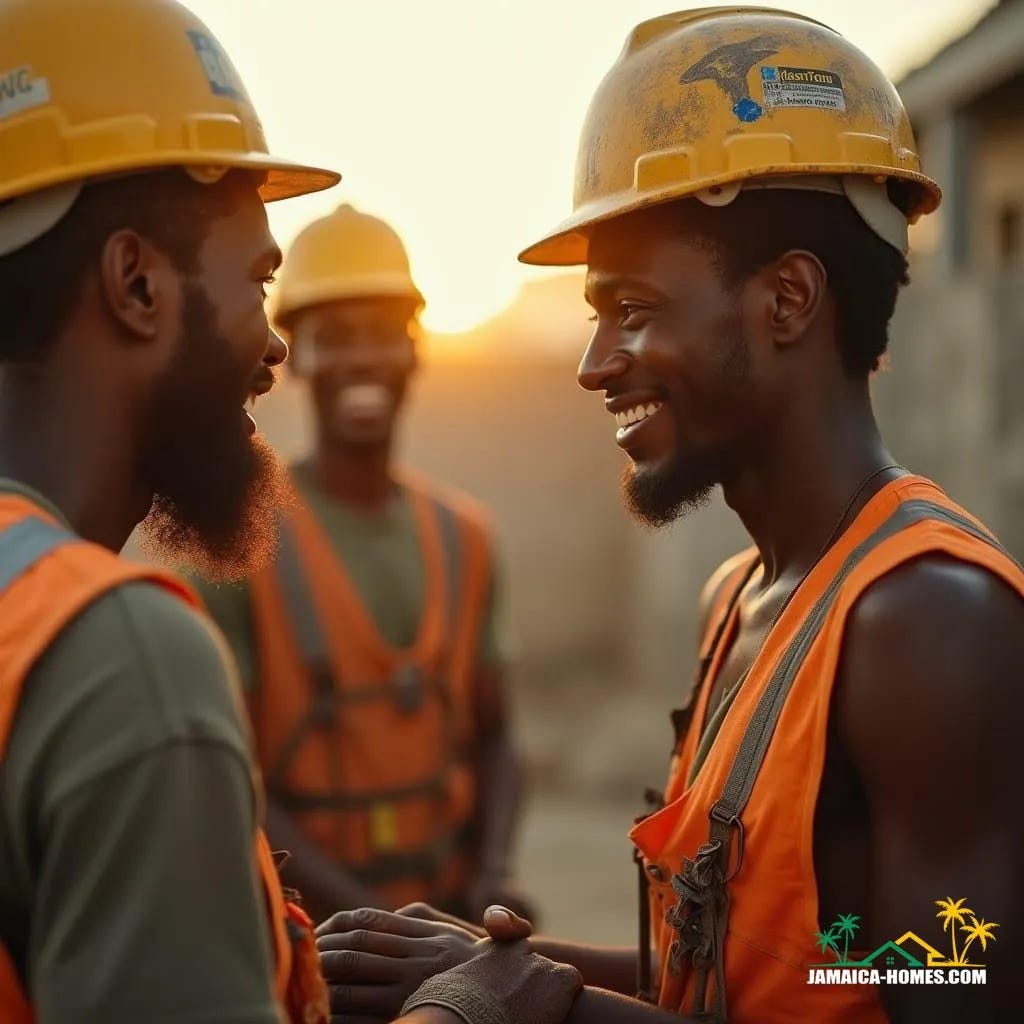
Because Jamaica is not standing still. It is building, expanding, modernising. New housing schemes stretch across parishes, cranes move steadily, land is being subdivided, sold, and shaped into the promise of a better life. The physical country is moving forward with visible intent. But beneath that visible progress sits a quieter uncertainty, one that cannot be measured in square footage or construction output.
What exactly is Jamaica building, beyond the concrete?
A nation is not secured by structures alone. It is secured by what those structures contain, families, values, discipline, a shared understanding of right and wrong. Remove those, and what remains may still look like progress, but it will not hold under pressure. That is not theory, it is history, repeated across nations that invested heavily in development but neglected formation.
Jamaica is not immune to that pattern.
The tension exposed over Easter weekend is not about Carnival versus church, or celebration versus restraint. It is about proportion. It is about whether a nation that once centred its identity around faith and community can still recognise the difference between release and drift. Because drift is rarely dramatic. It does not announce itself. It accumulates quietly, through small compromises, through lowered expectations, through the gradual normalisation of what would once have been questioned.
The Jamaican home has always been the first place where that line was held. Not perfectly, not without contradiction, but firmly enough to create structure. Faith was not simply spoken, it was embedded. Respect was not optional, it was expected. Boundaries were not negotiated daily, they were understood. That structure produced something more valuable than comfort, it produced stability.
That stability is now under strain.
Modern Jamaica is navigating a different landscape. Technology has changed how people think, what they see, what they value. Global culture arrives instantly, unfiltered, often louder and more persuasive than anything local. Parents are no longer the only voice shaping a child’s worldview. They are competing, and often losing, to influences that require no permission to enter the home.
This is not unique to Jamaica, but it is particularly consequential here, because Jamaica’s strength has always been its social fabric. Community, family, shared belief, these have historically compensated for economic limitations and external pressures. They have held the line when other systems struggled.
If those weaken, the impact will not be immediate, but it will be real.
At the same time, the world beyond Jamaica is becoming less stable, not more. Energy costs are rising, global conflicts are tightening supply chains, economic uncertainty is no longer distant news but an active force shaping daily life. In that environment, nations with strong internal cohesion tend to endure. Nations without it tend to fracture.
Cohesion does not come from policy alone. It comes from people who share a baseline of values.
That is where the conversation becomes uncomfortable.
Because Jamaica still speaks the language of faith. It appears in public discourse, in national ceremonies, in the very words of the anthem, which calls for “justice, truth, and beauty.” But language is not the same as practice. A nation can say the right things and still move in the wrong direction. The gap between the two is where problems begin.
Easter, at its core, is not a cultural event. It is a moral statement. It speaks to sacrifice, to restraint, to accountability. These are not abstract religious ideas, they are functional requirements for any society that intends to sustain itself. A population that rejects restraint struggles with discipline. A population that avoids accountability struggles with justice. A population that prioritises impulse over principle struggles with long-term stability.
These are not theological debates. They are practical realities.
The cross, whether viewed through faith or simply as historical symbol, represents a standard that does not adjust to convenience. It confronts the idea that freedom is not the absence of limits, but the presence of them. That idea is increasingly out of step with modern culture, which tends to equate freedom with the removal of restriction. The result is a society that feels more liberated, but often less anchored.
Jamaica is now negotiating that tension in real time.
This is not an argument against celebration. Jamaica’s ability to find joy, even in difficulty, is one of its defining strengths. But joy, without structure, becomes distraction. And distraction, over time, becomes direction. A nation that loses its sense of proportion does not collapse overnight, it drifts gradually, until the absence of foundation becomes impossible to ignore.
The critical question is whether Jamaica recognises that risk while there is still time to address it.
Because the solution will not come from a single institution. It will not come from government alone, or church alone, or education alone. It will come from alignment, from a shared decision, whether explicit or implied, about what the country stands for and what it refuses to lose.
That decision begins in the home.
Not the house, but the environment within it. What is taught. What is tolerated. What is corrected. What is repeated until it becomes instinct. These are the quiet mechanisms through which a nation is formed. They are not visible, they are not celebrated, but they are decisive.
Jamaica’s development trajectory suggests a country that is preparing for growth. Investment, infrastructure, housing, all point in that direction. But growth, without grounding, is fragile. It creates capacity without necessarily creating stability. And stability, ultimately, is what determines whether progress can be sustained.
The lesson from Easter, if it is to have any relevance beyond the weekend, is not about returning to a previous era. Jamaica cannot, and should not, attempt to replicate the past. The world has changed too significantly for that. The lesson is about recognising what was valuable in that past, and ensuring it is not discarded in the pursuit of modernity.
Faith, in this context, is not simply about religion. It is about structure. It is about a framework that informs behaviour, that shapes decisions, that provides continuity across generations. Without that framework, everything else becomes more difficult to maintain.
Jamaica now faces a quiet but defining choice. It can continue to build outward, focusing on visible progress, while allowing its internal foundations to weaken. Or it can pursue both, development and discipline, growth and grounding, modernity and meaning.
One leads to expansion.
The other leads to endurance.
The distinction matters.
Because when the next period of pressure comes, and it will, whether economic, social, or global, the question will not be how much Jamaica has built, but how well it holds together.
And that answer will not be found in the skyline.
It will be found in the home.