

When a Cathedral Burns, a Nation Sees Itself
What the Survival of Notre-Dame Revealed About Faith, Heritage, Memory, and the Buildings Jamaica Cannot Afford to Lose

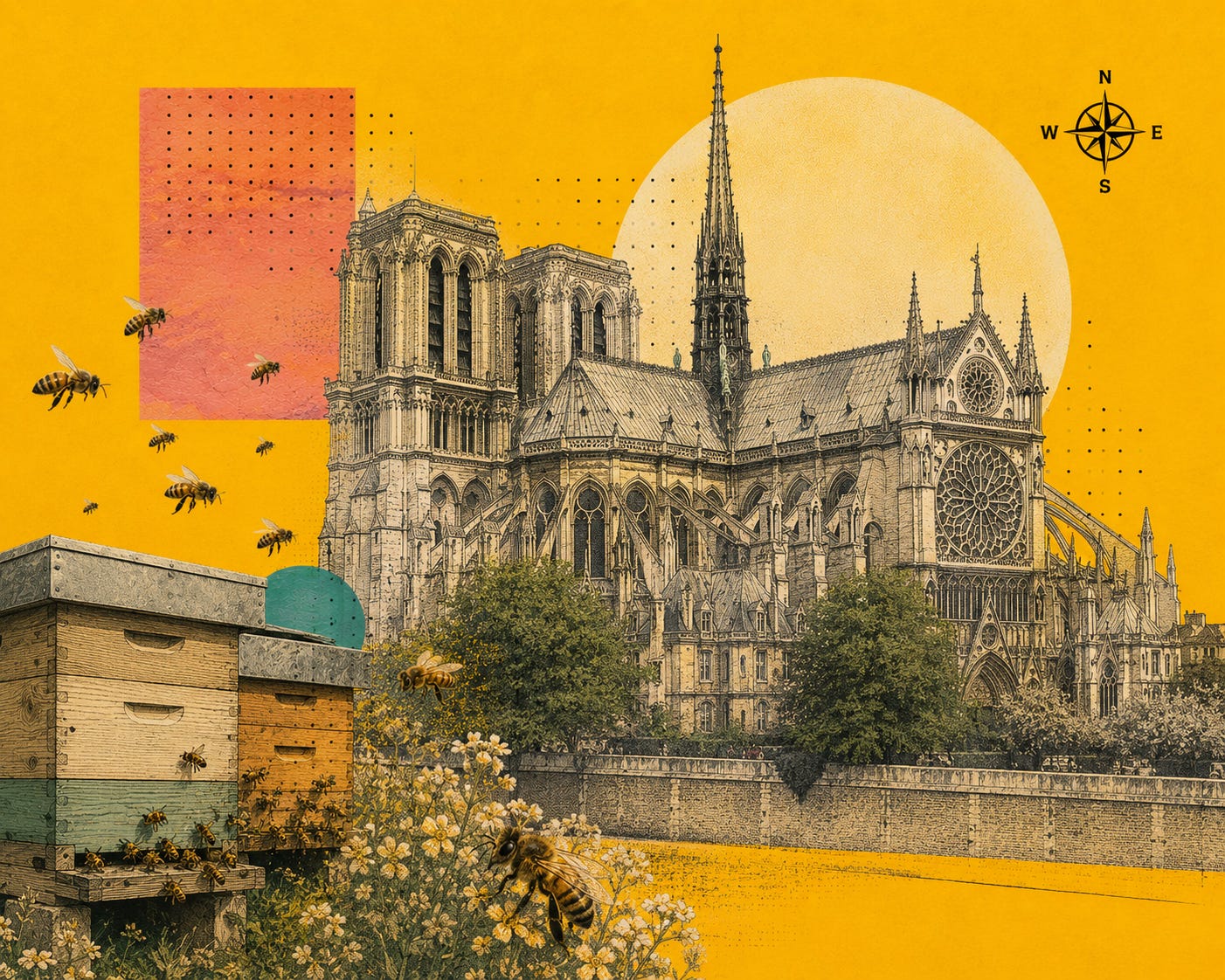
The survival of 180,000 bees inside Notre-Dame Cathedral after the devastating 2019 fire became one of the most haunting symbols of resilience in modern history.
Beyond religion, Notre-Dame exposed how sacred buildings function as cultural memory, economic infrastructure, and national identity.
Jamaica faces many of the same questions about heritage, vulnerability, insurance, climate resilience, and the future of historic religious spaces.
Across the island, churches sit on valuable land while also serving as shelters, community anchors, schools, and emotional landmarks.
Fires, hurricanes, earthquakes, neglect, and redevelopment pressures continue to threaten historic structures throughout the Caribbean.
The question is no longer whether Jamaica values its sacred spaces. The question is whether enough is being done to protect them before disaster arrives.
When flames tore through Notre-Dame Cathedral in April 2019, much of the world watched in disbelief. The burning spire collapsing into the heart of Paris became more than breaking news. It became a moment of collective mourning.
People who had never entered a cathedral before suddenly felt loss.
Not simply because a building was burning, but because something deeper appeared vulnerable. History. Identity. Continuity. Memory itself.
Then came one of the most unexpected details of all.
The bees survived.
Roughly 180,000 bees housed in hives on the cathedral’s sacristy roof lived through the inferno that nearly destroyed one of the world’s most recognised religious landmarks. Hidden beneath smoke, ash, and destruction, life quietly endured.
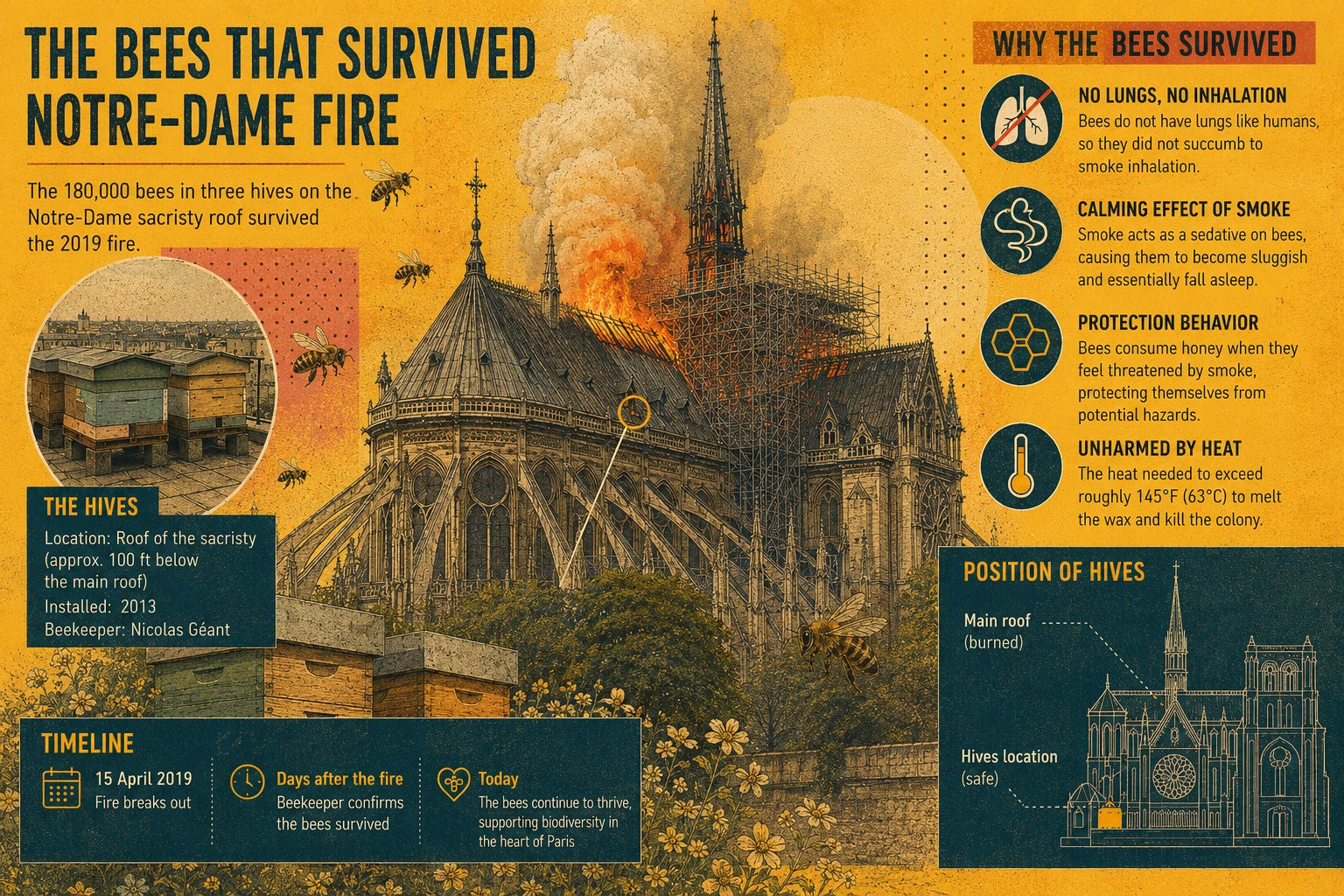
That image travelled around the world because it carried meaning far beyond France.
Even in catastrophe, something sacred remained alive.
For Jamaica, the symbolism feels uncomfortably familiar.
This is a country where churches are woven into almost every layer of national life. They are not merely places of worship. They are landmarks of memory. They sit at the centre of towns, communities, grief, celebration, resistance, migration, and survival itself.
Some Jamaicans learned to read in church halls. Others sheltered inside churches during storms. Many buried parents, married spouses, baptised children, or sought refuge from violence beneath church roofs.
The island’s religious structures are deeply tied to the emotional architecture of Jamaica.
Yet many of these buildings now stand vulnerable.
Some are aging quietly under the weight of time. Others face increasing threats from hurricanes, coastal erosion, earthquakes, fires, inadequate maintenance, urban pressure, and financial strain. In rapidly developing areas, historic church lands are also becoming economically attractive in ways that create uncomfortable questions about preservation versus redevelopment.
Notre-Dame forced many countries to confront a difficult reality: heritage can disappear far faster than people imagine.
And once it is gone, rebuilding the structure is often easier than rebuilding the meaning attached to it.
Across Jamaica, sacred buildings occupy a unique position because they are simultaneously spiritual, historical, social, architectural, and economic spaces.
A church in Jamaica is often far more than a sanctuary.
It may operate a basic school. It may feed vulnerable families. It may host funerals after community violence. It may provide counselling, shelter, literacy support, or emotional stability during moments of national trauma.
In some districts, churches remain among the few enduring institutions still trusted across generations.
That gives these structures enormous unseen value.
Yet unlike modern commercial developments, much of that value is difficult to calculate on paper.
How do you properly insure memory?
How do you quantify heritage?
What is the replacement cost for a building tied to emancipation history, migration stories, or the emotional identity of an entire town?
These are no longer abstract questions.
Climate pressures across the Caribbean are intensifying conversations about resilience, construction standards, insurance coverage, and disaster preparedness. Jamaica understands this reality intimately. The island has repeatedly experienced how quickly infrastructure can be tested by nature.
Historic religious buildings often face an especially difficult challenge because preserving architectural authenticity can conflict with the expensive structural upgrades needed for modern resilience.
Stone cracks.
Wood weakens.
Roofs age.
Funding disappears.
Congregations shrink.
Maintenance gets postponed one year at a time until suddenly a structure stands one storm, one fire, or one accident away from irreversible loss.
The destruction of Notre-Dame demonstrated how quickly centuries can hang in the balance.
But it also demonstrated something else.
People still care deeply about sacred space, even in an increasingly secular world.
Within hours of the fire, donations surged into the hundreds of millions. Architects, historians, engineers, conservationists, clergy, governments, and ordinary citizens rallied around the restoration effort.
Why?
Because certain buildings become larger than religion itself.
They become repositories of civilisation.
Jamaica possesses many such places, though often without the same global spotlight or financial backing.
Historic cathedrals, Baptist churches connected to emancipation, synagogues tied to centuries of Jewish history, Moravian structures, Anglican landmarks, Revivalist meeting grounds, and spiritually significant Maroon sites all form part of the island’s living heritage landscape.
Some remain protected.
Others remain dangerously fragile.
The irony is that societies often only realise the emotional value of these places after catastrophe strikes.
Notre-Dame taught the world that heritage preservation is not simply nostalgia. It is continuity planning for national identity.
The cathedral’s surviving bees unexpectedly captured that truth better than any political speech could.
Life persisted quietly in the middle of devastation.
Perhaps that is why the image resonated so deeply across cultures and borders.
It reflected something human.
Something spiritual.
Something enduring.
For Jamaica, the lesson may be larger than architecture.
The island continues to wrestle with rapid development, economic pressure, migration, environmental vulnerability, and evolving social identity. In that environment, preserving meaningful spaces becomes more than conservation. It becomes a statement about what a society chooses to remember.
Because once certain places disappear, entire emotional maps disappear with them.
And unlike concrete, memory is far harder to rebuild.