


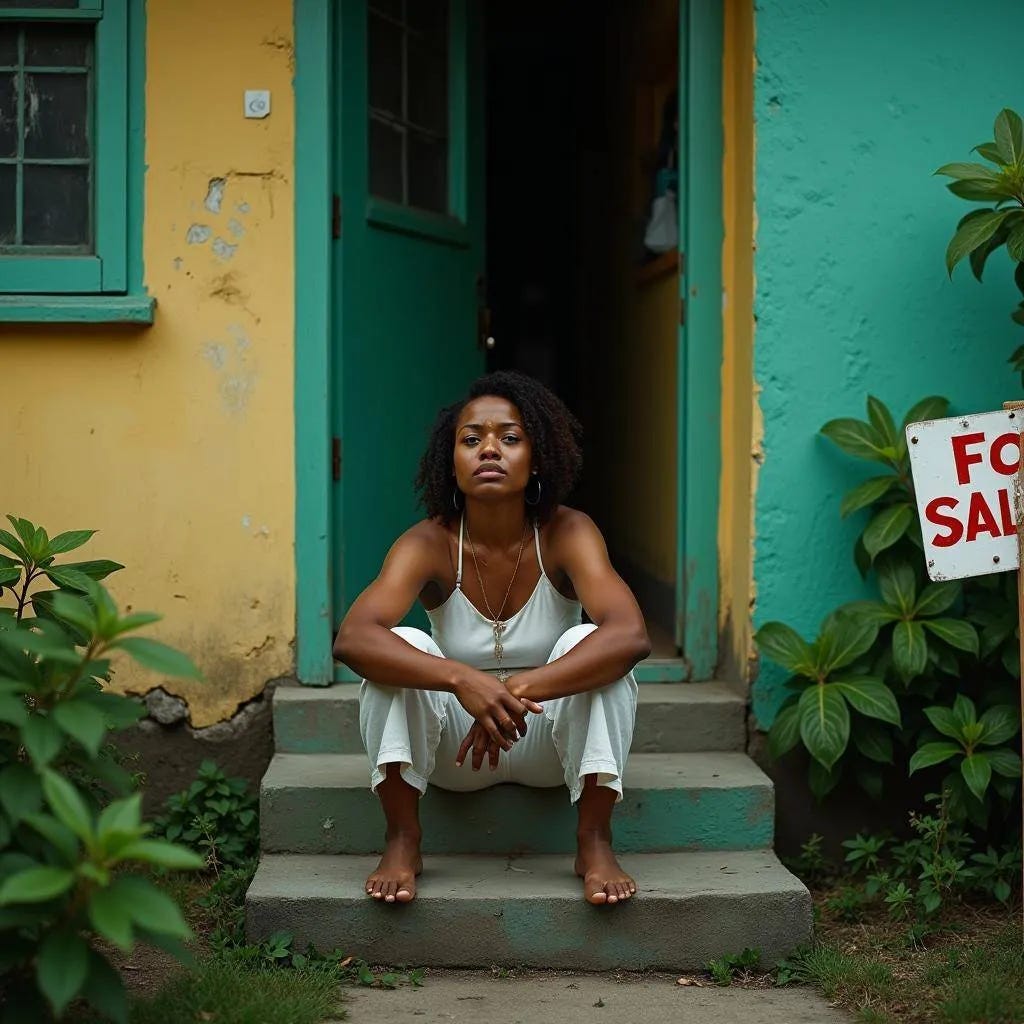
There is a particular silence that settles over a home that has been placed on the market but has not yet found its next owner.
The sign may still stand politely at the gate. The photographs may still circulate across the internet. The agent may still be answering calls. Yet time passes, and the house remains where it has always been—watching the world move around it.
For many homeowners in Jamaica, this experience can feel unsettling. A property that once seemed destined to attract swift interest instead waits patiently for the right buyer to appear.
But houses, like the lives built inside them, move to their own rhythm.
Real estate is rarely as simple as placing a listing online and waiting for offers to arrive. Homes carry stories, expectations, and sometimes a touch of sentiment. The market, meanwhile, operates according to its own quiet logic.
And so when a house does not sell immediately, it invites reflection rather than alarm.
As Dean Jones, founder of Jamaica Homes, once observed:
“Every home has its moment. The role of a good seller is not to force the market, but to recognise when the market is asking for something different.”
That moment of reflection can reveal much.
Jamaica’s Property Landscape: Subtle, Human, and Often Misunderstood
Much of what one reads about selling homes online originates from large overseas markets. The advice is often well-intentioned but framed around conditions that do not always mirror the Jamaican experience.
Jamaica’s housing market is, in many ways, a deeply human one.
Yes, data matters. Prices are analysed. Listings are compared. But transactions here are still influenced by relationships, community knowledge, and the quiet conversations that travel through neighbourhoods and extended families.
A buyer in Toronto may be considering a property in Kingston because a cousin recommended the area. Another buyer may be influenced by childhood memories of visiting relatives in St. Ann. A returning resident might be searching not only for a house but for a sense of belonging.
These are not variables that appear neatly on a spreadsheet.
Which is why the advice of a knowledgeable local agent often proves far more valuable than the tidy certainty of an online search result. A search engine can deliver statistics. A local professional understands the subtleties behind them.
And those subtleties matter.
The Quiet Power of Presentation
In recent years, technology has transformed how buyers encounter homes for the first time. A house in Kingston can now be viewed instantly by someone in London, New York, or Montego Bay, often through nothing more than a mobile phone screen.
But with that convenience comes a curious side effect: buyers compare far more properties than they once did.
They scroll quickly, pausing briefly on photographs before moving on. They measure space through images, judge lighting through pixels, and form impressions within seconds.
It may seem unfair to ask a house to perform under such scrutiny, but this is the stage upon which modern real estate now unfolds.
Fortunately, presentation does not demand extravagance.
Sometimes the most meaningful improvements are surprisingly modest: a fresh coat of paint that brightens a room, a neatly trimmed garden that frames the entrance, a living space cleared of clutter so the architecture itself can breathe.
In truth, a home that is well cared for often reveals its character without needing to shout for attention.
Dean Jones captures this sentiment simply:
“A house should not try to impress a buyer. It should quietly invite them to imagine a life inside it.”
When that invitation is extended thoughtfully, buyers tend to notice.
The Sensitive Question of Price
Of all the considerations surrounding a home sale, pricing carries the greatest emotional weight.
After all, a house is rarely just a structure of concrete and timber. It holds memories—family celebrations, late-night conversations, the quiet rhythms of daily life.
Placing a monetary figure upon such things can feel almost uncomfortable.
And yet, the market ultimately evaluates a property through the lens of value.
Many sellers look naturally to past sales within their neighbourhood to guide their expectations. If a similar house sold for a particular amount three years ago, it seems reasonable to assume a comparable outcome today.
But markets evolve.
Demand rises and falls. Financing conditions shift. New developments alter the character of an area. Buyers reconsider what they can afford.
A price that once seemed entirely appropriate may now sit just beyond what buyers feel comfortable offering.
This is not a judgment on the home itself. It is simply the market expressing its current reality.
As Dean Jones thoughtfully reflects:
“The value of a home is not defined by what we hope it will be worth, but by the moment when a buyer sees its future and is willing to invest in it.”
That moment arrives most readily when the price aligns with what buyers perceive as fair and attainable.
Accessibility: The House Must Be Seen
There is also a practical truth that is sometimes overlooked in the process of selling property.
A home cannot be purchased if no one experiences it.
In Jamaica, where many sellers continue living in their homes during the listing period, arranging viewings can understandably feel disruptive. Work schedules, family routines, and the desire for privacy all come into play.
But the ease with which buyers can view a property often influences whether they consider it seriously.
Imagine a prospective buyer visiting Kingston for just a weekend, hoping to explore several properties in different neighbourhoods. If a home requires lengthy notice or limited viewing hours, it may quietly fall off the list.
Not because it lacks appeal—but simply because time did not permit the visit.
Real estate, in many ways, thrives on opportunity. The more accessible a property becomes, the more opportunities arise for someone to recognise its potential.
Listening to the Market
When homes linger on the market, sellers sometimes begin to wonder whether something has gone wrong.
Yet the market itself is rarely unkind. It simply communicates in subtle ways.
Feedback from viewings might reveal that buyers appreciate the location but hesitate about the price. Others might admire the property yet wish the interior felt slightly brighter or more contemporary.
These comments are not criticisms.
They are signals—small insights that can guide thoughtful adjustments.
Interestingly, many successful sales occur only after a seller pauses long enough to listen carefully to what buyers are saying.
The Conversation That Matters Most
In moments of uncertainty, homeowners often turn to the internet in search of answers. And while digital advice can provide general guidance, it rarely understands the unique context of a specific property.
A more meaningful approach is often simpler.
Sit down with the agent. Speak candidly about what has been happening.
What are buyers currently prioritising in the area?
What feedback has emerged from recent viewings?
What adjustments might create renewed interest?
These conversations, when approached with openness, often illuminate possibilities that had not previously been considered.
Real estate is not merely a transaction. It is a collaboration between seller, agent, and buyer—each bringing their perspective to the table.
A Country That Knows How to Rebuild
Jamaica is a nation accustomed to resilience.
Communities here understand how to adapt, rebuild, and move forward when circumstances change. That quiet strength is woven into the island’s culture.
The housing market reflects that same spirit.
A home that waits patiently for its buyer is not an anomaly. It is simply part of the natural rhythm of property ownership.
Eventually, someone will walk through the gate, pause in the living room, and feel that unmistakable sense of possibility.
Dean Jones expresses it beautifully:
“Homes in Jamaica are more than investments. They are foundations for families, anchors for communities, and reminders that stability is something we build together.”
And when the right buyer arrives, the house—after all its waiting—will begin its next chapter.
A Final Reflection
If your home has remained on the market longer than you expected, it is worth remembering that houses are remarkably patient things.
They have stood through seasons, storms, celebrations, and quiet mornings alike. They understand that timing matters.
Sometimes a small change in presentation opens new eyes.
Sometimes a thoughtful adjustment in price invites new conversations.
Sometimes the right buyer simply has not yet discovered the listing.
But rarely does a home remain unsold forever.
With the right guidance, a willingness to adapt, and a little patience, the moment inevitably arrives when someone sees the property not merely as a building—but as the place where their own story might begin.