

When the Music Fades, What Remains?
Easter, the Jamaican home, and the quiet question of who we are becoming

There was a time in Jamaica when Good Friday did not need explaining. The island slowed, shops closed early, radios softened, and even conversation seemed to carry a different weight. Television, where it existed, told the story of the cross, and even those who did not fully understand it knew this was not an ordinary day.
Now, the speakers are louder, the costumes brighter, the weekend longer, and somewhere between the road march and the rum punch, a question lingers quietly in the background, almost too polite to interrupt the party, what exactly are we celebrating?
Jamaica has never been short on churches. One could argue, though the exact figures may shift depending on who is counting, that few nations carry as many steeples per square mile. Faith has long been stitched into the Jamaican identity, woven through Sunday service, grandmother’s prayers, and the rhythm of everyday life. But identity, like culture, does not stand still, it shifts, it stretches, and sometimes, without noticing, it thins.
Today, Jamaica feels like two conversations happening at once. One is loud, vibrant, unapologetically alive, a nation that knows how to celebrate, how to release, how to forget the weight of the week, if only for a moment. The other is quieter, almost hesitant, a nation still rooted in faith, still shaped by Scripture, but increasingly unsure how to carry that inheritance forward. Easter, perhaps more than any other moment, exposes that tension.
There is something almost poetic in the contrast. On one road, feathers, music, motion. On another, a man carrying a cross. One celebrates freedom of the body, the other speaks to the freedom of the soul. Neither is new, but the balance between them is shifting.
A pastor stands along Hope Road offering water to revellers, not protesting the party, not condemning the crowd, but quietly interrupting the moment with meaning. A bottle of water, a small gesture, a reminder that even in celebration, something deeper is still calling. It is not confrontation, it is invitation, and perhaps that is where the Church must rediscover its voice, not louder, but clearer.
Because the real question is not whether Jamaica is still a Christian nation. The question is whether it still behaves like one.
Faith, in many homes, has become inherited language rather than lived experience. It is spoken, referenced, even respected, but not always practiced. The lines between secular life and sacred life have not just blurred, in many cases, they have quietly disappeared. Church on Sunday, anything goes on Monday, and by Friday, the cross has been replaced with a calendar reminder.
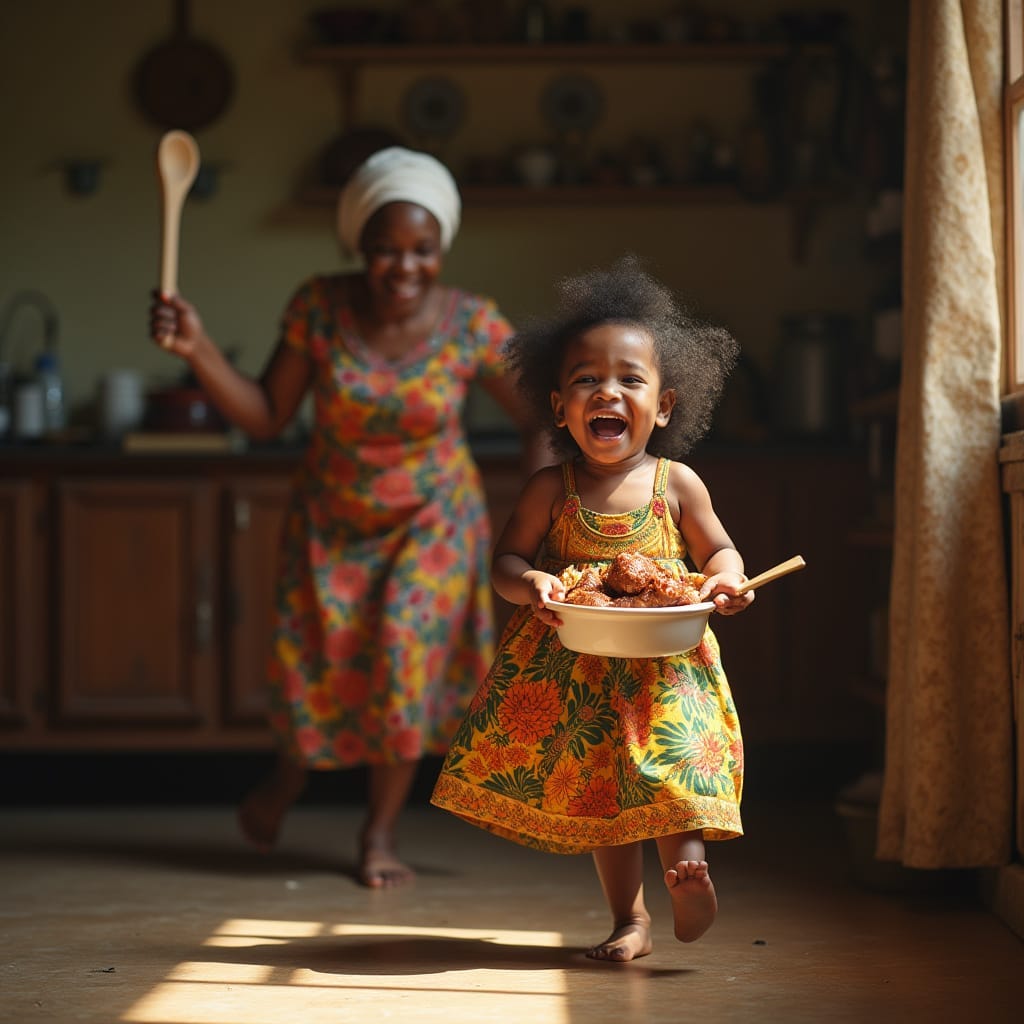
To understand what is being lost, one must return not just to Scripture, but to memory, to the Jamaican home. There was a rhythm to it. Grandmothers preparing bun and cheese days in advance, fish seasoned and set aside with care, kitchens alive with purpose. The kind of preparation that said, without words, this matters. Then the day itself, quiet, not empty, but full in a different way. Even the laughter was softer, as if instinctively aware that something sacred had taken place.
It was not perfect theology, it was not always deeply understood, but it was remembered, and remembrance, even imperfect, has power.
A home is more than walls. It is where values are rehearsed daily, often without announcement. A nation is nothing more, and nothing less, than a collection of those homes. Strong homes, steady nation. Fragmented homes, uncertain future.
A house can be built with concrete, steel, and skill, but a home, a real home, is built on something less visible, belief, discipline, love, structure, and yes, faith. Remove those, and what remains may still look impressive, but it will not hold under pressure.
And pressure is coming, not just to Jamaica, but to the world. Conflicts tighten global supply lines, energy prices rise, nations grow unsettled, and families elsewhere spend nights not in celebration, but in uncertainty, without water, without electricity, without peace. It is a sobering contrast. While one part of the world prepares for a weekend of release, another braces for survival, and somewhere in between sits Jamaica, blessed, yes, but not immune.
Because peace is not guaranteed, it is sustained, and it begins far closer to home than most would like to admit.
Which brings us back to the cross, not as decoration, not as tradition, but as a symbol that has outlived empires, outlasted wars, and quietly shaped civilizations. It is, at its core, a story of sacrifice, of restraint, of choosing purpose over impulse. In a world increasingly driven by immediacy, by what feels good now, that message feels almost inconvenient, yet it is precisely that inconvenience that gives it weight.
There is a kind of strength that does not shout, it does not dance in the street, nor demand attention, it waits, it endures, it holds the line when everything else lets go.
Jamaica’s national anthem speaks of justice, truth, and beauty. Not noise, not excess, not escape. Justice requires discipline, truth requires honesty, and beauty, real beauty, requires order. These are not abstract ideals, they are lived realities, built first in homes, then in communities, and finally in a nation. If those foundations weaken, the anthem becomes aspiration rather than reflection.
This is not a call to end celebration. Jamaica without joy would not be Jamaica. But joy, untethered from meaning, becomes distraction, and distraction, over time, becomes drift. The question is not whether people will go to Carnival, they will. The question is whether, after the music fades, anything remains.
Perhaps the answer is not found in forcing people back into churches, but in restoring what made those churches matter in the first place, clarity, conviction, consistency, a faith that is not seasonal, but structural, one that lives not just in sermons, but in homes.
Because independence, true independence, is not just political, it is moral. It is the ability of a people to govern themselves not only by laws, but by values. Values do not come from policies, they come from people, from families, from what is taught, repeated, and reinforced behind closed doors.
So as Jamaica moves forward, building, developing, modernising, it faces a quiet but defining choice, not between church and party, not between past and present, but between foundation and drift.
When the music fades, and the road clears, and the costume is folded away, and the house grows quiet again, what remains?
If the answer is nothing, then the nation has a problem. But if the answer is something, something steady, something rooted, something true, then there is hope, not just for Easter, but for the future of Jamaica itself.