

When the Planes Return but the Roofs Don’t
Tourism is rebounding after Hurricane Melissa. For many Jamaicans, recovery has not.

Visitor arrivals are nearing pre-hurricane levels
Roughly a quarter of hotel rooms are still offline
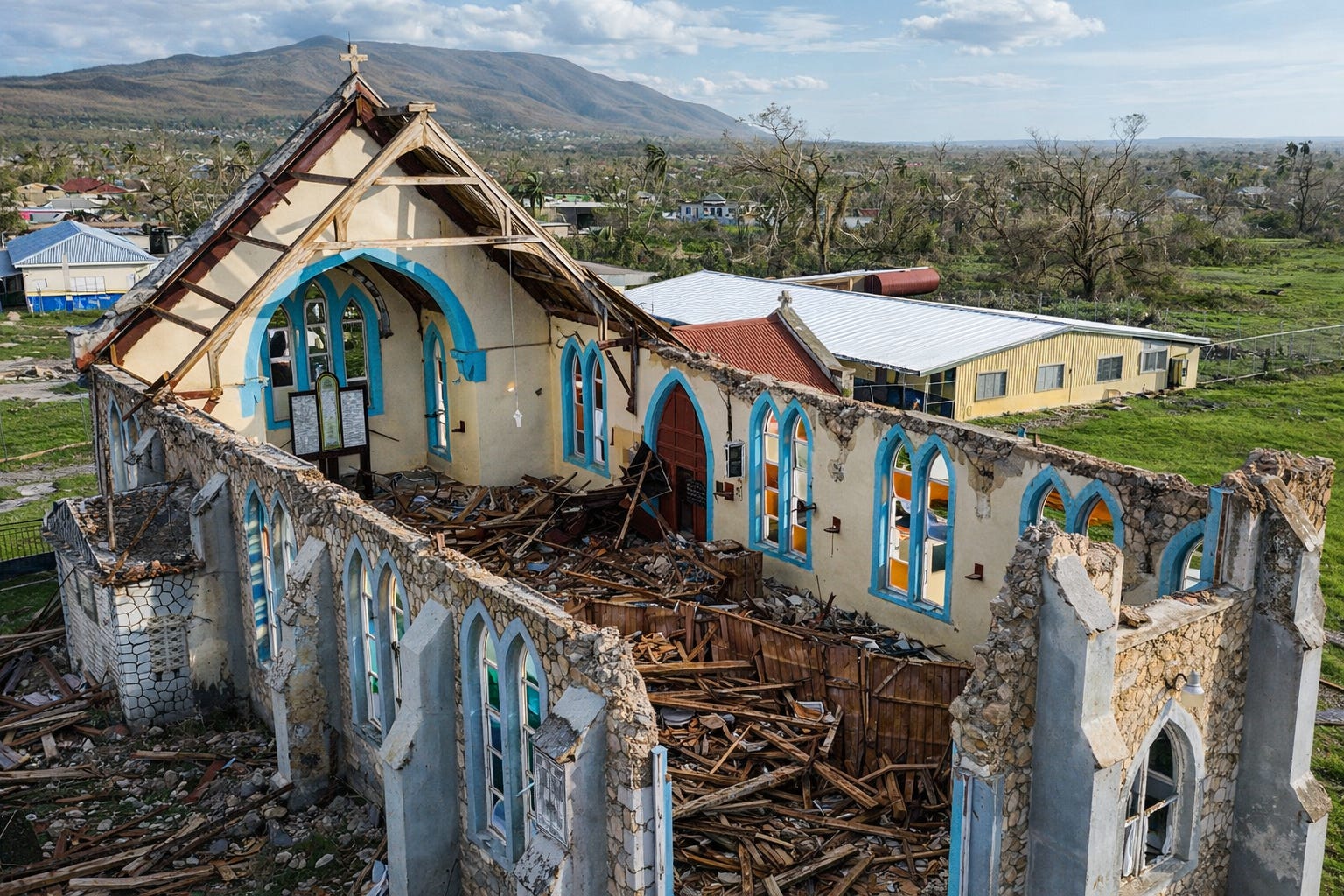
Thousands of Jamaicans remain displaced or under repaired roofs
Tourism capital is moving faster than housing recovery
The real question: recovery for whom, and on whose timeline?
The planes are landing again.
Airports are busy, hotel lobbies are reopening, and the language of recovery has returned to familiar rhythms, arrivals, occupancy, demand. Jamaica, officials say, is nearing a full rebound in tourism after Hurricane Melissa tore across the island just months ago.
But beyond the resort corridors, in districts where zinc sheets still sit loosely against timber and tarpaulin flaps in the wind, another reality holds.
There are still many without proper roofs.
This is not a contradiction. It is the structure of recovery itself.
Tourism, by its nature, rebounds faster. It is capitalised, insured, marketed globally, and under constant pressure to return. A closed hotel is a visible loss, measured daily. A damaged home, especially in a rural community, can disappear quietly into a slower system of assessments, grants, labour shortages, and delayed materials.
So the country can be open for visitors while still unfinished for its own people.
The Minister responsible for tourism has pointed to strong demand, with arrivals now approaching pre-storm levels, even as a significant portion of room stock remains offline. Alternative accommodations, villas and short-term rentals, have stepped in to absorb some of that demand, softening the blow to the sector.
It is, in many ways, a success story.
But it is also a reminder of how uneven recovery can be.
Because while tourism measures its progress in numbers, arrivals, bookings, revenue, the ordinary Jamaican measures recovery in something far more immediate: whether the rain comes through the roof at night.
There is a quiet tension in that gap.
In the hills and across the plains, families are still navigating what comes after the storm, navigating paperwork, waiting on assistance, patching what they can, living between what was and what might be restored. Some have received help. Many are still in process. For others, recovery is less a programme than a daily improvisation.
It is here that the language of “near full recovery” begins to feel distant.
Not wrong, but incomplete.
This is not new. It is a pattern seen across disaster-struck regions, where sectors tied to global flows, tourism, trade, finance, often stabilise ahead of the communities that host them. The visible economy recovers first. The lived economy follows more slowly.
In Jamaica, that gap carries particular weight.
Housing is not just shelter here. It is inheritance, identity, and security. A house is often the single most important asset a family will ever hold, passed through generations, built piece by piece over time. When a storm damages that structure, it is not simply a physical loss. It is a disruption of continuity.
And continuity takes time to rebuild.
There is also the matter of materials and labour. Post-storm demand places immediate pressure on both. Prices rise. Skilled labour becomes scarce. Even when assistance is available, the capacity to execute repairs across thousands of homes simultaneously is limited. Recovery, in that sense, is not just a financial question, but a logistical one.
Meanwhile, the global traveller sees a different Jamaica.
The beaches remain. The sea still turns that impossible shade of blue. The marketing continues, polished, confident, reassuring. And increasingly, there are places to stay again, villas, guesthouses, restored resorts.
Tourism adapts quickly because it must.
But housing cannot adapt at the same speed. It is rooted, literally and economically, in place.
There is no marketing campaign that can replace a roof.
This is where the story becomes less about contradiction and more about alignment. If tourism is indeed recovering strongly, then it creates an opportunity, perhaps even an obligation, to accelerate housing recovery alongside it.
Because the two are not separate.
The strength of Jamaica’s tourism product ultimately rests on the stability of the communities that support it, the workers, the service providers, the families who live just beyond the resort gates. A resilient tourism sector requires a resilient housing base. One cannot sustainably outpace the other indefinitely.
“A country does not recover when the visitor returns, it recovers when its people are secure again,” says Dean Jones, founder of Jamaica Homes. “Until then, you are looking at two Jamaicas moving at different speeds.”
That difference in speed is the real story.
It is visible in small ways. A reopened hotel down the road from a partially repaired home. A full flight landing in Montego Bay while a family in another parish waits on roofing materials. A sector regaining momentum while households rebuild incrementally.
None of this diminishes the importance of tourism. It remains one of Jamaica’s most critical economic engines, and its recovery is essential. Jobs depend on it. Foreign exchange depends on it. Confidence, both local and international, depends on it.
But recovery measured only through that lens risks missing something fundamental.
Because the truest measure of recovery is not how quickly the economy restarts, but how completely people are restored.
And restoration is slower work.
It requires coordination across ministries, sustained funding, efficient delivery mechanisms, and, perhaps most importantly, attention to those who are easiest to overlook once the headlines shift. It requires seeing housing not as a secondary issue, but as central to national resilience.
Storms do not just test infrastructure. They test systems.
They reveal where processes are strong, and where they are stretched. They expose the distance between policy and lived experience. And they ask, quietly but persistently, who recovers first, and who waits.
Jamaica is, by many measures, moving forward.
Tourism is returning. Rooms are reopening. Demand remains strong. The global image of the island endures, as it often does, resilient, desirable, familiar.
But beneath that surface, there is another measure still unfolding.
One roof at a time.
The work ahead is not just to restore what was lost, but to close the gap between these two recoveries, the visible and the lived, the economic and the human.
Because a nation is not fully back on its feet until its people are, quite literally, back under their own roofs.