


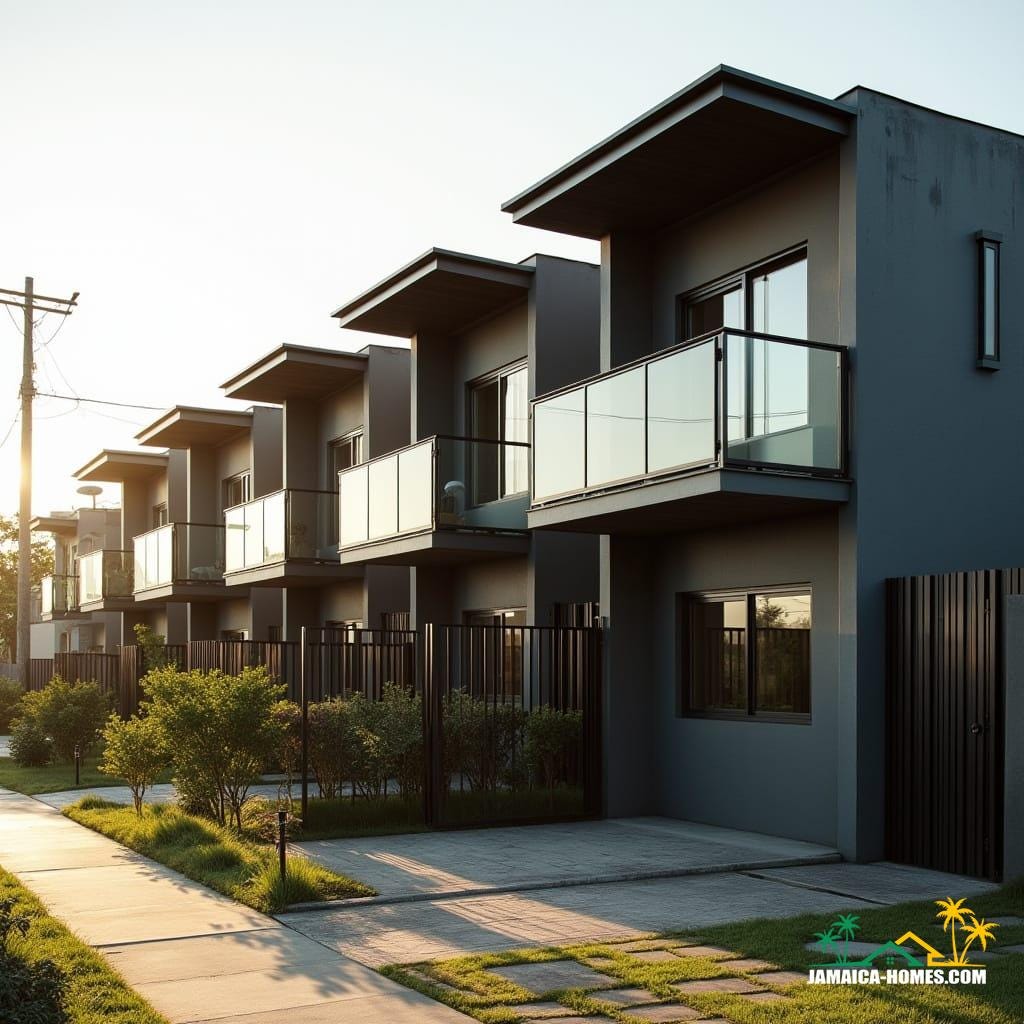
As the year gets underway, Jamaica’s housing market is revealing early signs of adjustment rather than upheaval. New listings, pricing patterns and development activity suggest a sector that is responding to recent pressures with recalibration, not retreat.
January finds buyers, developers and lenders operating in a landscape shaped by higher construction costs, tighter financing conditions and the after-effects of a demanding hurricane season. In that environment, housing decisions are being made with greater emphasis on certainty, durability and readiness.
This has sharpened the role of houses and townhouses within the market. More than any other residential product, they are carrying the practical weight of demand — accommodating families, returning residents and long-term buyers who are prioritising stability over speculation. The data now emerging points to a market that is neither overheated nor stalled, but one that is settling into a more deliberate, structured phase.
What is becoming evident early in the year is a housing sector defined less by headline momentum and more by positioning — where people are choosing to buy, what they are willing to pay for, and how residential development is reorganising itself across Jamaica.
Not loud.
Not speculative.
Not performative.
Just assured.
Homes are no longer being built simply to meet demand. They are being positioned — deliberately — to influence how people live, how communities function, and how quickly life can move forward after disruption. Townhouses, gated developments, and finished homes ready for financing are not accidental trends. They are responses to lived experience.
This is not about sales figures or marketing claims. It is about where Jamaica is placing its residential weight as the year opens — and why those choices reflect deeper shifts in behaviour, security, and expectation.
The Big Shift: Why Houses and Townhouses Matter Now
Across Jamaica, houses and townhouses have become the preferred middle ground between aspiration and practicality. Apartments still matter, traditional standalone homes still hold emotional value — but townhouses, in particular, have emerged as the most balanced residential product on the island.
They offer:
Ownership without isolation
Space without sprawl
Structure without suffocation
And increasingly, they are being delivered ready to live, ready to finance, and ready for modern life.
That readiness is not accidental. It is the foundation of the gated community model — and that model is now reshaping Jamaica’s residential landscape.
Why Gated Communities Are Thriving Across Jamaica
Gated communities are doing well in Jamaica for one simple reason: they remove friction from life.
They provide a sense of exclusivity, yes — but more importantly, they provide privacy and security in a world that is increasingly busy, demanding, and noisy. For the returning resident, the expat, and the hardworking Jamaican who simply does not want to be bothered, this matters deeply.
These developments offer homes that are:
Finished
Standardised
Lender-friendly
Which means life can begin immediately. No years of phased construction. No constant upgrades. No waiting for “when things settle.”
You buy the house.
You finance it.
You get on with life — and the business of living.
Many gated communities now include shared facilities such as swimming pools, green spaces, jogging paths, and children’s areas. Not all — but enough to signal a shift in expectation. These are no longer luxuries. They are becoming part of the baseline.
Developments are appearing wherever land can be sensibly assembled — particularly along the north coast — and this is not chaos. It is pattern. Gated living is quietly becoming the standard residential language of modern Jamaica.
The National Ranking: Where the Market Leads
This ranking is not about raw listing counts. It is about leadership, demand pressure, pricing influence, and strategic importance.
First: Kingston
Kingston leads because it must. It is the centre of gravity.
Townhouses here represent efficiency and control — security, proximity to business, and liquidity. Houses, particularly in established and hillside areas, continue to command some of the highest prices nationally.
Kingston does not chase residential trends. It absorbs them, refines them, and sets the tone.
Second: St. Andrew
St. Andrew offers balance. Space without distance. Calm without disconnection.
Townhouses here are often larger, more expressive, and clearly aimed at professionals who want lifestyle without compromise. Pricing remains high, but with wider variation — reflecting the parish’s diversity of terrain and neighbourhood character.
Third: Montego Bay
Montego Bay has moved beyond tourism identity into residential confidence.
Houses and townhouses here increasingly serve diaspora buyers, remote workers, and investors seeking income-generating assets that still feel like homes. The market is international in tone and forward-looking in intent.
Fourth: St. James
Beyond Montego Bay’s name recognition, St. James quietly expands.
Planned townhouse developments are rising with intent — gated, scaled, and designed for long-term occupation. This parish has become a testing ground for modern residential formats outside the capital region.
Fifth: St. Catherine
St. Catherine remains one of the most strategically important parishes in Jamaica’s housing system.
It provides accessibility without abandonment — particularly for buyers priced out of Kingston but unwilling to disconnect from it. Value, infrastructure, and family logic define this market.
Sixth: St. Ann
St. Ann is no longer just scenic. It is becoming dominant.
Along the coastal corridor — including areas such as Drax Hall — development has accelerated in both residential and commercial form. This stretch behaves increasingly like a Jamaican “Gold Coast.”
Nightlife, restaurants, bars, clubs, and large-scale events now define the rhythm. People regularly travel from Kingston to St. Ann for nights out — a powerful signal of shifting gravity.
Commercial activity is following. Residential demand is responding. And with direct motorway access, the corridor enjoys a gravitational pull that is difficult to ignore.
Critics argue that more business hubs must emerge locally to reduce travel back to Kingston — and they are right. But the foundations are already in place. Momentum has started. It rarely reverses.
Seventh: Trelawny
Trelawny feels like a market that understands timing.
It offers affordability today with growth logic for tomorrow. Residential developments here are measured, not rushed — often appealing to buyers who value early entry over instant prestige.
Eighth: Manchester
Manchester continues to offer space, climate, and stability.
Houses dominate more than townhouses, and lots tend to be larger. This parish attracts buyers seeking permanence, land, and a slower, more grounded pace of life.
Ninth: Westmoreland
Westmoreland trades in calm.
Residential demand here is selective and lifestyle-driven. Coastal pockets command premium pricing, while inland areas retain authenticity and privacy. Scarcity, not scale, supports value.
Tenth: Clarendon
Clarendon rounds out the top ten not through hype, but through relevance.
This is a parish that quietly sustains ownership at scale. It absorbs first-time buyers, growing families, and returning residents who value space, functionality, and realism.
Prices remain among the most accessible nationally, but they are not stagnant. Infrastructure, transport links, and population pressure ensure upward movement over time.
Clarendon acts as a pressure release valve for Jamaica’s housing market — and without it, the system would strain.
Not every strong market demands attention. Some simply endure.
Leading, Expensive, Accessible — In Plain Terms
Market leaders: Kingston and St. Andrew
Most expensive on average: Prime Kingston and hillside St. Andrew
Most accessible: Clarendon, parts of St. Catherine, inland parishes
Most exciting trajectory: St. Ann, St. James, Trelawny
Or put another way:
“Price follows belief long before it follows bricks.”
A Closing Note
This piece captures a moment — a wide, serious glance at Jamaica’s housing landscape as it stands today, drawn from what is publicly visible and thoughtfully observed. Markets, like people, are never still. Listings will change, prices will stretch or soften, developments will surge or slow. That is the nature of living systems.
And yes, there is always more beyond the frame.
But what emerges here is not illusion or exaggeration. These movements are already in motion, felt on the ground, reflected in choices being made quietly and repeatedly across the island.
Jamaica’s houses and townhouses are no longer simply places to live.
They are signals of intent.
Markers of belief.
Statements about where people are willing to plant themselves — and where the country, with calm confidence, is preparing to go next.