


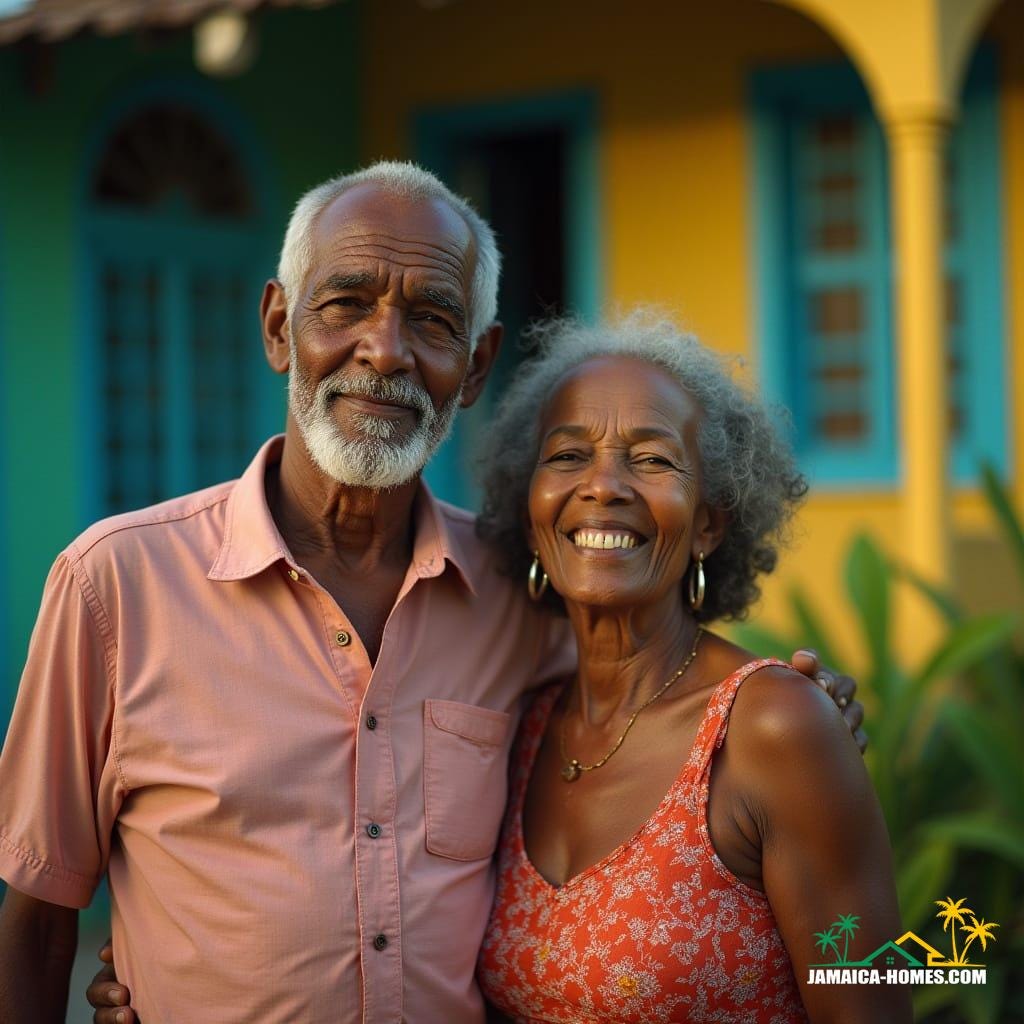
There are moments when a song doesn’t just fill the air — it fills the story of a nation.
Oh lawd, oh lawd, oh gosh, ay! The song begins with gratitude, a reminder that blessings, even when hard-won, fall on our table. That is Jamaica’s heartbeat: thankful for the blessings that have fallen on my table, learning all my lessons, now I’m willing and I’m able.
This island has always carried its story in rhythm — a rhythm of struggle and survival, of exile and return, of building and belonging. And if you listen closely, you’ll hear that the story of Jamaican real estate is written in the same melody: a song of freedom, investment, and identity, sung across generations.
Out of Chains, Into Land
When we look back at where the journey began, we see the shadow of slavery. Land was once denied, kept behind iron and law, worked by enslaved hands but never owned by them. Yet even then, the people sang redemption songs — low at first, whispered in cane fields, then louder with Emancipation in 1838.
Freedom came, but without land. So Jamaicans did what they had always done: they hustled, they prayed, they rose. Scraping together earnings, freedmen bought small plots in the hills, as humble as a lamb, working towards a goal. Thin soil, steep slopes, but every acre was dignity.
It was never easy. Morewhile you haffi toil, you might a crush up like a foil, but still, the midnight oil burned. Those tiny yards became the first foundations of Jamaican homeownership — proof that even against all odds, ownership was not just survival, but liberation.
“Look at Where I’m Coming From”
Migration became the next verse. With limited opportunities on the island, Jamaicans boarded ships for Cuba, Panama, and later Britain. The Windrush generation carried not just clothes in their suitcases, but also the spirit of this place — the rhythm of drums, the language of home, the stubborn pride of a small island that refused to bend.
In the factories of Birmingham, the hospitals of London, and the transport systems of England, Jamaicans worked with heads held high, though the world outside did not always welcome them. Yet through hardship, the refrain was the same: I really haffi say that I’m strong, I’m strong, all praises to the Most High One.
Even abroad, the dream of land endured. Money sent home became foundations for houses in Clarendon, Manchester, or St. Mary. Each remittance was not just currency, but commitment: a promise that no matter how far the journey, the road still led back to Jamaica.
Return of the Diaspora
Years later, the chorus changed. The children and grandchildren of the Windrush generation began to return. Retirees, investors, dreamers — they looked back at where the journey began and saw home not as memory, but as opportunity.
The returning diaspora brought experience, capital, and vision. They built villas in Ocho Rios, apartments in Kingston, eco-homes in Portland. Some came for the love, so naturally the light a shine. Others came to honor parents who had sacrificed abroad. All came because land in Jamaica is not just earth; it is belonging.
And they did not come empty-handed. They came with helping hands, with prayers for health, with visions of peace of mind. They came thankful, humble, but determined to rise.
Icons, Heroes, and a Global Stage
As Jamaica’s real estate grew, so did its voice in the world. Icons shaped not just politics, but culture and identity. Marcus Garvey told us to rise firm, never stumble. Louise Bennett reminded us to love the language of our people. Bob Marley carried our redemption songs to every continent.
And new voices followed — athletes who sprinted past records, musicians who lifted reggae and dancehall to the skies, entrepreneurs who brought the island’s spirit into global boardrooms.
Through them, Jamaica showed that when the pressure is overcome, it frees the soul. That even on a small island, the heights of great men and women could be reached — but only by burning the midnight oil.
Real Estate as Redemption
Property in Jamaica today is not just about square feet or rising values. It is an act of remembrance and a declaration of future. A concrete house in Spanish Town, a beachfront villa in Negril, a farm turned into a housing scheme in St. Elizabeth — each is a verse in the island’s ongoing song.
The expatriates who came to stay added their own harmonies. Some arrived seeking sun and sea, others for business, some simply for the love of Jamaica. They became part of the rhythm, helping to build the roads, businesses, and communities that shaped modern life.
For Jamaicans abroad, investing in land is more than portfolio growth. It is a way of saying: See deh now, mi jus’ a rise, and so mi rise, a so mi humble. It is a reclaiming of what ancestors once dreamed of but could not fully hold.
The Road Ahead
The market today faces challenges. Prices climb, demand grows, and young Jamaicans wonder if they, too, will claim their piece of land. Infrastructure strains to keep pace. Yet the refrain remains steady: Jah will never give mi more than mi can bear. So tell mi wah mi really haffi fear?
Jamaica’s real estate bends, but does not break. It adapts, it reinvents, it rises. From government housing schemes to luxury developments, from community-driven projects to diaspora-funded builds, the story continues to unfold — grounded always in the strength of a people who know how far they’ve come.
Where the Song Ends — and Begins Again
So when we look at where Jamaica is coming from, we don’t just see hardship. We see resilience. We see fields turned into homes, shacks turned into neighborhoods, remittances turned into foundations.
We see that every blessing, every helping hand, every midnight oil burned, has led to this moment. And we understand that real estate here is not just business — it is legacy. It is the sound of a people singing their story into walls, gardens, and rooftops.
The journey has never been easy, but it has always been ours. I really haffi say that I’m strong, I’m strong.
And as long as Jamaica sings, Jamaica builds. As long as Jamaica builds, Jamaica belongs.
All praises to the Most High One.