


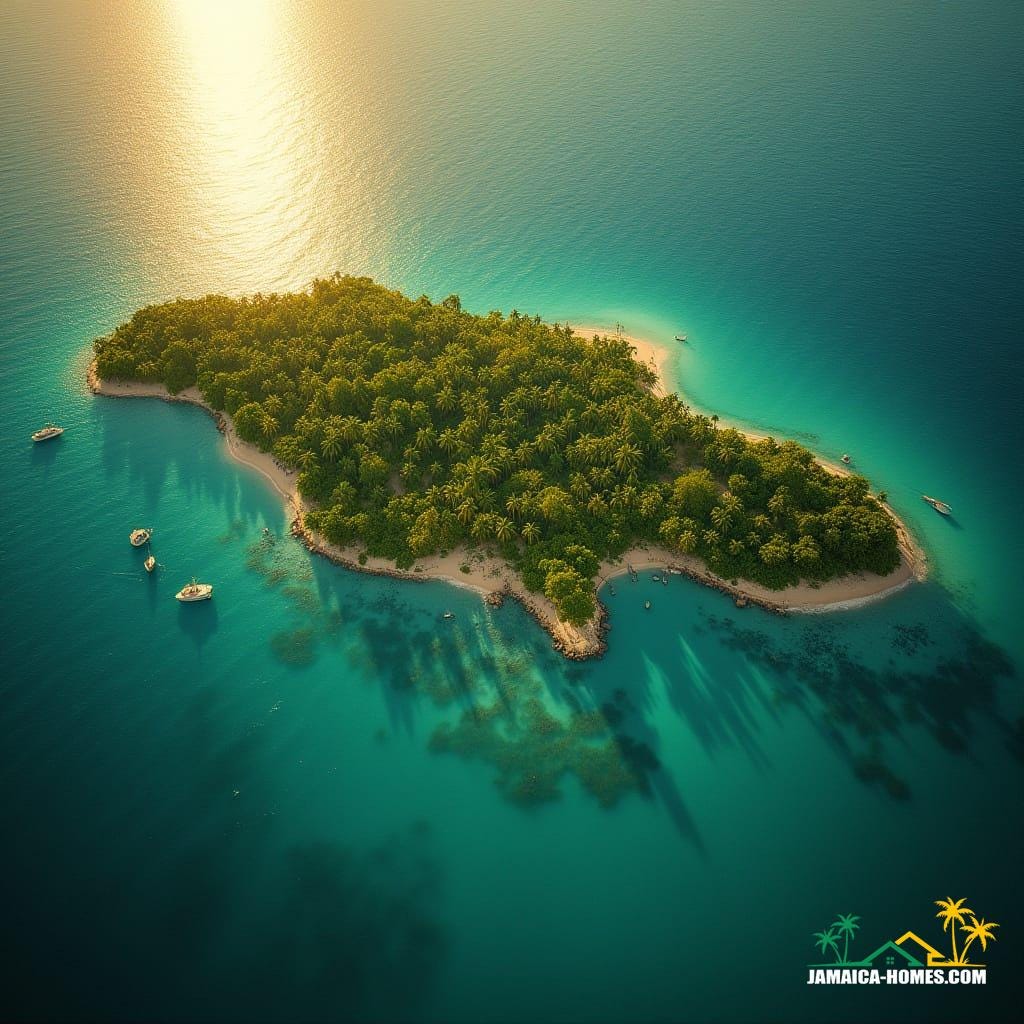
Jamaica is globally known for its reggae music, breathtaking beaches, and vibrant culture. But beneath the surface of tourism brochures and dancehall rhythms lies a complex web of historical power dynamics, forged through colonialism, piracy, slavery, and systemic class stratification. The question “Who really controls Jamaica?” is more than political—it’s economic, historical, and deeply tied to land ownership. To answer it, we must unravel the island’s past from the days of conquest and colonization to today’s real estate empires and power players, some of whom trace their roots to blood-soaked origins.
1. The Birth of Jamaica: Conquest, Piracy, and Plantation Wealth
Jamaica was violently taken from the Spanish by the British in 1655. At the time, Spain had already decimated much of the native Taíno population through forced labor, disease, and exploitation. When the British arrived, the island wasn’t merely a strategic military prize; it was a blank slate for plantation capitalism. Sugar was the new gold, and enslaved Africans became the fuel for its production.
The British Crown granted vast tracts of land to military officers and aristocrats—land that would become the base of generational wealth. To secure the colony, England encouraged piracy under the guise of privateering. Port Royal became a hub for pirates who raided Spanish ships and funneled their plunder into the local economy. Some of those pirates, like Henry Morgan, went legit, receiving knighthoods and land grants. These “respectable” men used blood money to found plantations, mercantile operations, and eventually political dynasties.
From the start, Jamaica’s elite learned that legitimacy could be purchased with enough violence and wealth.
2. Slavery and the Foundations of the Elite
Slavery formalized the racial and economic hierarchy in Jamaica. Whites owned the land, the capital, and the bodies of the enslaved. Mixed-race offspring of enslaved women and white planters were often granted special privileges, education, and eventually land—forming a buffer class between the white elite and the Black majority. This class would later evolve into the brown middle class, many of whom play pivotal roles in today’s business, law, and politics.
When slavery was abolished in 1834 (with full emancipation in 1838), Britain compensated slave owners with massive payouts. Enslaved people received nothing. Those funds—along with inherited land—enabled former planters to pivot into banking, shipping, rum production, and early industry. Many of Jamaica’s oldest families trace their wealth to these transactions.
3. Post-Emancipation Land Grab and Suppression
The post-emancipation period was not one of economic liberation for the Black majority. Land ownership remained concentrated in white and brown hands. Former slaves were often pushed into tenant farming or forced to squat on marginal lands. Efforts to own land were resisted by colonial authorities, who feared that landownership would lead to political autonomy.
One of the most powerful tools used to prevent the rise of a Black land-owning class was bureaucracy. Land titles, complex survey systems, and inflated purchase prices acted as barriers. Where legal resistance failed, force followed. The 1865 Morant Bay Rebellion, led by Paul Bogle, was rooted in land injustice. The British crushed it brutally, executing hundreds and reasserting colonial control.
Meanwhile, absentee landlords—often residing in England—continued to profit off Jamaican land via rent and production, widening the wealth gap.
4. Independence, Illusions, and the Rise of Local Capital
Jamaica gained independence in 1962, but power did not transfer evenly. British elites sold or passed on assets to trusted local counterparts—often of light complexion, educated abroad, and already wealthy. These individuals, many from merchant or brown planter classes, became the new Jamaican oligarchy.
During the Cold War, global powers flooded Jamaica with ideological investment. America, fearing socialism under leaders like Michael Manley, backed capitalist forces with money, training, and even covert operations. Meanwhile, local criminal networks emerged—not merely as gangsters, but as political enforcers and economic players.
“Donmanship”—a system where community leaders (often gang leaders) provided services in exchange for loyalty—became embedded in inner-city governance. Some dons were funded by major political parties and, over time, laundered their wealth through construction, entertainment, and yes—real estate.
Today, many prominent developers, landowners, and businesspeople have unclear or controversial pasts. Some transitioned from “garrison strongmen” into “legitimate businessmen.” That’s not unique to Jamaica—it’s a common route in many post-colonial, post-conflict societies.
5. The Land Question: Who Owns Jamaica Today?
Land in Jamaica is still highly unevenly distributed. According to various estimates, a small percentage of families and corporations own a disproportionately large share of usable land. The largest landowners include:
The Government of Jamaica (via agencies like the Urban Development Corporation)
Religious entities (such as the Anglican Church)
Old planter families (many with UK ties)
Modern real estate moguls (some linked to colonial wealth, others to newer entrepreneurial or political roots)
Additionally, major hotel chains and foreign investors now control significant beachfront and high-value areas. The irony is sharp: many Jamaicans can’t afford to buy land in their own country, while multi-national corporations build resorts on prime property with generous tax breaks.
6. Real Estate and Class Power
Real estate in Jamaica is the modern face of old-school control. The process of land titling is still burdensome, and many Jamaicans live on family lands with no formal documentation—making them vulnerable to dispossession. Meanwhile, developers with political connections can fast-track approvals and re-zone land.
Brown and white Jamaicans, many descended from historical merchant or planter classes, often dominate the upper tiers of banking, law, and land development. This is no accident. Generations of education, capital accumulation, and social access have entrenched their power.
The upper middle class—largely light-skinned, foreign-educated, and multi-generationally wealthy—forms the spine of modern Jamaican business. They run the real estate firms, finance houses, and advertising agencies. In contrast, many Black Jamaicans remain locked in cycles of rental, informal housing, or emigration in search of opportunity.
7. Gentrification and the “New Clean” Money
In recent decades, the gentrification of areas like Kingston’s Downtown, St. Andrew, and parts of St. Mary and St. Ann has accelerated. Old communities are being pushed out as new condos, hotels, and gated developments rise. Some of these projects are foreign-funded. Others are backed by Jamaicans who “went abroad, came back, and bought up the block.”
There’s a cultural battle too. The new elite often dress like expats, speak Patois selectively, and distance themselves from the poorer masses. Yet, many owe their wealth—either directly or indirectly—to illicit trades: drugs, gun-running, tax avoidance, or political favoritism.
As with the pirates of Port Royal, modern respectability can be acquired with the right optics and enough capital. Some of Jamaica’s most “respected” families began with rum smuggling, gun sales, or political racketeering—and are now hosting charity galas and owning board seats.
8. The Role of Diaspora and Foreign Capital
The Jamaican diaspora, especially in the UK, USA, and Canada, plays a powerful role in shaping the island’s real estate landscape. Remittances keep many households afloat, but also fuel land speculation. Jamaicans abroad often invest in property either as a retirement plan or a prestige project, creating a dual-market system: one for foreigners/diaspora and one for locals.
Additionally, Chinese, American, and European investors are rapidly buying strategic assets—ports, bauxite facilities, road infrastructure, and land. While this brings development, it also raises questions about sovereignty. Are we selling the island piece by piece?
9. So Who Really Runs Jamaica?
Jamaica is ruled not just by elected politicians, but by a complex matrix of:
Old money families (planter or merchant heritage)
Brown and white elites (often educated abroad)
Criminal entrepreneurs (now gone “clean”)
Foreign investors and corporations
Political gatekeepers (who grant access to permits, contracts, and licenses)
Religious and educational institutions (which shape minds and provide legitimacy)
Control is exercised through land, capital, media, education, and law. It’s rarely about who sits in Gordon House—it’s about who owns what, and who can access or deny opportunity.
From Piracy to Property Development
Jamaica’s story is not just one of oppression—it’s one of survival, adaptation, and reinvention. The same island that bred pirates and planters now produces global music icons and savvy developers. Yet, the structures of wealth and power remain deeply skewed. Until land ownership is democratized, and real access to capital is spread beyond the traditional elite, the question of “who really runs Jamaica” will remain the same.
Power follows land. Land follows history. And history, as Jamaica shows us, never really dies—it just changes disguise.