

Why Jamaicans Price Houses in US Dollars
From Montego Bay villas to unfinished family homes in Kingston, Jamaica’s housing market reveals a deeper story about currency, survival, diaspora wealth, and a small island trying to survive in a US


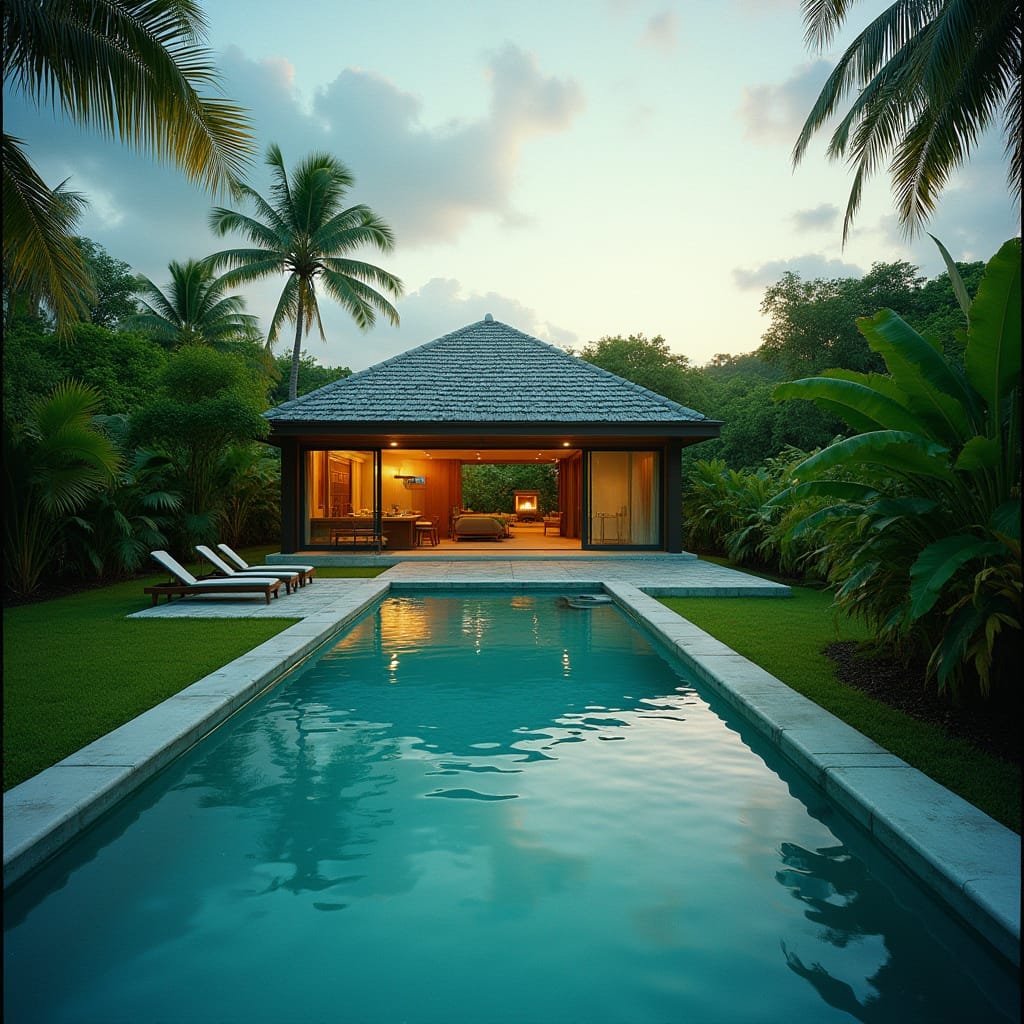
There is something quietly surreal about standing in the middle of Jamaica, earning in Jamaican dollars, paying taxes in Jamaican dollars, buying patties in Jamaican dollars, and then seeing a modest hillside home listed for US$450,000 as though the island itself has psychologically drifted offshore.
It happens so often now that many people barely question it anymore.
A two bedroom apartment in Kingston.
A villa in Montego Bay.
A lot in Ocho Rios.
All priced not in the currency most Jamaicans earn, but in the currency the world trusts.
The US dollar.
At first glance, it can feel absurd, even insulting. But spend enough time around developers, realtors, contractors, bankers, returning residents, and ordinary homeowners, and the logic begins to reveal itself. This is not simply a story about prestige or imitation. It is a story about fear, memory, economics, and survival.
Because in Jamaica, property is not just property.
It is pension.
It is inheritance.
It is status.
It is protection against inflation.
It is proof that a family endured.
And increasingly, it is tied to forces far beyond the island itself.
The roots of this stretch back decades. While houses were once more commonly discussed in Jamaican pounds and later Jamaican dollars, the shift toward US dollar pricing accelerated during the economic turbulence of the 1970s and 1980s. Inflation rose. Debt pressures intensified. The Jamaican dollar weakened repeatedly. By the 1990s, liberalisation, migration, tourism growth, and diaspora investment had transformed the psychology of the market.
People stopped merely asking, “What is this house worth locally?”
They began asking, “What value will survive internationally?”
And that question changed everything.
Today, much of Jamaica’s real estate market mentally operates in US dollars, even when transactions are technically completed in Jamaican currency. A house listed at US$500,000 may convert to a Jamaican dollar figure on paper, but the real anchor remains the US price. Sellers know it. Buyers know it. Banks know it.
Part of the reason is brutally practical.
Jamaica imports enormous amounts of what it needs to build. Steel, fixtures, roofing materials, generators, tiles, appliances, elevators, specialised equipment. When exchange rates move, construction costs move with them. Developers therefore think internationally, even while building locally. A weakening Jamaican dollar can quietly erase profits unless prices are protected.
And so the US dollar becomes less a foreign currency and more a shield.
Then there is the diaspora effect. Millions of Jamaicans live abroad, particularly in United States, Canada, and the United Kingdom. Remittances continue to pour into the island, helping families survive, build homes, pay mortgages, and purchase land. A returning resident from New York City or Toronto often thinks naturally in US or Canadian dollar equivalents. Sellers understand this instinctively.
In resort towns especially, the market long ago stopped being purely local.
A villa overlooking the Caribbean Sea is not merely competing with another house in Jamaica. Psychologically, it competes with property in Miami, Dubai, or London. The comparison may not always be rational, but it is real.
Then came the rise of short term rentals and platforms like Airbnb. Suddenly, ordinary residential property could generate foreign currency income. Apartments became investments. Houses became yield calculations. Entire developments were marketed around nightly rates paid by overseas tourists rather than long term affordability for Jamaicans.
This is where the unease begins.
Because while the system works in some ways, it also quietly fractures society in others.
For developers and property owners, dollar pricing often makes sense. It protects value. It attracts foreign investment. It stabilises expectations in an uncertain currency environment. It helps manage imported costs.
But for many ordinary Jamaicans, the market increasingly feels emotionally distant.
Someone earning J$250,000 per month can open a listing site and immediately feel excluded before even doing the conversion. US$300,000. US$450,000. US$1.2 million. The numbers appear not simply expensive, but foreign. Detached from local salaries. Detached from local reality.
There is now a growing sense among some Jamaicans that parts of the housing market are no longer truly designed for them.
And yet, the contradiction is impossible to ignore.
Many of the same people who criticise US dollar pricing would likely choose it themselves if selling property tomorrow. Because deep down, they too understand the instability that sits beneath the Jamaican dollar. They too want protection. They too fear losing value.
This is what makes the issue so emotionally complicated.
People resent the system while simultaneously depending on it.
In truth, Jamaica now operates with almost two parallel housing markets.
One market runs on international logic.
Diaspora money.
Luxury apartments.
Gated communities.
Airbnb returns.
Foreign investors.
US dollar listings.
The other runs on local survival logic.
Family land.
Incremental construction.
“Room by room” building.
Multigenerational households.
Remittances from relatives abroad helping to buy blocks one month at a time.
That divide may be one of the defining social realities of modern Jamaica.
And now, layered over all of this, is a much bigger global question.
What happens if the world itself begins changing?
The rise of BRICS, growing tensions between the West and countries like China and Russia, sanctions, wars, shipping disruptions, and discussions around “de-dollarisation” have created new uncertainty. Around the world, countries are increasingly asking whether they are too dependent on the United States financial system.
The Ukraine war accelerated these conversations dramatically. When sanctions hit Russia, many nations quietly realised how much power the US dollar system actually holds. Banking access, reserve freezing, trade restrictions, global payments. The American financial system revealed itself not just as economics, but geopolitical leverage.
That is why countries within BRICS have explored alternatives. More local currency trade. Alternative payment systems. Reduced reliance on SWIFT. Greater gold accumulation. Diversified reserves.
But the reality is more complex than internet slogans declaring “the end of the dollar.”
Because despite all the criticism, global investors still often run toward the US dollar during crises, not away from it. Trust remains the decisive factor. Markets trust American bond markets. American liquidity. American military power. American institutions. Even countries publicly critical of the US still hold large amounts of dollar linked reserves.
And Jamaica, perhaps more than many countries, remains deeply tied to the American orbit.
Tourism depends heavily on US visitors.
Remittances flow heavily from the US.
Trade routes are linked to North America.
Imports are priced through global dollar systems.
Even psychologically, Jamaicans often measure wealth against the US dollar.
So while the world may become more multipolar over time, Jamaica is unlikely to suddenly begin pricing houses in Chinese yuan or a future BRICS currency. The island’s relationship with the US economy runs too deep.
Still, the conversation matters because small islands like Jamaica feel global tremors intensely.
A war thousands of miles away can affect cement prices in Kingston. Fuel costs in Spanish Town. Mortgage affordability in Mandeville. Shipping costs in Savanna-la-Mar.
That is the strange vulnerability of island economies. They are local in scale, but global in exposure.
And yet Jamaica continues.
Still building.
Still buying land.
Still extending verandas.
Still pouring columns one month at a time.
Still believing, stubbornly, almost spiritually, in property ownership.
Because beneath all the economics lies something older and more emotional.
Land in Jamaica is dignity.
For generations, owning a piece of land represented escape from dependency. A family yard. A concrete house replacing board. A roof surviving the next hurricane season. A child inheriting something tangible.
That instinct remains incredibly powerful.
So yes, people complain about US dollar pricing. Sometimes bitterly. Sometimes rightly. But the market persists because Jamaicans are navigating two realities simultaneously. One local. One global.
And perhaps that is the deeper truth hidden beneath every listing.
The US dollar on the sign is not merely about America. It is about uncertainty. It is about memory. It is about trying to hold value steady in a world that increasingly does not feel steady at all.
Jamaica may sit in the Caribbean Sea, but its housing market now floats inside a much larger ocean of global finance, migration, tourism, geopolitics, and shifting power.
And still, somehow, the island remains Talawa.
Small.
Pressured.
Exposed to every global storm.
But still building anyway.