


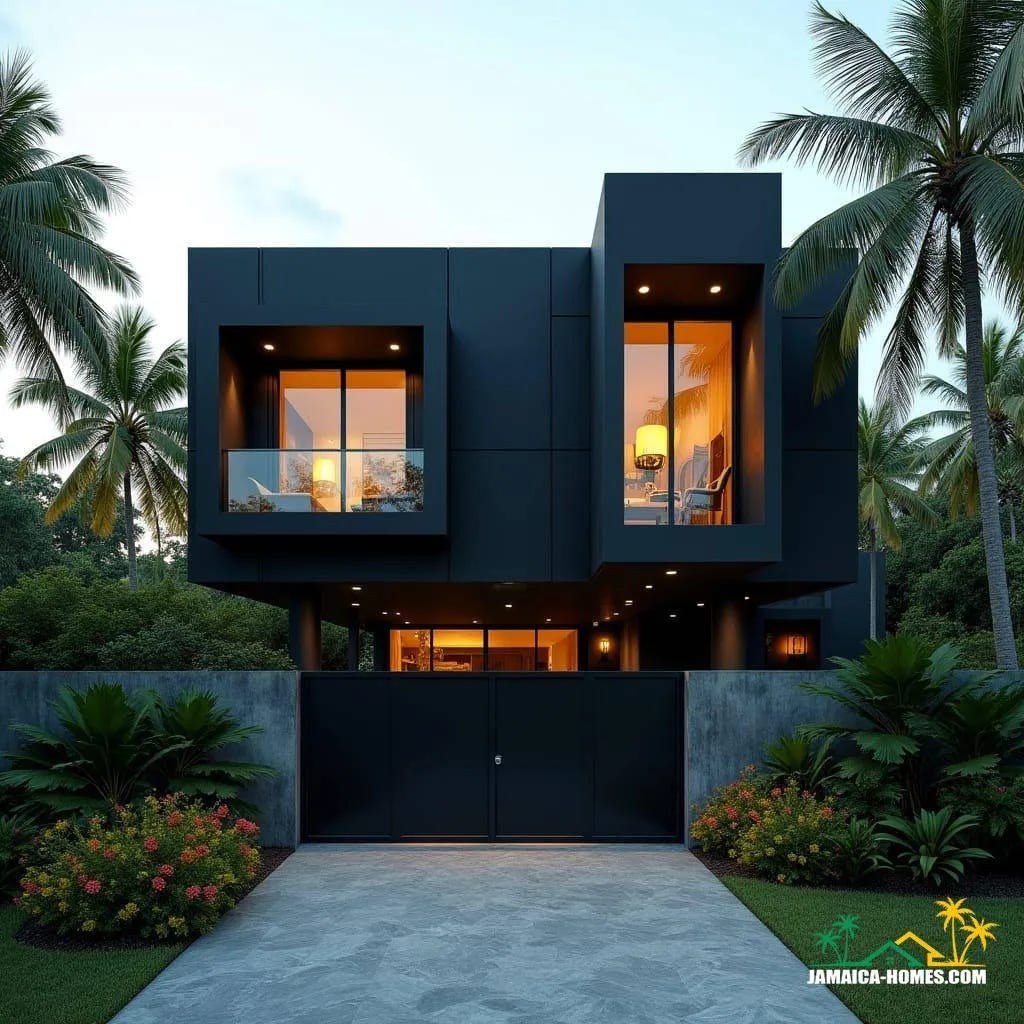
At some point, a house that once felt like a blessing can begin to feel… limiting.
It’s not that you don’t appreciate it. It sheltered you. It held your milestones. It carried your family through seasons of growth and uncertainty. But something has shifted.
Maybe the children have grown and need more privacy.
Maybe your dining table now doubles as a workstation and the line between home and hustle has blurred somewhat.
Maybe the old layout, charming as it once seemed, no longer fits how you live, think, and dream today.
Across Jamaica, many homeowners are quietly asking themselves a tender but powerful question: Is it time for something new?
Not new for vanity’s sake.
Not new for status.
But new for alignment.
And increasingly, the answer is leading people toward new construction.
A Changing Conversation in Jamaica’s Property Market
In the United States, industry bodies like the National Association of Realtors report rising interest in newly built homes. While Jamaica’s market operates very differently, we are seeing our own version of that shift.
This is not about copying America.
It’s about understanding Jamaica.
Our housing market has unique pressures:
Limited land in high-demand areas like Kingston and Montego Bay
Growing middle-class aspirations
Diaspora investment returning home
Increasing construction standards
A population that wants resilience, efficiency, and modern living
Developments in areas such as Portmore, Mandeville, and expanding corridors in Spanish Town reflect something important: Jamaicans are not just buying houses anymore. They are choosing lifestyle ecosystems.
And in many cases, those ecosystems are newly built.
When Your Current House No Longer Supports Your Growth
There is no shame in outgrowing a home.
You may have bought your current property when interest rates were different, when prices were lower, when your salary was smaller, when your children were younger.
But life moves.
A two-bedroom starter home in Portmore might have felt like achievement at 30. At 45, with aging parents or teenage children, that same house might feel like a squeeze.
Dean Jones, Founder of Jamaica Homes, puts it this way:
“Your home should stretch your possibilities, not shrink your peace.”
That sentiment resonates deeply in today’s Jamaica. Especially now, as many families are reassessing what security truly means—not just emotionally, but structurally and financially.
Why New Construction Is Gaining Attention in Jamaica
Let’s be clear: new construction is not automatically the better choice. Jamaica’s market demands discernment. But for a growing number of move-up buyers, it is becoming a compelling option.
Everything Is Truly New
In older Jamaican homes, maintenance can quietly become a second mortgage.
Roof leaks after heavy rains.
Electrical systems that need upgrading.
Water tanks that have seen better days.
Septic systems nearing capacity.
With new construction, you are not inheriting someone else’s deferred maintenance or patchwork repairs. You start fresh.
That does not eliminate responsibility—but it reduces the surprise factor.
And in a country where extreme weather events remind us of the importance of solid construction, starting with up-to-date building standards offers a level of reassurance that many buyers value deeply.
Built for Modern Jamaican Living
Older homes in Jamaica often feature compartmentalized layouts—formal living room, separate dining room, tight kitchen spaces.
Today’s homeowners often want:
Open-plan living
Indoor-outdoor flow
Space for remote work
Energy-efficient systems
Water storage solutions
Secure, well-lit surroundings
New developments frequently integrate these elements from the start.
Solar readiness.
Water tanks as standard.
Improved drainage planning.
Modern finishes.
It is not simply aesthetic. It is functional.
As Dean Jones observes:
“In Jamaica, resilience is not a luxury feature. It is a design principle.”
That line captures the evolution of the market. Buyers are no longer only impressed by granite countertops. They want durability, smart layout, and future-proofing.
The Opportunity to Personalize
In some developments—particularly if you purchase early—you may be able to choose finishes, tiles, cabinetry, paint schemes, or minor layout adjustments.
This level of customization was once reserved for building on your own land. Now, in select developments, buyers can influence the final product without carrying the full burden of managing construction.
But here is where Jamaican prudence comes in: customization must be clearly documented. Verbal agreements are not enough. Specifications should be in writing, with timelines and clear expectations.
In Jamaica, hope is a strategy we use in church, not in contracts.
Community Amenities Are Becoming More Common
Traditionally, Jamaican neighborhoods were organic. You bought a lot, built your house, and the community formed over time.
Today’s gated communities are different.
Developments in places like Ocho Rios and Montego Bay increasingly feature:
Green spaces
Walking trails
Play areas
Clubhouses
Security posts
For families, that built-in infrastructure is attractive. It creates convenience and shared standards.
But buyers must also understand the implications:
Homeowners’ association (HOA) fees
Community rules
Restrictions on modifications
Freedom in Jamaica is cultural currency. Living in a gated development means balancing independence with collective standards.
Builder Incentives: A Careful Opportunity
In the U.S., builders sometimes offer significant incentives. In Jamaica, incentives exist—but they operate differently.
You may see:
Assistance with closing costs
Appliance packages
Minor upgrade credits
Flexible payment schedules during construction
However, Jamaican buyers must exercise diligence. Always verify:
The developer’s track record
Planning approvals
Title status
Infrastructure completion
Buying off-plan can offer value—but it requires trust backed by documentation.
As Dean Jones often reminds clients:
“Opportunity without due diligence is just expensive optimism.”
The Emotional Shift: Rebuilding More Than Walls
There is something symbolic about choosing a brand-new home in a season of national rebuilding and personal reassessment.
It is not about abandoning what you had. It is about acknowledging what you need next.
For many Jamaicans, a new home represents:
Stability
Progress
Legacy
A statement of forward movement
But let’s be honest. Not everyone should move.
If your current home:
Meets your space needs
Is structurally sound
Is in a prime location
Would cost more to replace than renovate
Then upgrading or remodeling may be wiser.
New construction is an option. It is not an obligation.
Financial Realities in the Jamaican Context
Mortgages in Jamaica differ significantly from those in the U.S.
Interest rates.
Deposit requirements.
Approval timelines.
Valuation standards.
Local institutions like National Housing Trust (NHT) play a unique role in financing for qualified contributors. Commercial banks and building societies operate with their own criteria.
Buyers considering new construction should factor in:
Deposit (often 10–20%)
Legal fees
Stamp duty and transfer tax (if applicable)
Valuation fees
Insurance
And importantly: build in contingency.
Because even in new construction, life can surprise you.
Location Still Reigns Supreme
It does not matter how modern a home is if it is poorly located.
Proximity to:
Schools
Work
Transportation corridors
Healthcare
Commercial centres
remains crucial.
In Jamaica, traffic patterns alone can determine quality of life. A beautiful house that adds two extra hours of commute each day may quietly erode the peace you sought.
A witty but true Jamaican reality?
A house may be “gated,” but if you spend three hours daily stuck on Mandela Highway, you’re only gated from your own living room.
Lifestyle includes logistics.
A Word of Sensitivity and Strength
In times when communities are regathering themselves, the idea of building anew must be approached with humility.
Some are upgrading.
Some are restoring.
Some are simply stabilizing.
There is no hierarchy of resilience.
Whether you choose to renovate, rebuild, relocate, or remain exactly where you are—every decision rooted in wisdom is progress.
So, Should You Consider New Construction?
Ask yourself:
Does my current home still support my future plans?
Am I financially prepared for a move?
Have I explored renovation as an alternative?
Have I done proper due diligence on developers?
Does the new location enhance my daily life?
If the answers align, new construction may not just be a trend. It may be your next chapter.
The Bottom Line
In Jamaica today, new construction is no longer just for the elite or the diaspora investor. It is increasingly a real contender for move-up buyers seeking:
Space
Modern functionality
Structural reassurance
Community amenities
A fresh start aligned with present realities
But it requires discernment. It requires documentation. It requires vision.
Dean Jones captures it best:
“A house is a structure. A home is a decision about the future you are brave enough to claim.”
Whether that future is in a newly built development in Portmore, a hillside property in Mandeville, or a carefully renovated Kingston family home, the principle remains the same.
Your home should carry your next season—not trap you in your last one.
And sometimes, the boldest move forward is not about leaving where you were. It is about choosing what better fits who you have become.
Disclaimer:
This article is for general informational purposes only and does not constitute legal, financial, mortgage, or investment advice. Real estate decisions in Jamaica should be made after consulting with qualified professionals, including licensed realtors, attorneys-at-law, financial institutions, and valuators. Market conditions, lending criteria, and development regulations may change, and individual circumstances will vary. Always conduct proper due diligence before entering into any property transaction.