

Why Some Caribbean Homes Never Recover After Storms
KINGSTON, Jamaica — June has officially arrived, marking the start of the 2026 Atlantic hurricane season and the return of a familiar ritual across the Caribbean: checking forecasts, restocking emergency supplies and hoping the next storm tracks elsewhere.
For now, the Atlantic basin remains relatively quiet. Meteorologists say dry Saharan air, dust and strong wind shear are suppressing tropical development across much of the Caribbean and Atlantic Ocean. Yet forecasters are closely watching conditions that could support the season’s first named storm in the coming weeks.
The calm beginning has done little to ease concerns among many Caribbean homeowners.
Across the region, memories of Hurricane Gilbert, Ivan, Maria, Dorian, Beryl and countless lesser-known storms remain fresh. More importantly, many families are still living with the consequences of storms that struck years ago.
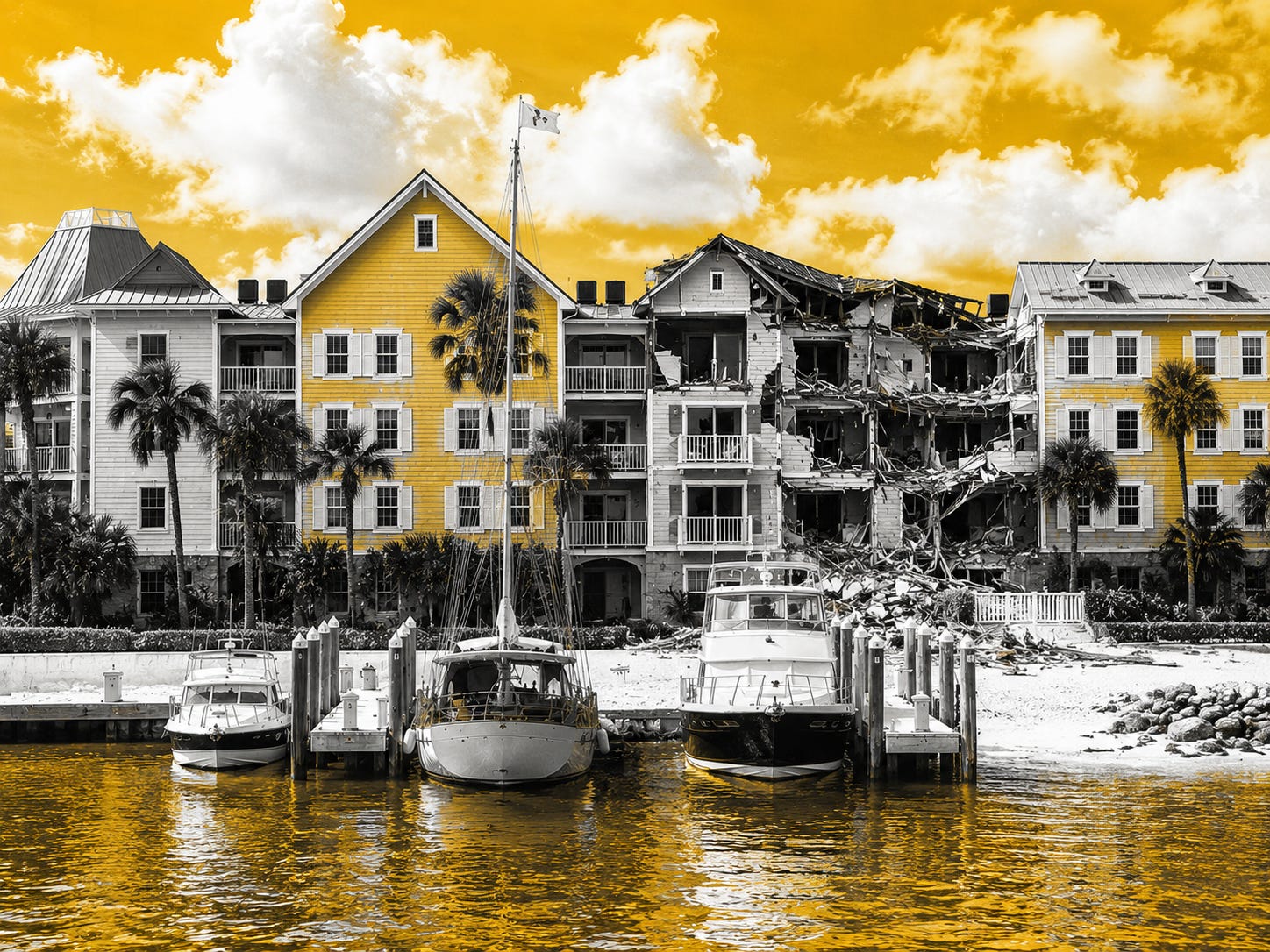
A damaged roof patched with tarpaulin. Cracked walls that were never repaired. Homes left partially rebuilt after insurance money ran out. Properties abandoned entirely because the cost of recovery became impossible.
As governments, meteorologists and emergency agencies prepare for another hurricane season, a less discussed question remains: why do some Caribbean homes never fully recover after storms?
The answer extends far beyond wind speed and rainfall totals.
History offers some clues.
For centuries, hurricanes have shaped settlement patterns throughout the Caribbean. Colonial records describe storms destroying entire towns long before modern weather forecasting existed. Yet in many cases communities rebuilt stronger and more resilient than before.
Today’s challenge is different.
The Caribbean is facing a combination of rising construction costs, housing shortages, insurance gaps, climate pressures and economic uncertainty. Even when a hurricane season is forecast to be quieter than average, experts warn that a single storm can still alter the future of a family, a community or an entire island.
Caribbean climatologist Cedric Van Meerbeeck recently warned regional leaders that the 2026 season could be more unpredictable than headline storm counts suggest. While El Niño conditions are expected to suppress overall hurricane activity, warmer sea surface temperatures across parts of the northern Caribbean could still contribute to extreme rainfall, flooding, heat waves and damaging weather events.
His warning reflects a reality that many Caribbean homeowners understand well.
The danger is not always the storm itself.
Sometimes the greatest challenge begins after the skies clear.
When Hurricane Gilbert struck Jamaica in 1988, thousands of homes were damaged or destroyed. Similar scenes played out across Grenada following Hurricane Ivan in 2004 and throughout parts of Dominica and Puerto Rico after Hurricane Maria in 2017.
In the immediate aftermath, reconstruction efforts often begin with urgency and optimism. Governments announce recovery programmes. International aid arrives. Communities mobilise.
But years later, the landscape frequently tells a different story.
Some homes are fully restored. Others remain trapped in a state of permanent recovery.
One of the biggest reasons is insurance.
While mortgage holders are generally required to carry coverage, many Caribbean homeowners own property outright and choose not to insure because of cost. Others discover after a storm that their policies cover far less than the actual cost of rebuilding.
The result is a financial gap that can stretch from thousands to hundreds of thousands of dollars.
For families already coping with inflation, rising utility bills and economic pressures, that gap can become impossible to bridge.
And with another hurricane season now underway, the question facing many Caribbean homeowners is not simply whether a storm will arrive this year.
It is whether they would have the resources to recover if it does.
The lesson of recent decades is that recovery begins long before a hurricane warning is issued. Stronger building standards, proper maintenance, adequate insurance, secure property ownership and resilient infrastructure often determine whether a home returns to normal life—or remains a reminder of a storm long after the headlines disappear.