


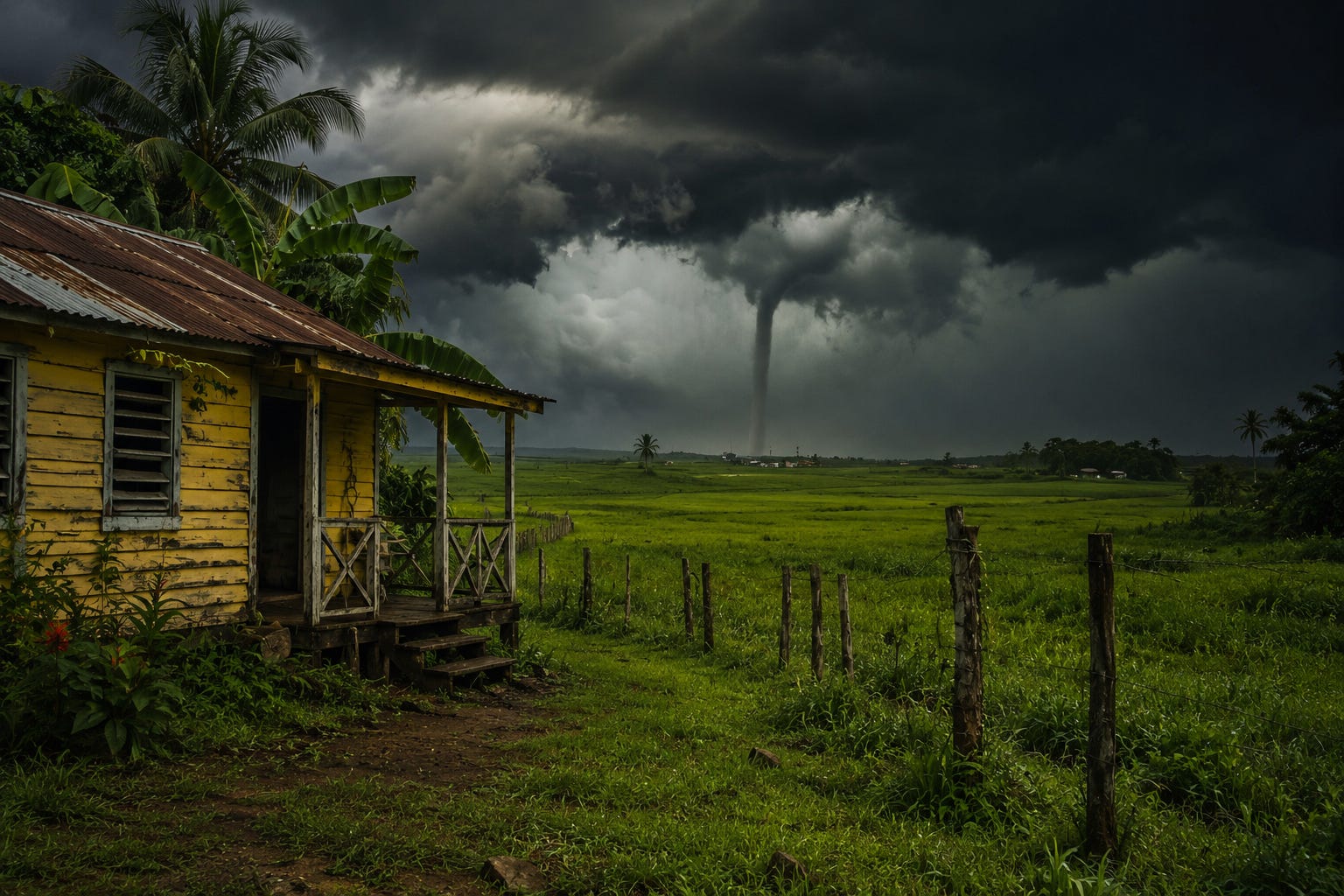
Every hurricane season, the images return with painful familiarity. Roofs torn away. Flooded living rooms. Broken walls exposed to the sky. Families standing outside homes they spent decades building. Entire communities waiting for electricity, water, insurance assessors, contractors, or simply answers.
But one of the biggest misconceptions about storms is that recovery begins once the winds stop.
For many families, especially across the Caribbean, recovery never fully happens.
Some homes are repaired. Some are patched. Some are abandoned quietly over time. Some become trapped in a permanent cycle of damage and incomplete rebuilding. Others remain occupied while still carrying hidden structural, financial, and emotional scars years later.
Increasingly, researchers, insurers, engineers, economists, and climate experts are warning that modern storms are exposing something deeper than weak roofs or poor drainage. They are exposing the growing fragility of housing systems themselves.
One of the most important realities is that storm damage is often slow moving, not immediate.
People tend to imagine homes after disasters in simple terms. Destroyed or safe. Standing or collapsed.
But many homes enter a long decline instead.
A relatively small section of damaged roofing can allow large amounts of rainwater inside. In humid climates like Jamaica and the wider Caribbean, mold can begin spreading within hours. Water penetrates walls, electrical systems, insulation, timber, ceilings, and foundations. Steel corrodes slowly. Concrete weakens over time. Wooden framing rots from the inside out.
Months later, homes that initially looked repairable can become dangerously compromised.
Mold is one of the biggest long term recovery killers because proper remediation is expensive and invasive. Families often continue living inside partially damaged homes because they simply cannot afford to relocate while repairs happen. Research following hurricanes in the United States found some households remained in barely habitable conditions for years, surrounded by exposed walls, leaking roofs, and chronic stress.
Insurance gaps make the situation even worse.
Globally, disaster losses now regularly exceed hundreds of billions of dollars annually, yet much of that damage remains uninsured. Major reinsurance firms describe this as the “protection gap,” the growing divide between economic losses and insured losses.
In many Caribbean countries, insurance penetration remains relatively low compared to the scale of climate exposure. In Jamaica, underinsurance is a particularly serious issue because many homeowners either never insured the property properly, insured it years ago at outdated values, built incrementally without updated valuations, or occupy inherited family homes with unclear documentation.
That means recovery often depends on savings, remittances, borrowing, government assistance, or informal rebuilding. And increasingly, families are running out of financial resilience.
After major storms, rebuilding costs often surge dramatically. Labour shortages emerge. Roofing materials become scarce. Shipping disruptions affect imported supplies. Fuel costs rise. Contractors become overwhelmed. The same home may cost far more to repair after the disaster than it was insured for before the disaster.
In island economies heavily dependent on imports, that pressure becomes even more severe.
Storms also expose deep housing inequality.
Research repeatedly shows wealthier households recover faster because they are more likely to have adequate insurance, legal documentation, access to contractors, savings, transportation, and the ability to temporarily relocate.
Poorer households often face the opposite reality. Delayed assistance. Informal construction. Unclear land ownership. High interest debt. Contractor exploitation. Limited access to financing. Inability to leave unsafe living conditions.
Disaster researchers increasingly describe this as “recovery inequality,” where storms widen social divisions long after headlines disappear.
This matters enormously in Jamaica, where housing conditions vary dramatically between gated communities, middle income schemes, informal settlements, hillside communities, coastal developments, and inherited family land.
Climate change is now intensifying these vulnerabilities.
Scientists increasingly warn that storms are no longer only wind events. Extreme rainfall has become one of the biggest drivers of housing destruction. Slow moving systems can dump enormous quantities of rain over short periods, overwhelming drains, gullies, retaining walls, rivers, and urban infrastructure.
In Jamaica, this intersects dangerously with blocked drainage systems, hillside runoff, informal river settlements, coastal erosion, and rapid urban expansion.
Areas once considered relatively safe are now flooding more frequently.
And this is forcing difficult conversations globally about where homes should be built at all.
Researchers in several countries are increasingly questioning whether some vulnerable coastal zones, flood plains, erosion exposed beaches, and unstable hillsides can realistically sustain repeated rebuilding forever.
In parts of the United States, some insurers have already reduced coastal exposure or sharply increased premiums. Some experts warn climate risk could eventually affect mortgage availability, property values, and long term housing affordability across vulnerable regions worldwide.
The uncomfortable reality is that some communities may become progressively harder to insure, finance, or rebuild sustainably.
Engineering research also shows that construction quality matters enormously.
Storms often expose weaknesses hidden during normal weather conditions. Homes become far more vulnerable when they have weak roof connections, poor drainage, inadequate foundations, low elevation, cheap materials, or years of deferred maintenance.
Engineers increasingly emphasize that resilience is systemic. A strong roof alone is not enough if windows fail, drainage collapses, slopes shift, or floodwaters undermine foundations.
Studies from hurricane resistant building programs in the United States found strengthened homes often experienced fewer insurance claims, lower repair costs, and shorter recovery periods. Features like hurricane straps, reinforced roofing systems, impact resistant windows, elevated foundations, and improved drainage can dramatically reduce long term damage.
One widely cited estimate from resilience researchers suggests every dollar invested in disaster mitigation can save multiple dollars in future recovery costs.
But stronger construction costs money. And many households are already financially stretched before storms even arrive.
This creates another painful truth.
Recovery is not only technical. It is psychological.
Living inside damaged housing environments contributes to anxiety, depression, emotional exhaustion, social isolation, and chronic stress. Children often experience disrupted schooling and long term instability. Families face endless paperwork, insurance disputes, contractor problems, rising debt, and the emotional fatigue of rebuilding the same life repeatedly.
Researchers increasingly discuss “resilience fatigue,” the cumulative exhaustion caused by repeated disasters.
People can adapt once. Sometimes twice.
But eventually many begin asking a harder question.
How many times can ordinary people realistically rebuild?
Across parts of the Caribbean, there are homes still carrying visible damage years after storms because recovery never fully happened. Some owners close off damaged rooms permanently. Some gradually abandon sections of properties. Some migrate overseas. Some quietly stop repairing altogether.
This “silent abandonment” rarely appears in official statistics, but it is becoming part of the hidden reality of climate vulnerability.
The storm itself may last one night.
Recovery can consume a decade.
And perhaps that is the deepest truth behind why some homes never recover after storms.
Homes do not fail equally.
The ability to recover increasingly depends on wealth, geography, infrastructure, governance, insurance systems, engineering quality, and whether societies can adapt quickly enough to a changing climate.
In Jamaica and across the Caribbean, homes are rarely just structures. They represent migration, sacrifice, inheritance, identity, family history, and decades of work.
Which is why the loss cuts so deeply when recovery never truly comes.
And why storms are no longer only environmental events.
They are becoming tests of whether modern housing systems themselves can survive the climate era.