The Windrush generation, encompassing Caribbean immigrants arriving in the United Kingdom between 1948 and 1971, has left a profound impact on Jamaica and its real estate sector, as well as globally. Originating from the ship HMT Empire Windrush, which brought the first large wave of Caribbean migrants, this movement marked a significant historical moment, influencing cultural and social dynamics in Jamaica. As these individuals and their descendants contributed to the UK’s rebuilding efforts post-World War II, they also shaped Jamaica’s real estate landscape by fostering a connection between the island and its diaspora. This connection has influenced property investments and development trends in Jamaica, where returning migrants or their descendants seek to reconnect with their roots, driving demand for residential and commercial properties. On a global scale, the Windrush legacy extends beyond real estate, impacting societal structures and migration policies. The story of these Caribbean immigrants resonates with broader discussions about migration, identity, and multiculturalism, influencing how nations address issues of immigration and integration. The experiences of the Windrush generation highlight the complexities of diaspora communities and their contributions to both their countries of origin and their new homes, reflecting a global narrative of movement, adaptation, and legacy. In real estate, the Windrush influence manifests in the resurgence of interest in Caribbean properties by the descendants of these early migrants, shaping market trends and fostering a sense of heritage and continuity.
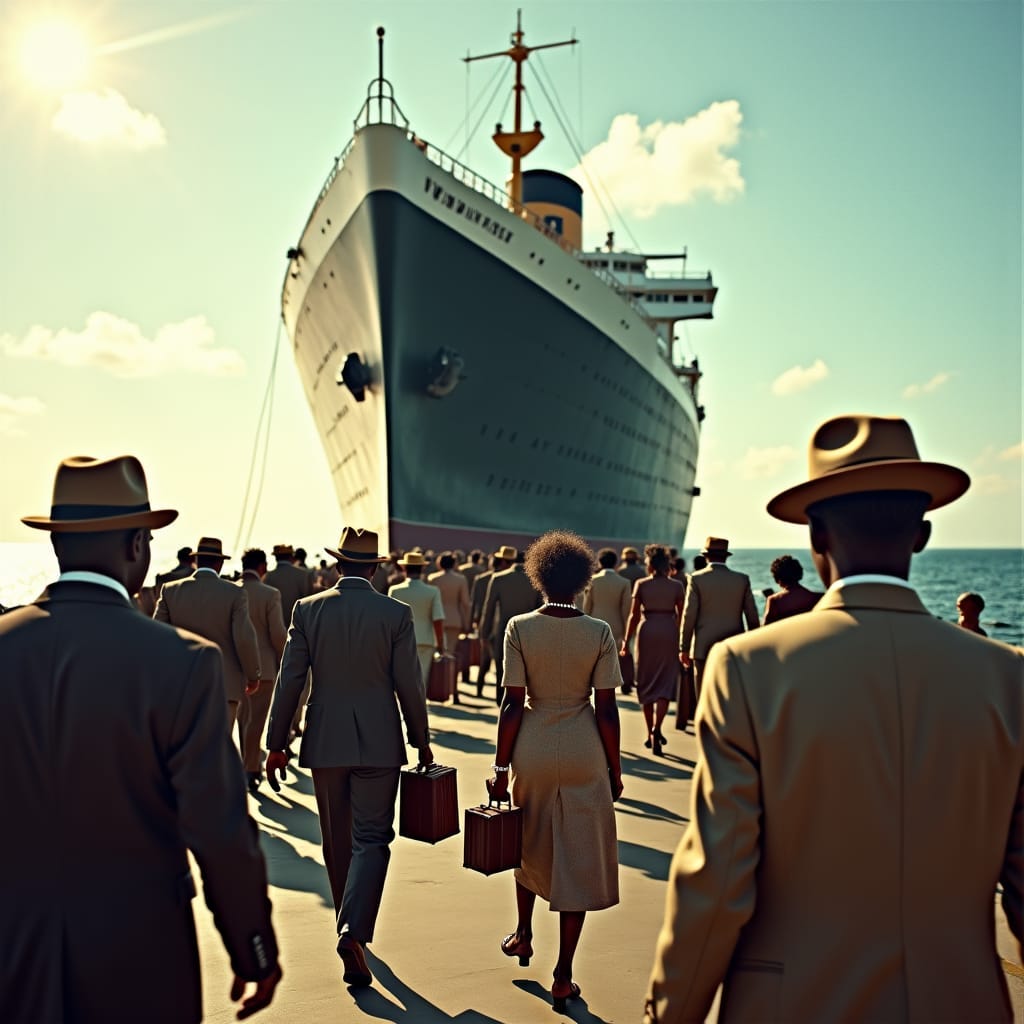
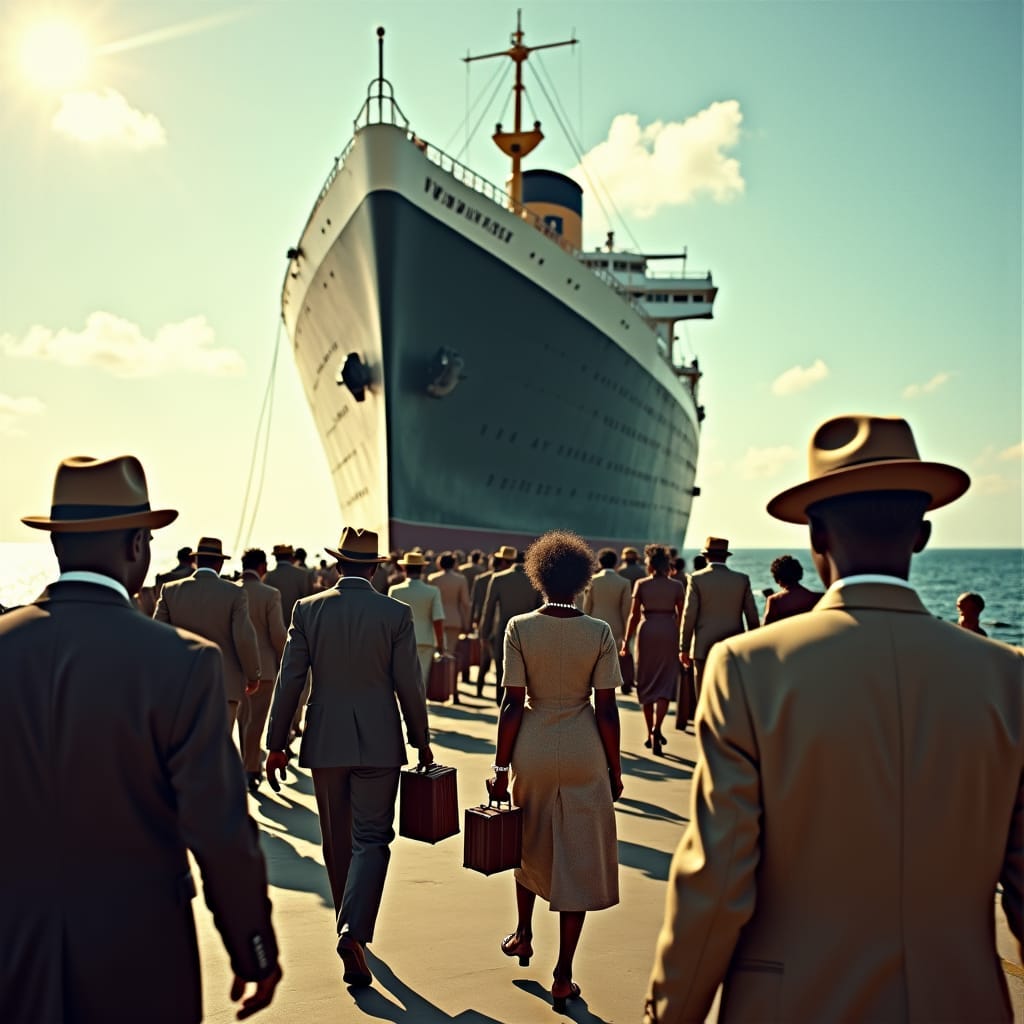
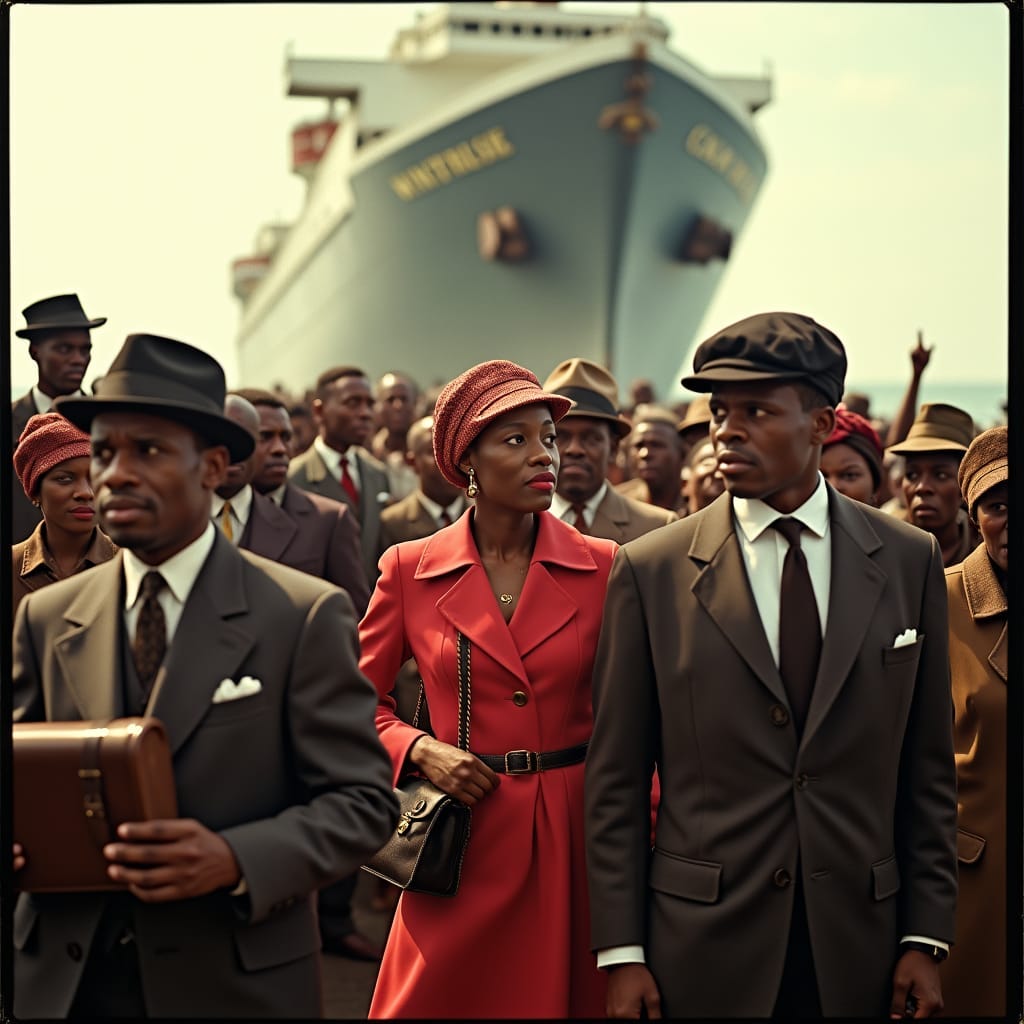
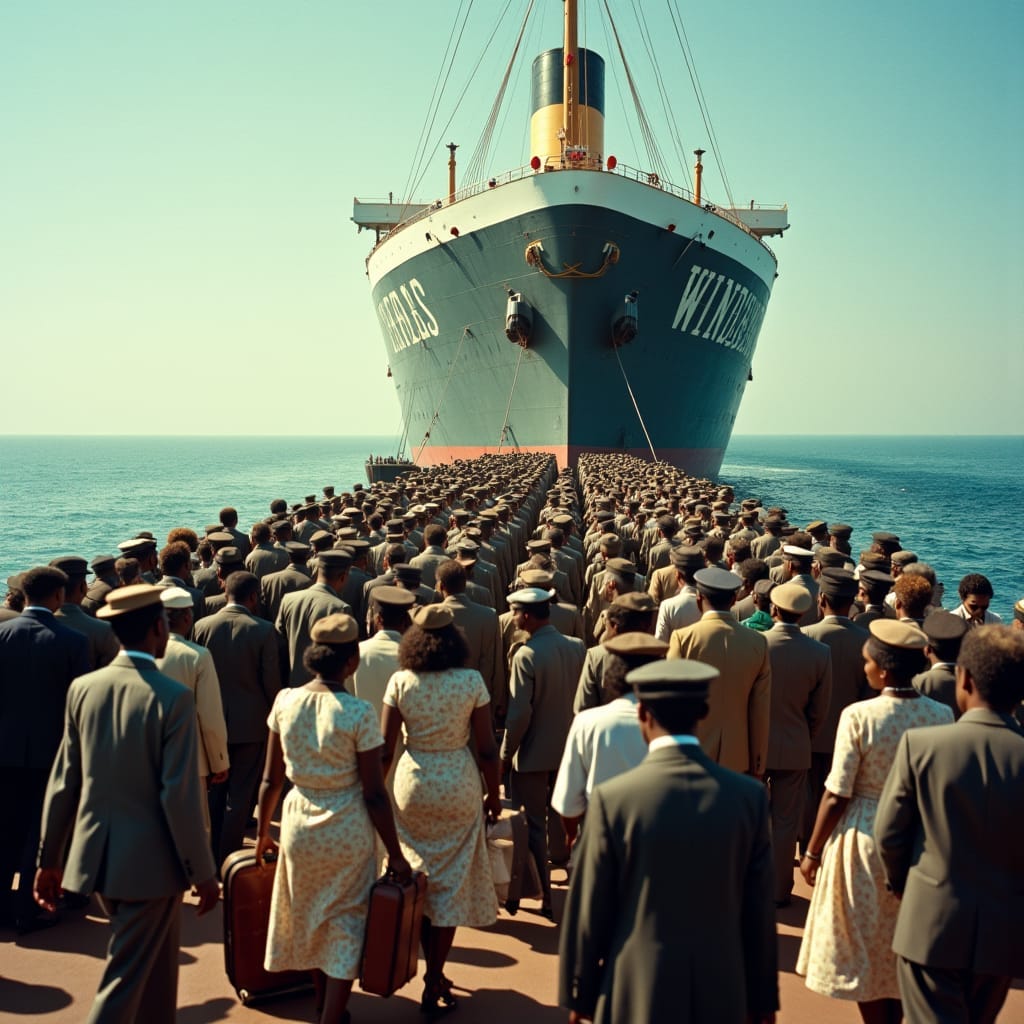
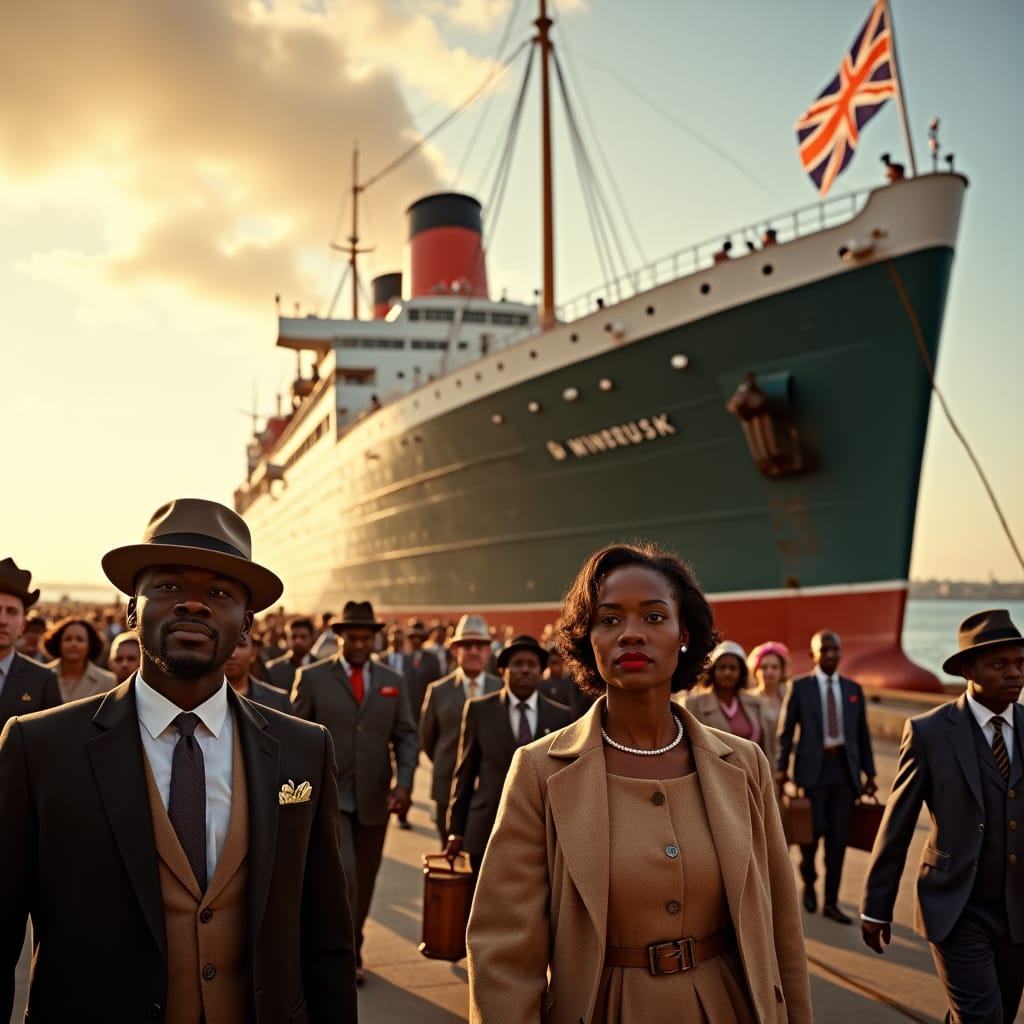
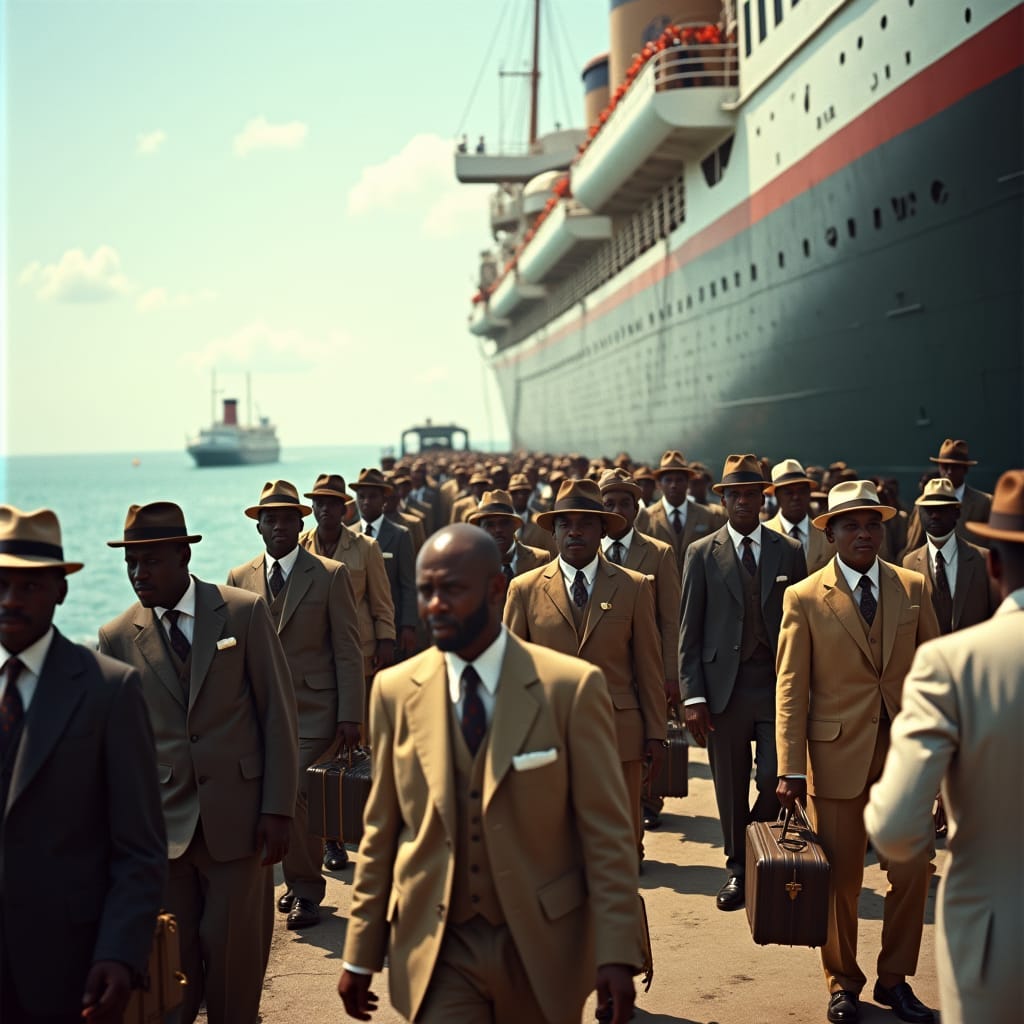
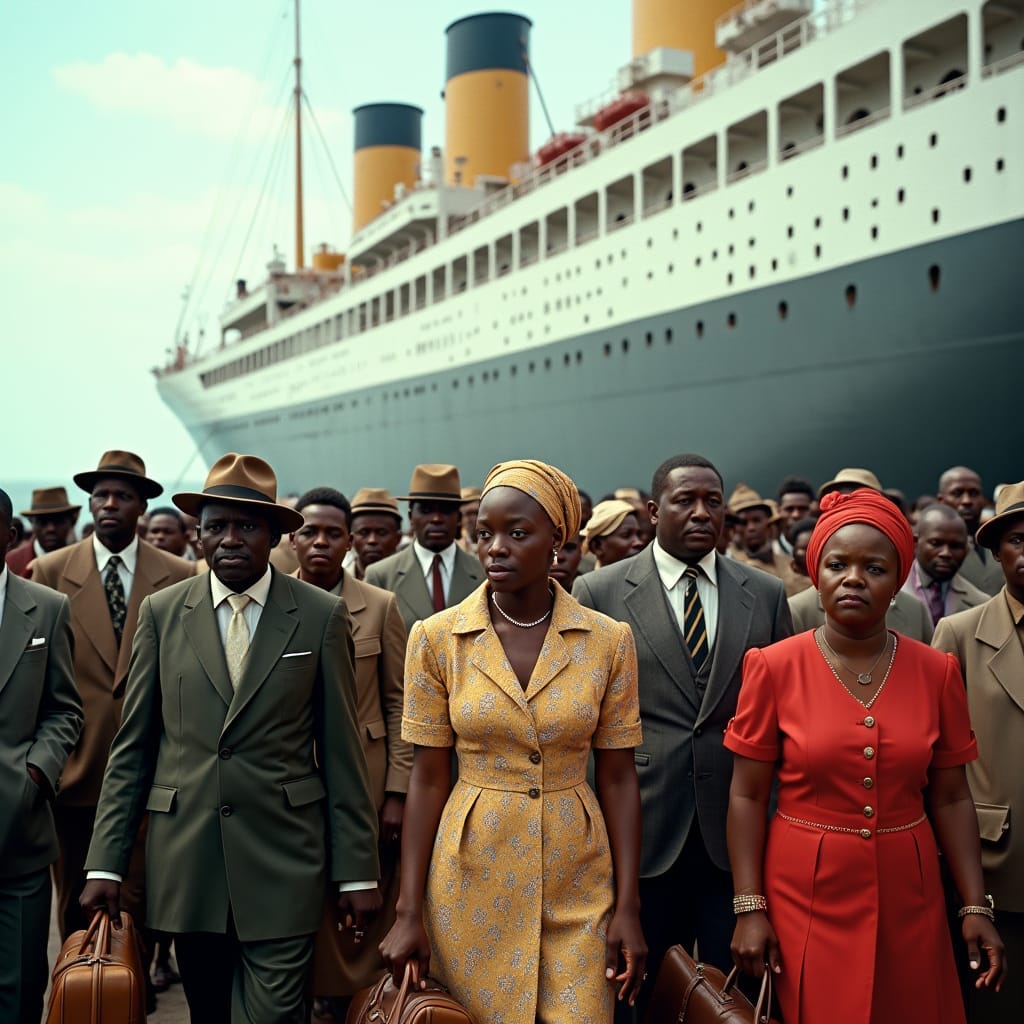
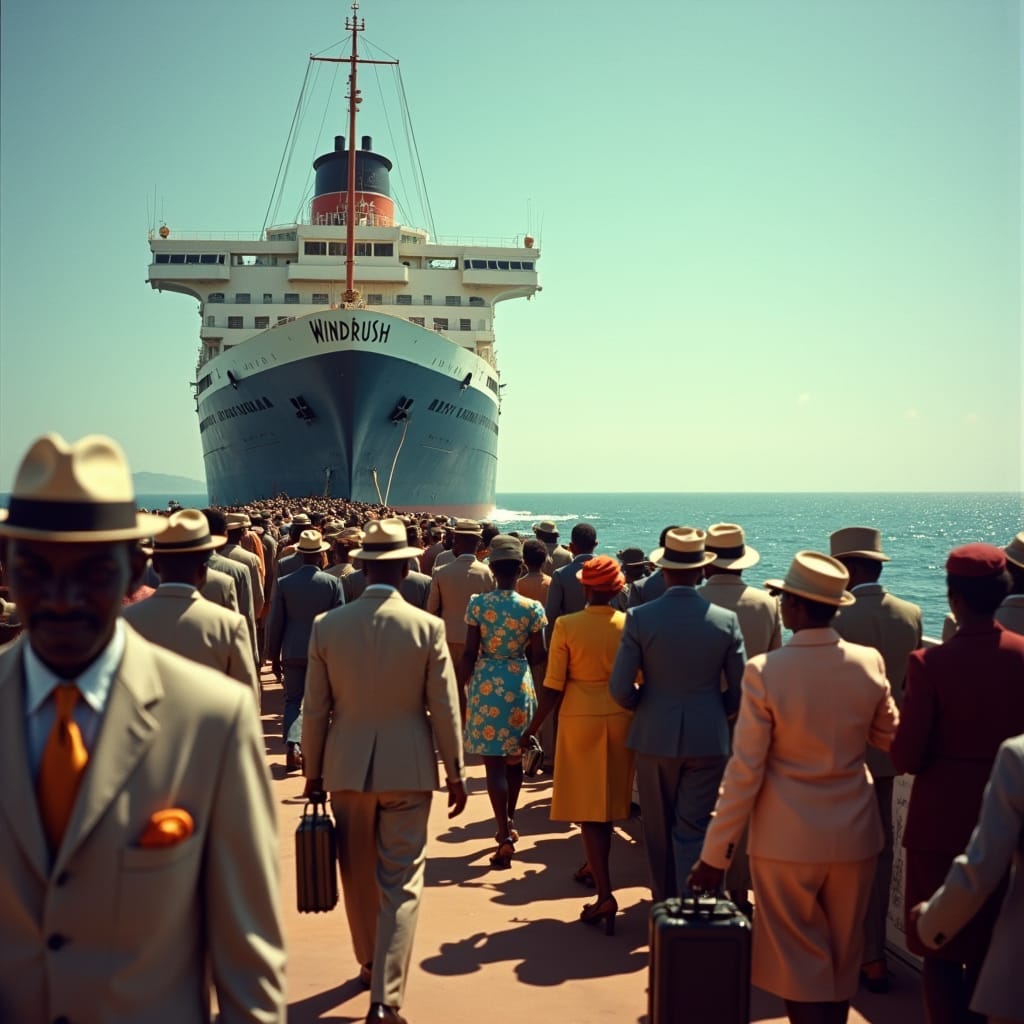
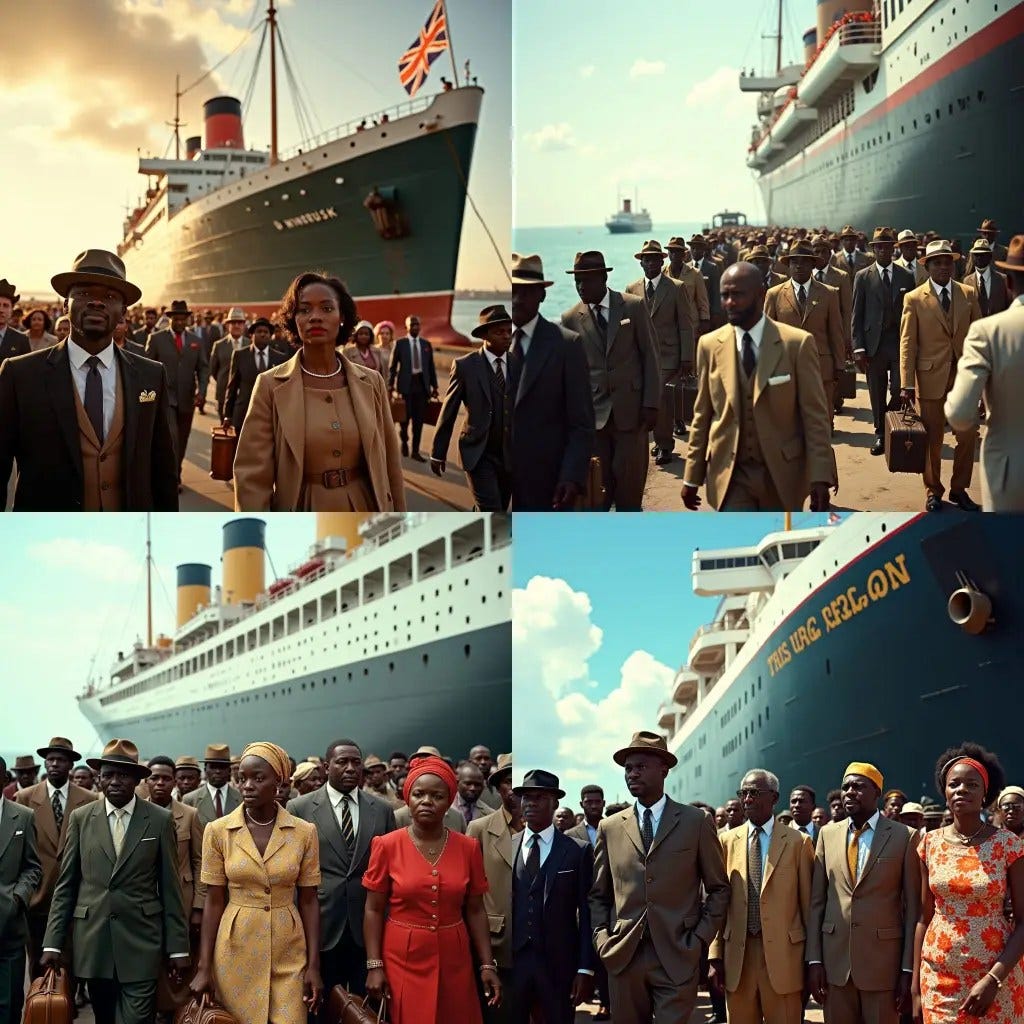
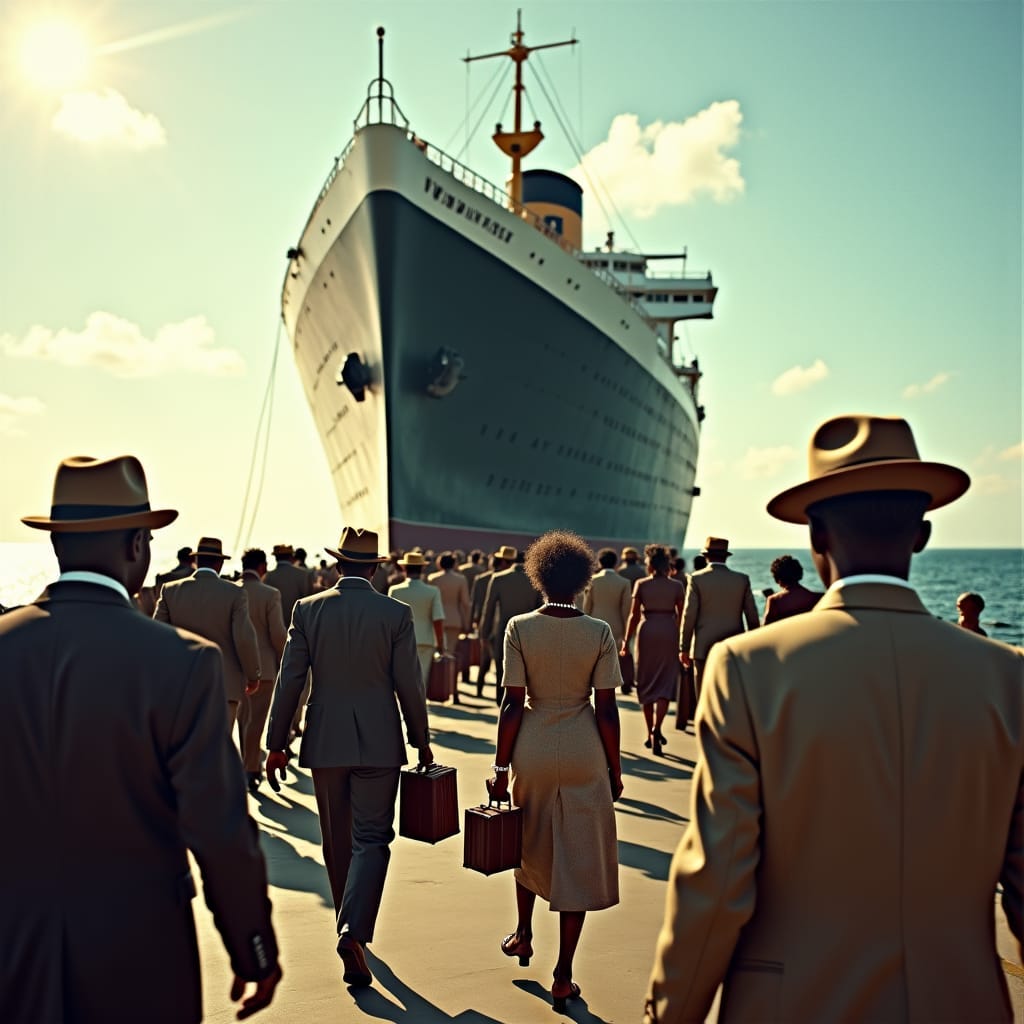
Historical HMT Empire Windrush ship arriving in Britain, 1940s, warm sunlight casting long shadows, clear blue skies, calm waters, reflecting the optimism of the era. Black Jamaican passengers, dressed in authentic attire, bustling on deck: men in suits, fedoras, and trilbies, some holding vintage suitcases, others wearing casual work clothing; women in modest, knee-length dresses, headscarves, and pearl necklaces, exuding hope, curiosity, and pride. The ship’s massive structure towers behind, ‘Windrush’ emblazoned on its side in bold, Art Deco lettering. Inspired by the cinematography of Roger Deakins, influenced by the vibrant colors of Gordon Parks, and the poignant realism of Malick Sidibé, with a touch of classical Hollywood grandeur.
Historical HMT Empire Windrush ship arriving in Britain, 1940s, warm sunlight casting long shadows, clear blue skies, calm waters, reflecting the optimism of the era. Black Jamaican passengers, dressed in authentic attire, bustling on deck: men in suits, fedoras, and trilbies, some holding vintage suitcases, others wearing casual work clothing; women in modest, knee-length dresses, headscarves, and pearl necklaces, exuding hope, curiosity, and pride. The ship’s massive structure towers behind, ‘Windrush’ emblazoned on its side in bold, Art Deco lettering. Inspired by the cinematography of Roger Deakins, influenced by the vibrant colors of Gordon Parks, and the poignant realism of Malick Sidibé, with a touch of classical Hollywood grandeur.
Historical HMT Empire Windrush ship arriving in Britain, 1940s, warm sunlight casting long shadows, clear blue skies, calm waters, reflecting the optimism of the era. Black Jamaican passengers, dressed in authentic attire, bustling on deck: men in suits, fedoras, and trilbies, some holding vintage suitcases, others wearing casual work clothing; women in modest, knee-length dresses, headscarves, and pearl necklaces, exuding hope, curiosity, and pride. The ship’s massive structure towers behind, ‘Windrush’ emblazoned on its side in bold, Art Deco lettering. Inspired by the cinematography of Roger Deakins, influenced by the vibrant colors of Gordon Parks, and the poignant realism of Malick Sidibé, with a touch of classical Hollywood grandeur.
Historical HMT Empire Windrush ship arriving in Britain, 1940s, warm sunlight casting long shadows, clear blue skies, calm waters, reflecting the optimism of the era. Black Jamaican passengers, dressed in authentic attire, bustling on deck: men in suits, fedoras, and trilbies, some holding vintage suitcases, others wearing casual work clothing; women in modest, knee-length dresses, headscarves, and pearl necklaces, exuding hope, curiosity, and pride. The ship’s massive structure towers behind, ‘Windrush’ emblazoned on its side in bold, Art Deco lettering. Inspired by the cinematography of Roger Deakins, influenced by the vibrant colors of Gordon Parks, and the poignant realism of Malick Sidibé, with a touch of classical Hollywood grandeur.
Historical HMT Empire Windrush ship arriving in Britain, 1940s, warm sunlight casting long shadows, clear blue skies, calm waters, reflecting the optimism of the era. Black Jamaican passengers, dressed in authentic attire, bustling on deck: men in suits, fedoras, and trilbies, some holding vintage suitcases, others wearing casual work clothing; women in modest, knee-length dresses, headscarves, and pearl necklaces, exuding hope, curiosity, and pride. The ship’s massive structure towers behind, ‘Windrush’ emblazoned on its side in bold, Art Deco lettering. Inspired by the cinematography of Roger Deakins, influenced by the vibrant colors of Gordon Parks, and the poignant realism of Malick Sidibé, with a touch of classical Hollywood grandeur.
Historical HMT Empire Windrush ship arriving in Britain, 1940s, warm sunlight casting long shadows, clear blue skies, calm waters, reflecting the optimism of the era. Black Jamaican passengers, dressed in authentic attire, bustling on deck: men in suits, fedoras, and trilbies, some holding vintage suitcases, others wearing casual work clothing; women in modest, knee-length dresses, headscarves, and pearl necklaces, exuding hope, curiosity, and pride. The ship’s massive structure towers behind, ‘Windrush’ emblazoned on its side in bold, Art Deco lettering. Inspired by the cinematography of Roger Deakins, influenced by the vibrant colors of Gordon Parks, and the poignant realism of Malick Sidibé, with a touch of classical Hollywood grandeur.
Historical HMT Empire Windrush ship arriving in Britain, 1940s, warm sunlight casting long shadows, clear blue skies, calm waters, reflecting the optimism of the era. Black Jamaican passengers, dressed in authentic attire, bustling on deck: men in suits, fedoras, and trilbies, some holding vintage suitcases, others wearing casual work clothing; women in modest, knee-length dresses, headscarves, and pearl necklaces, exuding hope, curiosity, and pride. The ship’s massive structure towers behind, ‘Windrush’ emblazoned on its side in bold, Art Deco lettering. Inspired by the cinematography of Roger Deakins, influenced by the vibrant colors of Gordon Parks, and the poignant realism of Malick Sidibé, with a touch of classical Hollywood grandeur.
Historical HMT Empire Windrush ship arriving in Britain, 1940s, warm sunlight casting long shadows, clear blue skies, calm waters, reflecting the optimism of the era. Black Jamaican passengers, dressed in authentic attire, bustling on deck: men in suits, fedoras, and trilbies, some holding vintage suitcases, others wearing casual work clothing; women in modest, knee-length dresses, headscarves, and pearl necklaces, exuding hope, curiosity, and pride. The ship’s massive structure towers behind, ‘Windrush’ emblazoned on its side in bold, Art Deco lettering. Inspired by the cinematography of Roger Deakins, influenced by the vibrant colors of Gordon Parks, and the poignant realism of Malick Sidibé, with a touch of classical Hollywood grandeur.
Historical HMT Empire Windrush ship arriving in Britain, 1940s, warm sunlight casting long shadows, clear blue skies, calm waters, reflecting the optimism of the era. Black Jamaican passengers, dressed in authentic attire, bustling on deck: men in suits, fedoras, and trilbies, some holding vintage suitcases, others wearing casual work clothing; women in modest, knee-length dresses, headscarves, and pearl necklaces, exuding hope, curiosity, and pride. The ship’s massive structure towers behind, ‘Windrush’ emblazoned on its side in bold, Art Deco lettering. Inspired by the cinematography of Roger Deakins, influenced by the vibrant colors of Gordon Parks, and the poignant realism of Malick Sidibé, with a touch of classical Hollywood grandeur.
The scene captures a historic and emotional moment as Jamaican passengers stand on the deck of the HMT Empire Windrush, each face reflecting the mixture of hope, uncertainty, and excitement. They are gathered on the ship’s deck, dressed in the practical yet dignified fashion of the 1940s, with men in suits or work attire and women in dresses, some with headscarves. Small suitcases and bags rest at their feet or are held in their hands, symbols of the journey and new life ahead.
The Windrush itself is an impressive backdrop, its structure solid and monumental, the name ‘Windrush’ clearly painted on the side. The ship has become more than just a vessel—it’s a bridge between Jamaica and Britain, carrying these passengers from their home into an unknown future. The people’s expressions range from pride to trepidation; some look ahead confidently, while others gaze back at the familiar shoreline they are leaving. Above, the sky is clear, a reminder of the vast ocean they crossed to get here, embodying the bravery, resilience, and ambition of the passengers who would go on to shape the future of Britain and create a legacy for generations to come.