

Buy Or Build?
For Jamaicans overseas, the dream of a home back home is really a question of trust, cost, patience and protection


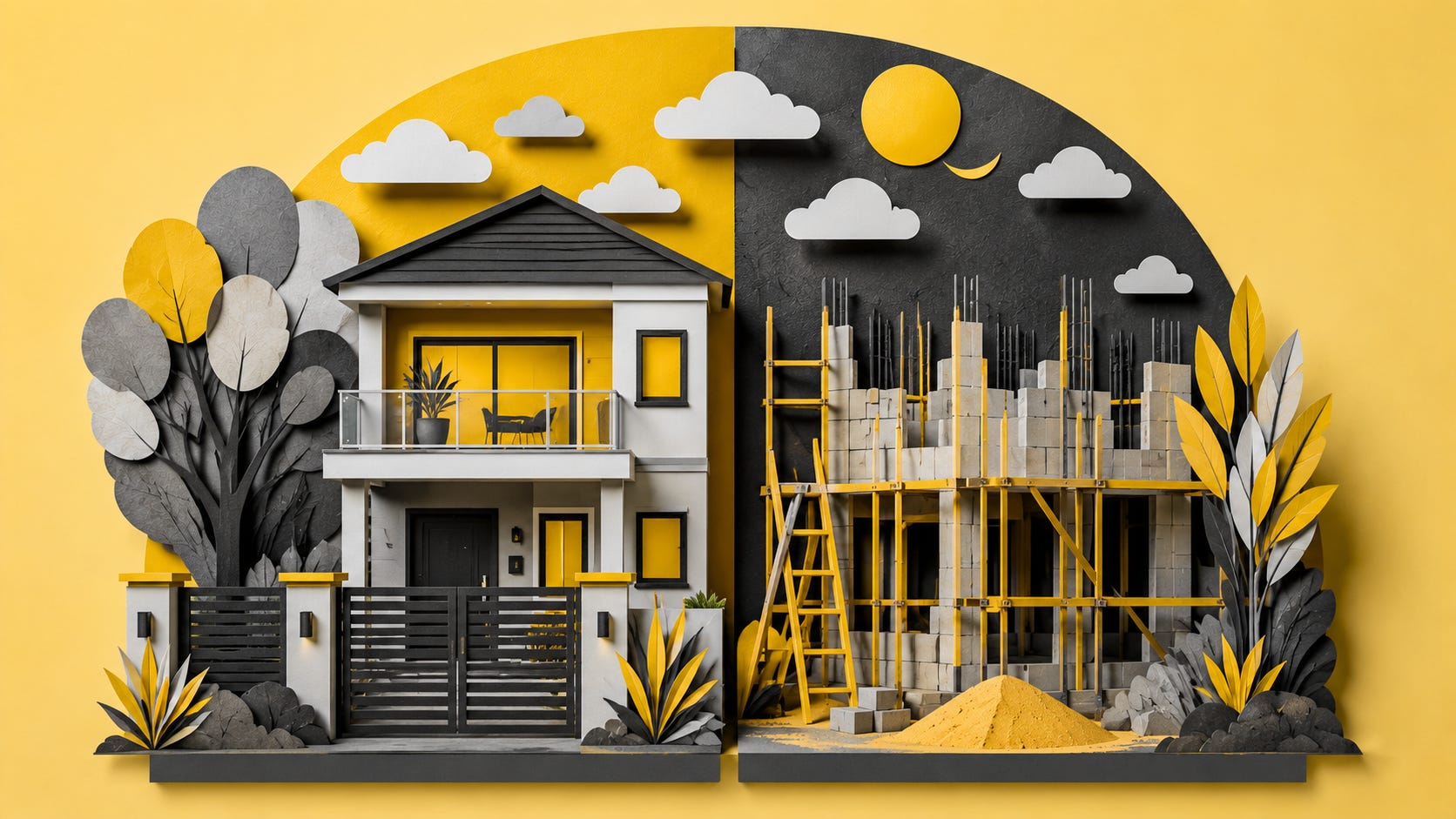
There is a particular kind of conversation happening quietly across the Jamaican diaspora right now. It begins in London after a long shift. In Toronto during winter. In New York between rising rent and rising childcare costs. A son thinking about his ageing mother back home. A daughter wondering if she should finally buy land before prices climb again.
And increasingly, in 2026, it is happening against a backdrop of global uncertainty that feels impossible to ignore.
Oil markets remain nervous as tensions involving Iran, Israel and the United States continue to unsettle investors and governments worldwide. Shipping routes across parts of the Middle East remain under scrutiny. Insurance markets are becoming more cautious. Construction materials continue to fluctuate in price globally. Even when conflict happens thousands of miles away, Jamaicans eventually feel it in steel prices, mortgage costs, shipping delays, fuel bills and supermarket shelves.
In Jamaica, where so much of the housing market depends on imported materials, imported fuel and overseas remittances, global instability rarely stays overseas for long.
Which is why more Jamaicans abroad are now asking a difficult but deeply emotional question.
Should I buy a house in Jamaica, or build one?
One online discussion recently captured the dilemma perfectly. A Jamaican born overseas explained that the goal was simple. Find a home for a grandmother, a sister in law and a baby nephew, while perhaps renting part of the property to support the family financially into the future.
It sounded practical.
But in Jamaica, property is never just about property.
It is about security.
It is about migration.
It is about family.
It is about whether years of sacrifice overseas can finally become something solid back home.
And sometimes, it is also about fear.
Buying Feels Safer
For many diaspora buyers, purchasing a completed property feels like the safer route.
You can physically inspect the roof.
You can see cracks in walls.
You can check whether the road floods after heavy rain.
You can speak to neighbours.
You can verify the community.
One commenter in the discussion described building remotely in Jamaica as something “for very brave people only.”
That may sound dramatic, but many Jamaicans understand exactly what was meant.
Across the island sit unfinished houses frozen in time. Bare columns stretching upward. Rusting steel exposed to rain. Half completed dreams waiting on another barrel, another money transfer, another family agreement, another overseas paycheck.
Some projects stall because material prices rise unexpectedly. Others collapse under poor supervision, contractor disputes, theft, title problems or family disagreements.
And global instability is quietly making things harder.
Conflict involving Iran and wider Middle East tensions continue to create uncertainty around global energy markets. Higher oil and shipping costs eventually affect Jamaica’s imported cement, steel, tiles, fixtures and transportation expenses. Insurance costs remain elevated globally following repeated climate related disasters. Even when inflation cools slightly in major economies, building costs in Jamaica often remain stubbornly high because so much of the sector depends on imports.
So while buying may appear more expensive upfront, it often gives overseas families something emotionally priceless.
Certainty.
The Real Cost Of Buying
Many first time buyers make one major mistake.
They focus only on the deposit.
In reality, the deposit is just the beginning.
For a typical J$40 million property purchase, the upfront numbers can surprise people quickly.
Purchase price: J$40,000,000
Deposit, often 10%: J$4,000,000
Half registration fee at 0.25%: approximately J$100,000
Half stamp duty: J$2,500
Legal fees at around 2%: roughly J$800,000 plus possible GCT
Valuation reports, bank fees, title searches, insurance, survey costs, TRN processing and administration fees can easily add another J$150,000 to J$500,000 or more.
Suddenly, a buyer may need over J$5 million upfront before furniture, repairs, moving expenses or emergency reserves are even considered.
The core taxes and transfer structure in Jamaica generally include:
Stamp duty, J$5,000 flat fee, usually shared between buyer and seller.
Registration fee, 0.5% of the sale price, commonly split equally.
Transfer tax, 2% of the sale price, usually paid by the seller.
Real estate commission, commonly around 5%, typically paid by the seller where an agent is involved.
Legal fees often range from 1% to 5%, depending on complexity, mortgage arrangements, probate issues, company ownership structures or title complications.
Then there is the timeline.
A standard transfer may take 60 to 90 days, but delays happen regularly where probate is involved, taxes remain unpaid, tenants occupy the property, title defects appear, or mortgage approvals move slowly.
And in Jamaica, delays rarely arrive politely.
Yet Building Still Has A Pull
Despite all of this, many Jamaicans still choose to build.
Why?
Because building offers something buying often cannot.
Flexibility.
A house in Jamaica is rarely static. It grows with the family.
An extra floor appears years later.
A rental flat gets added downstairs.
A small shop opens at the front.
A side room becomes an Airbnb.
A verandah gets enclosed for another child returning home.
Jamaican homes often evolve in stages rather than arriving fully complete from day one.
That adaptability matters enormously in a country where many households function as multigenerational economic systems.
The overseas buyer in the discussion mentioned wanting rental income to help support the family long term. That logic is now common across Jamaica.
Homes increasingly work as income producing assets, survival mechanisms and retirement plans all at once.
The Building Process Most People Underestimate
Building in Jamaica requires far more than buying blocks and cement.
The practical process usually includes:
Buying or verifying land ownership.
Conducting title searches and surveys.
Checking drainage, zoning restrictions, access roads and utilities.
Hiring an architect, structural engineer and quantity surveyor.
Submitting plans to the Municipal Corporation.
Obtaining planning approval.
Selecting contractors carefully.
Using written contracts.
Creating staged payment schedules.
Keeping inspection records, receipts, photographs and material logs.
And importantly, obtaining proper building approval.
In Jamaica, permission is generally required for construction, demolition, additions, major repairs, temporary structures and changes of use.
In Kingston and St Andrew, a single family residential application may take approximately four weeks under ideal conditions, while more complex applications can take 60 to 90 days or longer.
The approval costs themselves also add up.
Current Local Authority processing fees commonly include:
Single family dwelling applications, around J$120 per square metre.
Apartments or multifamily developments, around J$190 per square metre.
Commercial developments, around J$190 per square metre.
Hotels and guesthouses, around J$280 per square metre.
Card fee, J$200.
Drainage inspection fee, J$1,000.
Inspection fees, J$4,500.
Additional storeys above two floors, J$1,500 per extra storey.
Additional inspection visits, J$3,000.
Permit copy and conditions, J$2,000.
Appeals, J$5,000.
Research requests, J$3,000.
Official letters, J$500.
Building permits generally remain valid for six months. Revalidation usually costs 10% of the original fee and can only happen four times, covering a maximum extension period of roughly two years.
The Biggest Risk Is Usually Human
One of the most revealing parts of the online discussion was this.
People were not primarily worried about hurricanes or earthquakes.
They were worried about people.
One commenter warned that even with a good contractor, everything still depends on whether the person overseeing the project can truly be trusted. Another warned about lawyers operating without proper registration.
That anxiety reflects a very real part of Jamaica’s property culture.
Distance changes everything.
When you are overseas, you cannot casually drive by the site.
You cannot easily inspect deliveries.
You cannot quickly challenge suspicious changes.
And so the modern Jamaican property journey increasingly revolves around verification.
Experienced buyers now routinely insist on:
Independent valuation reports.
Surveyor inspections.
Attorney background checks.
Licensed realtors.
Live construction cameras.
Flood risk reviews.
Boundary verification.
Written scopes of work.
Insurance confirmation.
Drainage inspections.
Detailed receipts and progress photographs.
Not because Jamaicans are naturally distrustful.
But because too many families have learned painful lessons through experience.
Buying Versus Building
So which option is actually better?
Buying usually works best for people living overseas who want certainty, faster occupancy, fewer moving parts and less direct supervision.
Building may work better for people who already own good land, want rental units, prefer phased construction, need a multigenerational layout, or have trusted oversight on the ground.
But there is one uncomfortable truth many Jamaicans quietly understand.
Buying can cost more financially upfront.
Building can cost more emotionally.
The Due Diligence Checklist
Before buying or building in Jamaica, experienced professionals strongly recommend checking:
Certificate of Title.
Registered ownership details.
Existing caveats, mortgages or disputes.
Property tax compliance.
Surveyor reports.
Valuation reports.
Planning restrictions.
Access rights.
Flooding and drainage history.
Boundary positions.
Utility access.
Occupants or tenants.
Probate complications.
Attorney practising certificates.
Realtor licensing.
Contractor references.
Written construction contracts.
Insurance requirements.
Estimated timelines.
And importantly, contingency reserves of at least 10% to 20% of total construction cost.
Because in Jamaica, the unexpected is rarely optional.
What People Really Want
At its heart, this discussion was never really about real estate.
It was about care.
A family trying to protect elderly relatives.
A parent trying to create stability.
A diaspora generation trying to reconnect sacrifice with something permanent.
And perhaps that is why these conversations feel so emotional.
A house in Jamaica is rarely just a building.
It is memory.
It is migration.
It is proof that years abroad meant something.
And in an uncertain world shaped by wars, inflation, oil shocks, rising insurance costs and global instability, that dream of a secure place back home may matter more now than ever before.
Source discussion adapted from Reddit user experiences discussing buying versus building property in Jamaica.