

Jamaica’s Hidden Waste Problem Meets a Rising Cost of Living
As households tighten budgets, a quiet question is emerging: why does so much edible food still go to waste, and could Jamaica design a system to change it?

The cost of living continues to reshape daily life across the island. Grocery bills are rising, housing costs remain firm in key urban centres, and for many households the margin between stability and strain is narrowing. Recent data and commentary from institutions such as the Planning Institute of Jamaica and the Statistical Institute of Jamaica have pointed to persistent inflationary pressures, even as the economy shows signs of steady growth.
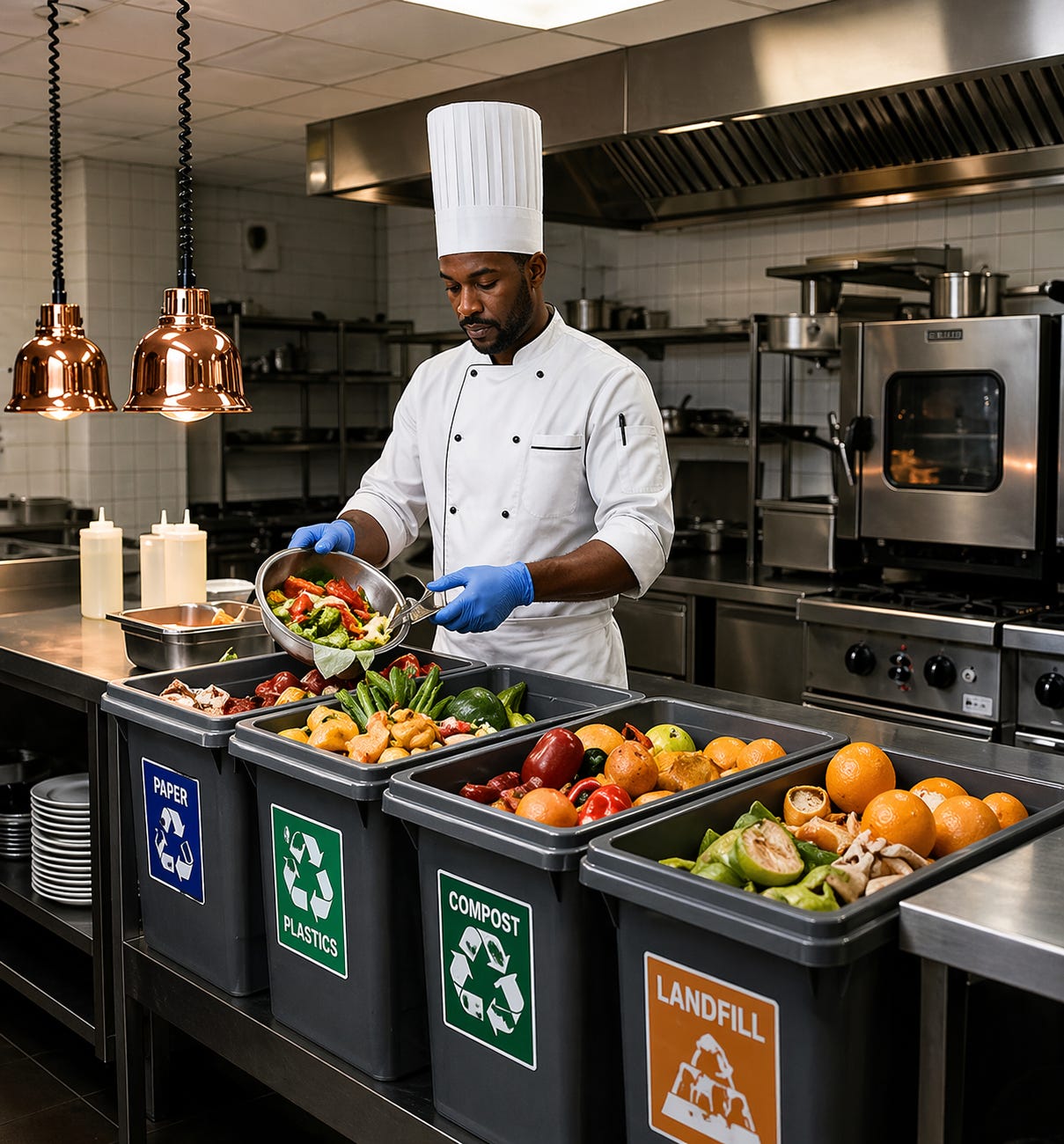
Yet behind the headlines, a quieter contradiction is playing out. Along Jamaica’s tourism corridor, particularly in resort-heavy areas such as Montego Bay and Negril, large volumes of edible food are discarded each week as part of maintaining the all inclusive guest experience, according to tourism stakeholders familiar with hotel operations.
It is not a uniquely Jamaican issue. Countries such as France have introduced laws requiring supermarkets to redirect unsold food to charities, a policy widely credited with reducing waste and increasing food bank supply. However, that model was designed for packaged retail environments. Applying a similar approach to prepared food in hotels presents a different level of complexity.
“Jamaica does not have a food shortage in the way people assume,” said Dean Jones, founder of Jamaica Homes and Realtor Associate. “What we have is a distribution problem. Food exists, but it is not moving efficiently to where it is needed.”
Industry representatives, including members of the Jamaica Hotel and Tourist Association, have long acknowledged the operational challenges involved. Food safety regulations, liability concerns, and the absence of a coordinated cold chain network mean that redistribution at scale remains difficult. As one tourism stakeholder, who asked not to be named, noted: “The system is built for consistency and safety first. Once food leaves that controlled environment, the risks increase significantly.”
From a hotel operator’s perspective, disposal is often the simplest and lowest-risk option. From a national perspective, however, that equation is beginning to attract scrutiny, particularly as communities near major resort towns continue to face uneven access to affordable food.
There are also shifting global expectations. International travellers are becoming more conscious of sustainability, and large hotel brands are under increasing pressure to demonstrate responsible environmental, social, and governance practices. In that context, food waste is no longer just an operational issue, but a reputational one.
For Jamaica, any solution is likely to be gradual rather than immediate. Globally, similar initiatives have typically begun with pilot programmes in high-volume locations, suggesting that tourism hubs such as Montego Bay and Negril could provide a starting point for Jamaica.
The issue ultimately sits at the intersection of cost of living, infrastructure, and planning. At its core, the issue reflects a broader structural reality. Food, like housing, is shaped as much by distribution and design as by supply.
For now, the waste remains largely out of public view. But as economic pressures persist and global standards evolve, it may not remain a background issue for much longer.